The Ultimate Guide to Japanese Ikebana Flower Arranging
18 min read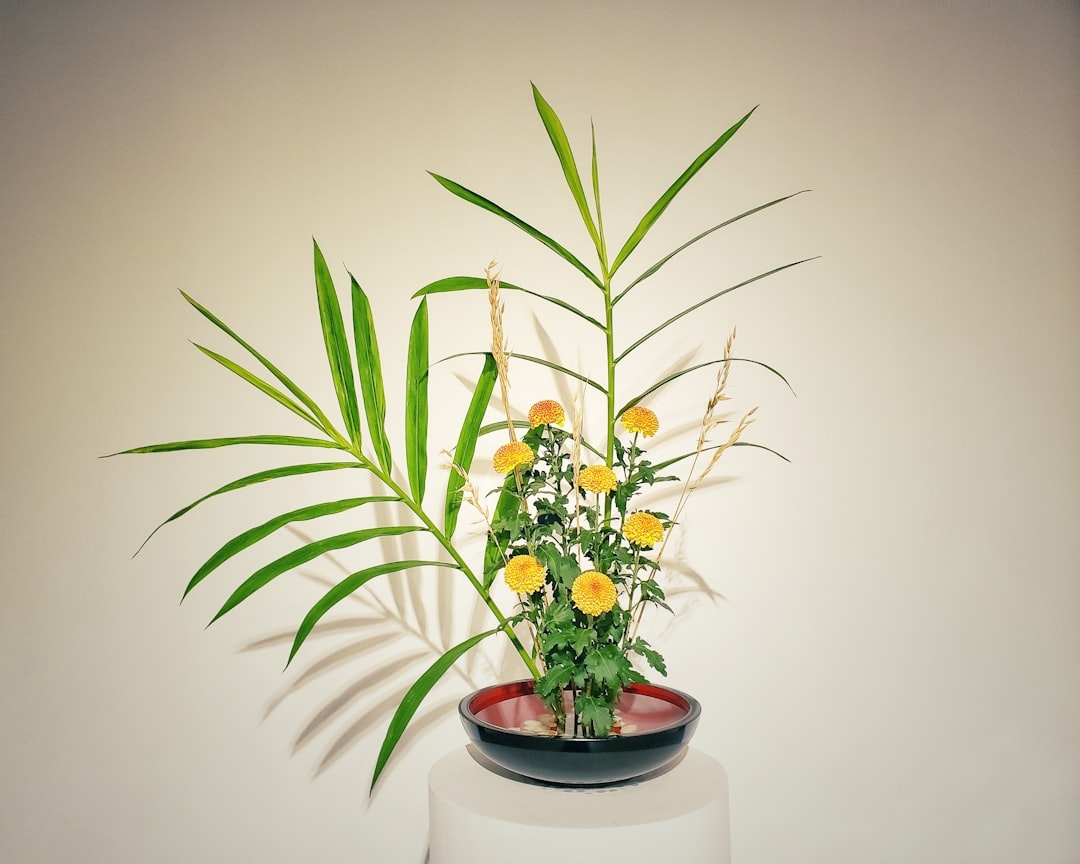
Contents:
- What Is Ikebana? Understanding the Art of Japanese Flower Arranging
- Ikebana vs. Western Flower Arranging: A Side-by-Side Comparison
- A Brief History of Ikebana Flower Arranging
- The Major Schools and How They Differ
- Core Principles Every Ikebana Student Learns First
- The Three-Point Triangle: Shin, Soe, and Tai
- Ma: The Art of Meaningful Space
- Line, Rhythm, and the Season
- Essential Ikebana Tools and Materials
- The Kenzan (剣山): Your Most Important Tool
- Containers: Suiban, Vases, and Vessels
- Scissors: The Ikebana Hasami
- Plant Material: What to Use
- The Main Ikebana Styles: A Practical Rundown
- Rikka (立花): The Classical Upright Style
- Shoka (生花): The Classic Three-Branch Style
- Nageire (投入れ): The Free-Style Vase Arrangement
- Moribana (盛り花): The Ohara School’s Signature Style
- Jiyuka (自由花): Contemporary Free Style
- How to Make Your First Ikebana Arrangement: Step-by-Step
- What You’ll Need
- The Steps
- Troubleshooting Common First-Timer Problems
- Sourcing Materials in the United States
- Local Sources
- Online Specialty Suppliers
- US Pricing Expectations (2026)
- Taking Your Practice Further: Classes, Schools, and Community
- Finding an Ikebana Teacher in the US
- Online Learning Resources
- Books Worth Owning
- Ikebana and Mindfulness: The Meditative Dimension
- Caring for Your Ikebana Arrangement
- Seasonal Ikebana: Arranging Through the Year
- Spring (March–May)
- Summer (June–August)
- Fall (September–November)
- Winter (December–February)
- Frequently Asked Questions About Ikebana
- How long does it take to learn ikebana?
- Is ikebana expensive to practice at home?
- Can I use artificial flowers for ikebana?
- What’s the difference between ikebana and bonsai?
- Do I need to join a formal school to practice ikebana?
- Your Next Step Starts With Three Stems
Ikebana is the Japanese art of flower arranging, practiced for over 600 years. Unlike Western floral design, it uses minimal materials—typically 3 main branches or stems—arranged according to strict principles of line, space, and harmony. Beginners can start with a basic kenzan (pin frog), a shallow bowl, and three stems for under $30 in supplies.
Picture this: a single curved branch, two spare stems, and a shallow ceramic dish filled with still water. Nothing extra. Nothing fussy. Just three elements in quiet conversation with each other and with the empty space around them. That’s ikebana—and the moment you see a well-made arrangement, something in you goes still too.
This ikebana flower arranging guide covers everything from the 600-year history behind this practice to the exact materials you need to get started tonight. Whether you’re completely new to floral arts or you’ve been doing Western-style bouquets for years and want something more meditative, you’ll find practical, specific guidance here.
What Is Ikebana? Understanding the Art of Japanese Flower Arranging
Ikebana (生け花) translates literally as “living flowers” or “flowers kept alive.” It’s the traditional Japanese practice of arranging plant material—branches, stems, leaves, flowers, and even seed pods or bare wood—into compositions governed by specific aesthetic and philosophical principles.
The defining feature is restraint. A typical ikebana arrangement uses three primary elements, each representing a point in a symbolic triangle: heaven (shin), earth (tai), and humanity (soe). The tallest element reaches upward; the shortest grounds the piece; the middle element bridges them. Everything else is secondary—or absent entirely.
Space is not empty in ikebana. It’s structural. The gaps between stems carry as much visual weight as the stems themselves, and arrangers are trained to see “ma” (間)—the meaningful pause—as an ingredient, not an absence.
Ikebana vs. Western Flower Arranging: A Side-by-Side Comparison
Many beginners confuse ikebana with general Asian-inspired floral design, or assume it’s simply a more minimal version of what florists do. The differences run deeper than aesthetics.
- Materials used: Western floristry typically fills a vase with 12–24 stems of similar height. Ikebana uses 3–7 elements, often including bare branches, grasses, or sculptural foliage alongside flowers.
- Symmetry: Western arrangements often aim for symmetry and visual fullness. Ikebana is almost always asymmetrical by design—asymmetry is considered more natural and dynamic.
- Vase placement: In Western design, the vase is a container. In ikebana, the vessel is a collaborator—its shape, color, and material influence every placement decision.
- Philosophy: Western floristry is largely decorative. Ikebana is a disciplined practice; many schools treat it as a form of moving meditation or spiritual cultivation.
- Training: Western floral design can be self-taught quickly. Ikebana traditionally involves years of study under a teacher, with formal ranks and certificates in established schools.
That said, ikebana isn’t inaccessible. The foundational principles are learnable by anyone, and even your first arrangement will feel meaningfully different from anything you’ve made before.
A Brief History of Ikebana Flower Arranging
Ikebana’s roots reach back to the late 6th century, when Buddhist monks began placing flowers on altars as offerings. The practice was called kuge (供華), and it carried spiritual weight from the start—flowers weren’t decoration, they were devotion.
The first recognized ikebana school, Ikenobo, was established by priest Ono no Imoko around 621 CE at Rokkakudo Temple in Kyoto. It remains the oldest and largest ikebana school in the world, with over 3 million practitioners globally today. The Ikenobo headmaster position has been held by members of the same family lineage for more than 55 generations.
By the Muromachi period (1336–1573), ikebana had moved beyond temple practice into the homes of the aristocracy. The tatebana style emerged—tall, formal arrangements with strict vertical emphasis. Over the following centuries, the practice democratized, styles multiplied, and new schools formed.
The Major Schools and How They Differ
There are over 3,000 registered ikebana schools in Japan today. For beginners, three are worth knowing in detail:
- Ikenobo (池坊): The oldest school, founded in the 6th century. Known for classical styles including rikka (standing flowers) and shoka. Arrangements tend to be formal, structured, and highly technical. Best for those drawn to tradition and history.
- Ohara (小原流): Founded in 1895 by Unshin Ohara, who broke with tradition by using shallow containers called suiban and introducing Western flowers like roses and carnations into arrangements. The Ohara school is widely considered more accessible for beginners and for practitioners outside Japan.
- Sogetsu (草月流): Founded in 1927 by Sofu Teshigahara. Sogetsu is the most avant-garde of the major schools—it encourages arrangers to use any material in any location, including wire, metal, glass, and found objects. The motto: “Anyone can do ikebana, anywhere, anytime, with any material.” This is the school most popular in contemporary art circles and among younger practitioners.
Each school issues its own curriculum, certificates, and teaching licenses. If you pursue serious study, your school choice will shape your entire approach. For casual practice at home, all three schools offer beginner-friendly English-language books and online resources.
Core Principles Every Ikebana Student Learns First
Before you touch a single stem, understanding these principles will make every arrangement you create more intentional.
The Three-Point Triangle: Shin, Soe, and Tai
Most classical styles are built on a three-point structure. The measurements are specific:
- Shin (heaven/primary): The tallest element. Its height is typically 1.5 times the width of the container plus its height. So if your bowl is 8 inches wide and 3 inches tall, shin should be about 16–17 inches.
- Soe (humanity/secondary): Three-quarters the height of shin.
- Tai (earth/tertiary): Three-quarters the height of soe.
These aren’t rigid rules in every school, but they give beginners a reliable starting framework. Ohara simplifies them slightly; Sogetsu encourages you to break them intentionally once you’ve learned them.
Ma: The Art of Meaningful Space
Ma (間) is the Japanese concept of negative space—the deliberate pause or interval that gives form to everything around it. In ikebana, an empty area within an arrangement isn’t a mistake to be filled. It’s breathing room. It draws the eye, implies movement, and creates tension that makes the whole composition feel alive.
Western floral students often struggle most with this principle. The instinct is to fill gaps. Resist it. Your first twenty arrangements will probably benefit from removing one element, not adding one.
Line, Rhythm, and the Season
Ikebana is intensely seasonal. Arrangers are expected to reflect the natural world as it actually exists at the moment of creation—not an idealized or permanent version of it. A winter arrangement in January might feature bare branches and a single camellia, not roses. An autumn piece might include browning leaves and seed heads alongside any bloom.
Curved lines suggest gentleness and flow. Sharp angles communicate tension or drama. Horizontal lines imply calm. Vertical lines project strength. These aren’t decorative choices—they’re the vocabulary of the composition.
Essential Ikebana Tools and Materials
You don’t need much to begin. Here’s an honest, practical breakdown of what matters.
The Kenzan (剣山): Your Most Important Tool
The kenzan, also called a pin frog or needle frog, is a heavy metal base covered in sharp upright pins. Stems are pressed onto the pins to hold them in position at precise angles. Without a kenzan, most ikebana arrangements fall apart.
Quality matters here. A cheap kenzan from a craft store will have pins that bend and bases that shift. A good-quality Japanese kenzan—brands like Seki, Kenzan-Ya, or Clover—costs between $15 and $45 and lasts decades. For most beginners, a round kenzan 2.5 to 3 inches in diameter handles the majority of arrangements. Buy one good one rather than two cheap ones.
Containers: Suiban, Vases, and Vessels
The suiban (水盤) is the shallow, wide bowl most associated with modern ikebana. It holds a small amount of water and showcases the kenzan and the stems’ angles. Traditional suiban are ceramic or bronze, but any flat-bottomed shallow dish works for practice. Many beginners use a simple white ceramic plate or a low pottery bowl.
The vessel choice affects everything. A dark matte bowl recedes and lets plant material dominate. A glossy white dish reflects light upward and brightens the arrangement. Tall cylindrical vases (used in nageire style, which means “thrown-in”) create a completely different compositional dynamic.
Scissors: The Ikebana Hasami
Ikebana scissors (hasami) are designed differently from standard floral scissors. They have a spring-loaded mechanism and thick blades that can cut through woody branches cleanly in a single motion. A decent pair starts around $25–$35. Brands Okatsune and Tobisho make well-regarded options available on Amazon and through specialty garden suppliers in the US.
You can start with good sharp kitchen shears, but dedicated hasami make a real difference when you begin working with thicker branches—and they’re worth having once you commit to the practice.
Plant Material: What to Use
Ikebana uses a broader range of plant material than most Western floral practice. Think beyond flower-shop stems:
- Branches: Quince, cherry, pussy willow, forsythia, dogwood. These provide the primary “line” in many arrangements.
- Flowers: Chrysanthemums, irises, lilies, camellias, and orchids are classic ikebana flowers. Roses and carnations work particularly well in Ohara-style arrangements.
- Foliage: Aspidistra (cast iron plant), ti leaves, cycas palm, and snake grass are frequently used for structural support and contrast.
- Grasses and sedges: Particularly popular in contemporary Sogetsu work.
- Sculptural elements: Bare branches, driftwood, seed pods, dried materials—especially in winter and autumn arrangements.
For your first arrangement, visit a grocery store floral section or a local florist. Ask for three stems with good “line”—a curved branch or tall dramatic stem, a focal flower, and something low and leafy. Total cost: $8–$15.
The Main Ikebana Styles: A Practical Rundown
Each major style has a distinct structure. You don’t need to master all of them—but knowing what they are helps you choose a starting point and understand what you’re looking at when you encounter ikebana in the wild.
Rikka (立花): The Classical Upright Style
Rikka, meaning “standing flowers,” is the oldest formal ikebana style, developed in the Ikenobo school during the Muromachi period. It uses 7–9 defined branches representing elements of a natural landscape—a mountain, a waterfall, a valley, a town. Rikka arrangements can stand 3–6 feet tall and take master practitioners hours to create.
This is not a beginner style. It’s worth studying as context, but most students don’t attempt rikka until they’ve studied ikebana for at least two or three years.
Shoka (生花): The Classic Three-Branch Style
Shoka is the three-branch arrangement most often depicted in ikebana books and classes. It embodies the shin-soe-tai triangle directly and is considered the foundation of Ikenobo study. Shoka arrangements are compact, elegant, and highly compositionally controlled. This is an excellent second step after learning the absolute basics.
Nageire (投入れ): The Free-Style Vase Arrangement
Nageire means “thrown in,” which is a little misleading—nothing is carelessly tossed. What it refers to is a looser, more naturalistic approach using a tall vase instead of a shallow suiban. No kenzan is used; stems are supported by careful wedging, forking, or crossing inside the vase. Nageire is wonderful for beginners working with long-stemmed flowers from the grocery store because it requires less specialized equipment.
Moribana (盛り花): The Ohara School’s Signature Style
Moribana, meaning “piled-up flowers,” was introduced by the Ohara school and is now arguably the most popular style among Western students. It uses a shallow suiban and kenzan, keeps arrangements lower and wider than classical forms, and welcomes a broader range of materials including Western flowers. The relatively relaxed structure makes it forgiving for beginners while still teaching all the core principles.
Recommendation for most beginners: Start with moribana. Buy a shallow bowl, a good kenzan, and three stems. Follow the shin-soe-tai proportions. You’ll be arranging correctly on your first try.
Jiyuka (自由花): Contemporary Free Style
Jiyuka is the most open-ended form, associated primarily with the Sogetsu school. There are no prescribed structures—arrangers create based on personal expression, using any materials and any vessel. This style often looks more like sculpture than floral arrangement, and serious practitioners spend years in classical study before jiyuka work carries real depth.
How to Make Your First Ikebana Arrangement: Step-by-Step
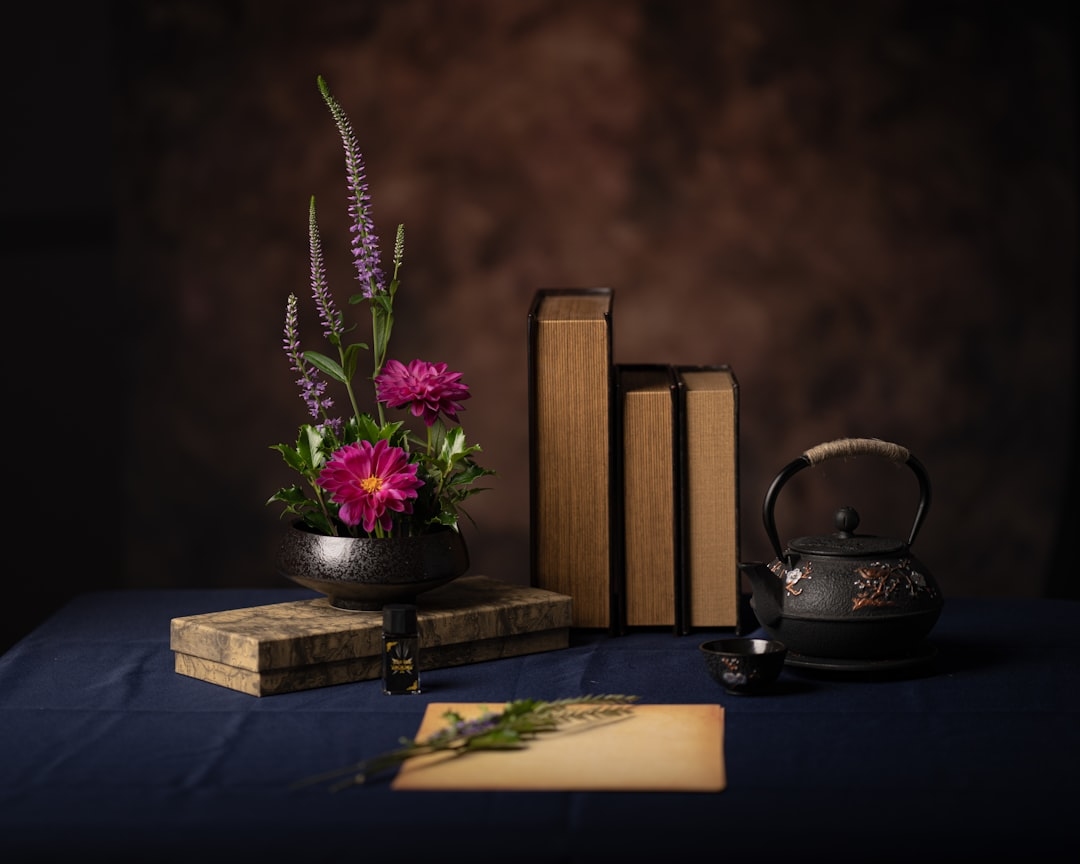
Here’s a practical moribana arrangement you can complete in about 30 minutes on your first try.
What You’ll Need
- 1 shallow bowl or dish (8–10 inches wide, 2–3 inches deep)
- 1 kenzan, placed slightly off-center toward the back-left of the bowl
- 3 stems: one tall branch or dramatic stem (shin), one medium-height flower (soe), one short leafy or low stem (tai)
- Ikebana scissors or sharp kitchen shears
- Water to fill the bowl about halfway
The Steps
- Set up your kenzan. Place it slightly off-center in the bowl. Fill the bowl with enough water to cover the kenzan base. The pins should be fully submerged.
- Cut and place shin. Measure your bowl: width plus height, multiplied by 1.5. That’s your shin height. Cut the stem at a 45-degree angle. Press it firmly onto the kenzan at a slight forward lean—about 10–15 degrees from vertical, angled toward the viewer.
- Cut and place soe. Three-quarters the height of shin. Position it to the left of shin (or right—either works, but be consistent), angled outward at roughly 45 degrees from vertical.
- Cut and place tai. Three-quarters the height of soe. Place it on the opposite side of shin from soe, angled outward and slightly forward at about 60–75 degrees from vertical—low and close to the bowl’s surface.
- Step back and look. The three stems should form a loose, asymmetrical triangle when viewed from above. Each stem should lean in a slightly different direction, creating depth and movement.
- Remove anything unnecessary. If you added filler stems or leaves, take them out one by one until you feel the arrangement breathe. Less is almost always more.
- Adjust angles. Small adjustments to stem angle on the kenzan create large visual changes. Tilt shin forward 5 more degrees. See what changes. This is the part that teaches you the most.
Troubleshooting Common First-Timer Problems
- Stems keep falling off the kenzan: Cut the stem flat across the bottom (not at an angle) and press firmly straight down. Angled cuts can slip sideways on pins.
- The arrangement looks flat: Your stems are probably all pointing the same direction. Each stem in ikebana should lean into a different zone of space. Think of them as pointing toward three different corners of the room.
- It looks too sparse: Trust the sparseness. Live with the arrangement for 10 minutes before adding anything. Your eye will adjust. More often than not, what feels “too empty” is actually just right.
- It looks cluttered: Remove the stem you love the most. Seriously. The most beautiful element often overpowers the composition.
Sourcing Materials in the United States
Finding ikebana-appropriate plant material in the US is easier than you might expect, once you know what to look for.
Local Sources
Whole Foods, Trader Joe’s, and most independent florists carry good stem material. Ask specifically for “line flowers” or branches with interesting curves. Curly willow, protea, birds of paradise, and monstera leaves are widely available and work beautifully in ikebana. Farmer’s markets in spring and summer are excellent sources for seasonal branches in blossom.
Your own yard is a legitimate source. A curved branch from a backyard shrub, a few stems of ornamental grass, or a single flower from a garden bed can make a compelling arrangement. Ikebana masters have always foraged; there’s nothing impure about it.
Online Specialty Suppliers
For tools specifically, several US-based retailers stock quality Japanese ikebana supplies:
- Floral Supply Syndicate (FSS): Carries kenzans, suiban, and hasami. Ships nationwide.
- Chabatree: Japanese lifestyle retailer with a good range of ceramic vessels appropriate for ikebana.
- Amazon: Search specifically for “Kenzan pin frog” and filter by weight—heavier is better. A kenzan that weighs under 4 oz is too light for serious work.
US Pricing Expectations (2026)
- Basic kenzan (round, 2.5 inch): $15–$25
- Quality kenzan (Seki or comparable): $30–$50
- Ohara-style suiban bowl (ceramic): $25–$80
- Ikebana hasami scissors: $25–$60
- Beginner stem bundle (3–5 stems from florist): $10–$20
- Complete beginner starter kit: $60–$120 all-in
Taking Your Practice Further: Classes, Schools, and Community
Home practice will take you surprisingly far, but structured study accelerates everything. Here’s how to find it in the US.
Finding an Ikebana Teacher in the US
The Ikebana International organization has over 160 chapters worldwide, including dozens of active US chapters in cities including New York, Los Angeles, San Francisco, Seattle, Chicago, and Honolulu. Their website (ikebana-international.org) includes a chapter locator. Many Japanese cultural centers and Japanese American community associations also offer regular ikebana classes, often at low cost ($10–$25 per session).
Formal enrollment in a school like Sogetsu or Ohara typically begins with a registered teacher who reports to the school’s headquarters. After completing the first level of curriculum (usually 10–20 lessons), you receive an official certificate from the school. Most serious practitioners pursue at least the first two or three certification levels before teaching independently.
Online Learning Resources
The Sogetsu school offers official online courses through its Tokyo headquarters, with English-language instruction. The Ohara school similarly offers instructional video content. YouTube channels from certified ikebana teachers—search specifically for teachers affiliated with named schools, not just “ikebana tutorial”—offer high-quality free instruction for beginners.
Several US-based ikebana teachers offer Zoom lessons for $40–$80 per session. For students outside major cities, this is a genuinely effective option. The teacher can observe your arrangement via camera and provide real-time feedback, which matters more in ikebana than in almost any other craft.
Books Worth Owning
- Ikebana: The Art of Arranging Flowers by Shozo Sato — a clear, beautifully photographed introduction covering multiple styles. Around $25 new.
- Sogetsu: The Free School of Ikebana — the official Sogetsu textbook, available in English. Essential if you pursue Sogetsu study.
- The Art of Japanese Flower Arrangement by Alfred Koehn — an older text (1933) but remarkably clear on foundational principles and philosophy.
Ikebana and Mindfulness: The Meditative Dimension
Many practitioners—particularly in the US—come to ikebana not primarily for the aesthetics but for the mental stillness it produces. The process demands a specific quality of attention that most daily activities don’t require.
You’re observing a stem to understand its natural curve. You’re calculating proportion. You’re looking at negative space. You’re adjusting an angle by three degrees and watching the whole composition shift. None of this can be done while mentally somewhere else. Ikebana arranging is, practically speaking, a mindfulness exercise whether you frame it that way or not.
A 2019 study from Kyushu University found that participants who engaged in ikebana practice three times per week for four weeks showed measurable reductions in salivary cortisol (a stress biomarker) compared to a control group. The researchers attributed the effect to the combination of focused attention, tactile engagement, and sensory exposure to natural materials. You don’t need to frame your practice as therapy for those benefits to accrue.
Caring for Your Ikebana Arrangement
A well-made ikebana arrangement using fresh flowers and properly conditioned stems will typically last 5–10 days. Here’s how to extend that:
- Change the water every 2 days. Lift the kenzan with stems attached, rinse both under cool water, replace the water in the bowl, and return the kenzan.
- Re-cut stems every 3–4 days. Trim a small amount off the bottom of each stem at a 45-degree angle to restore water uptake.
- Keep arrangements away from direct sun and heat vents. Ideal temperature range: 60–70°F. Avoid placing arrangements near fruit bowls—ripening fruit emits ethylene gas that accelerates flower aging.
- Mist lightly once per day. A fine water mist over the plant material (not the water in the bowl) keeps flowers hydrated and slightly extends their lifespan.
- When flowers fade, don’t discard everything. Often the branches and foliage remain viable after flowers drop. A branch-only arrangement is a valid and beautiful ikebana composition.
Seasonal Ikebana: Arranging Through the Year
Seasonality is foundational, not optional. Here’s a brief guide to what to use and what to avoid across the US calendar.
Spring (March–May)
This is the richest season for ikebana material in most US climates. Cherry and plum branches in blossom, forsythia, dogwood, tulips, ranunculus, peonies (late spring), and fiddlehead ferns all work beautifully. The mood should feel emergent—reaching upward, delicate, anticipatory. Keep arrangements light in color: whites, soft pinks, pale yellows.
Summer (June–August)
Bold material for a bold season. Sunflowers, dahlias, lotus (if you can source it), tropical foliage, bamboo, and large-leafed plants like hosta and canna work well. Summer ikebana can afford more visual weight and contrast—deep greens against vivid blooms. This is also when grasses and sedges reach their best form.
Fall (September–November)
The most rewarding ikebana season for many practitioners. Brilliant autumn foliage branches, seed heads, dried grasses, persimmon branches with fruit, chrysanthemums (historically the quintessential fall ikebana flower in Japan), and bare sculptural branches beginning to lose leaves. Embrace imperfection—a partially dried leaf or a cluster of berries conveys the season’s transitional quality better than any perfect bloom.
Winter (December–February)
Minimalism becomes even more natural when little is blooming. Bare branches alone can make a profound arrangement. Camellia (a classic winter ikebana subject), hellebores, evergreen foliage, pussy willow, forced paperwhites or amaryllis, and dried materials all serve well. Winter ikebana teaches restraint more directly than any other season—there simply isn’t as much to work with, and that limitation is the lesson.
Frequently Asked Questions About Ikebana
How long does it take to learn ikebana?
Basic ikebana principles can be applied in your first session—most beginners produce a recognizable, pleasing moribana arrangement within 30–60 minutes of starting. Formal proficiency within a school system, such as achieving a teaching license through the Sogetsu or Ohara school, typically requires 3–7 years of regular study. Most practitioners treat it as a lifelong practice rather than a skill with a finish line.
Is ikebana expensive to practice at home?
No. A complete beginner setup costs $60–$120 for tools (kenzan, suiban, scissors) and $10–$20 per arrangement for fresh plant material. Compared to most creative hobbies, ikebana is relatively affordable—and the tools last years or decades with proper care. If you already have a suitable shallow bowl, you can start for under $30 by adding just a kenzan and scissors.
Can I use artificial flowers for ikebana?
Technically yes, but it conflicts with a core principle of ikebana: the Japanese word itself means “living flowers.” The practice is designed around engagement with natural, impermanent materials—the way a flower fades is part of its meaning. Dried flowers are used in some arrangements, particularly in winter. Silk or plastic flowers are generally considered incompatible with the philosophy, though some contemporary Sogetsu practitioners have used artificial materials in conceptual work.
What’s the difference between ikebana and bonsai?
They’re distinct practices. Bonsai is the art of cultivating and shaping miniature trees over months and years; it’s horticultural and requires ongoing care of a living plant. Ikebana is the art of arranging cut plant material into compositions; each arrangement is made, appreciated, and then dismantled or allowed to naturally decompose. Both involve deep attention to natural form and seasonal awareness, but the materials, timescale, and techniques are entirely different.
Do I need to join a formal school to practice ikebana?
No. Many people practice ikebana at home using books, online resources, or occasional workshops without formal school enrollment. You’ll progress more slowly and miss the depth of curriculum that schools provide, but home practice is legitimate and rewarding. Joining a school becomes most valuable if you want certification, want to teach, or want the structured progression and community that school membership provides. Many US practitioners start solo and join a school after a year or two once they’re sure of their interest.
Your Next Step Starts With Three Stems
Six hundred years of tradition, three main branches, one bowl of water. That’s the whole apparatus. You already have everything you need to understand it—you just haven’t placed the first stem yet.
Pick up a kenzan this week. Stop by a grocery store floral section on your way home and ask for something tall and curved, something medium with a good bloom, and something low and leafy. Set aside thirty minutes at the kitchen table. Follow the shin-soe-tai proportions, trust the empty space, and step back when you’re tempted to add more.
That first arrangement—even if it’s imperfect, even if the stems shift slightly or the proportions feel off—will teach you more about seeing than almost anything else you could spend thirty minutes doing. Ikebana isn’t something you understand by reading about it. It’s something you understand by doing it, then redoing it, then slowly noticing that your eye has changed.
Start there. The rest of this ikebana flower arranging guide will mean more once your hands have been in it.