Complete Guide to Xeriscaping with Flowers in Dry Climates
18 min read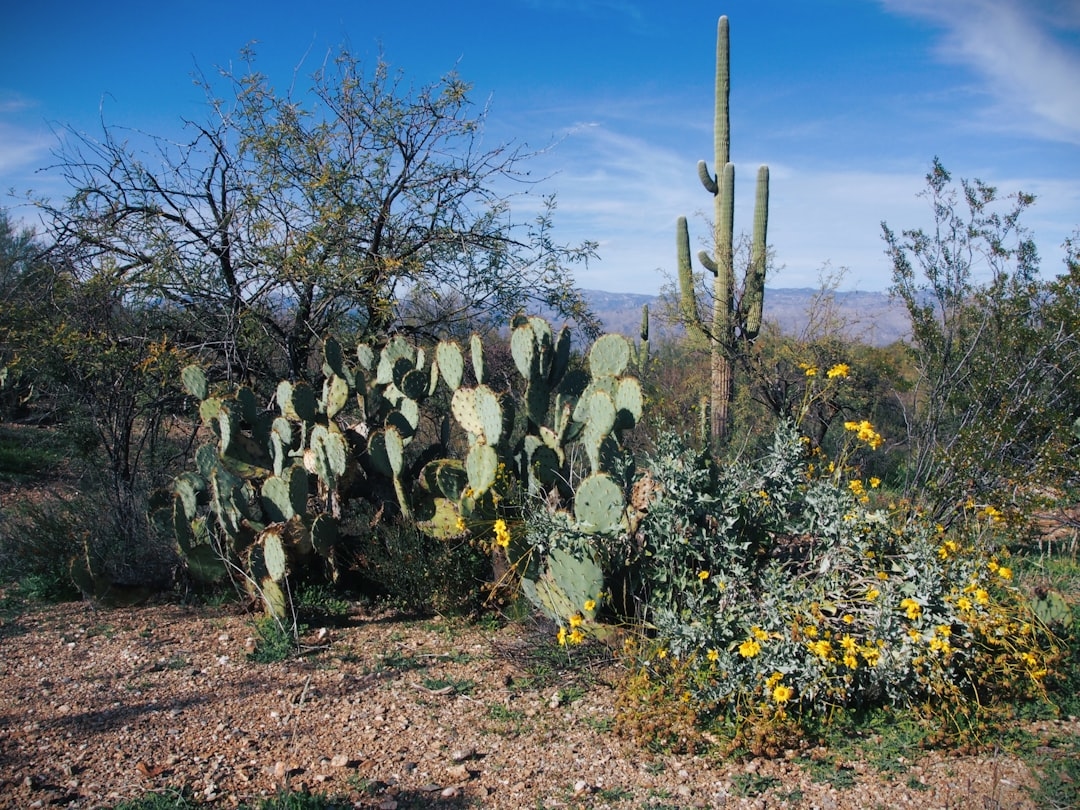
Contents:
- What Is Xeriscaping and Why Does It Matter for Flower Gardens?
- Understanding USDA Hardiness Zones for Dry Climates
- The Best Xeriscaping Flowers for Dry Climates
- Native Wildflowers
- Mediterranean and Adapted Perennials
- Succulents and Agave-Family Flowers
- Designing a Flowering Xeriscape: Principles and Layout
- Hydrozoning: Grouping Plants by Water Need
- Soil Preparation and Amendment
- Mulch: The Single Highest-Impact Xeriscaping Tool
- Xeriscaping Flowers Guide: Seasonal Planting Calendar
- Spring (March – May)
- Summer (June – August)
- Fall (September – November)
- Winter (December – February)
- Water-Wise Irrigation Strategies for Flowering Xeriscapes
- Drip Irrigation Over Overhead Sprinklers
- Deep Watering vs. Frequent Shallow Watering
- Common Mistakes to Avoid in Flowering Xeriscapes
- Expert Perspective: Choosing Flowers That Work With Your Soil
- Flowering Xeriscape Design Styles and Aesthetic Approaches
- The Prairie Style
- The Desert Southwest Style
- The Mediterranean Cottage Style
- Ecological Benefits of Flowering Xeriscapes
- Sourcing Xeriscaping Flowers: What to Look For
- Regional Native Plant Nurseries
- What to Look for at the Nursery
- Online Sources and Mail-Order
- Maintaining a Flowering Xeriscape Through the Seasons
- Annual Maintenance Tasks
- Long-Term Plant Management
- Frequently Asked Questions
- What flowers are best for xeriscaping in hot, dry climates?
- How long does it take for a xeriscape to become truly drought tolerant?
- Can I xeriscape in a humid climate, or is it only for dry regions?
- Do xeriscaping flowers attract pollinators?
- How much does it cost to xeriscape a typical front yard?
- Moving Forward: Building Your Xeriscape One Season at a Time
In the drought-stricken American Southwest of the 1980s, Denver Water coined a word that would quietly transform how millions of gardeners think about beauty and survival: xeriscape. Derived from the Greek xeros (dry) and the Latin scapus (scene), it was a practical response to a city running short on water. But the concept it named was ancient. The Pueblo peoples of the Colorado Plateau had cultivated drought-tolerant gardens for centuries, selecting plants that thrived on rainfall measured in single digits. They understood something that modern landscapers are only now rediscovering — that scarcity can produce extraordinary beauty.
This xeriscaping flowers guide is built for anyone who wants that beauty without the water bill. Whether you’re working with a sun-baked backyard in Phoenix, a rocky slope in Denver, or a clay-heavy lot in Dallas, the principles here apply. You’ll find specific plant recommendations, planting timelines, design strategies, and expert advice — all grounded in how flowering plants actually behave under stress.
What Is Xeriscaping and Why Does It Matter for Flower Gardens?
Xeriscaping is a landscape design philosophy centered on reducing or eliminating supplemental irrigation. It’s not about gravel and cacti, though both can play a role. It’s about choosing plants that are naturally adapted to local rainfall patterns, then arranging them in ways that maximize the efficiency of whatever water is available.
For flower gardeners, this reframes the entire process. Instead of starting with aesthetics and working backward to water requirements, you start with water — specifically, how much your region receives annually and when — and build your palette from there.
The numbers are stark. A conventional suburban lawn in the American Southwest can consume 60 to 70 gallons of water per square foot per year. A well-designed xeriscape reduces that figure by 50 to 75 percent, according to the EPA’s WaterSense program. For a 500-square-foot garden, that’s a potential savings of 15,000 to 25,000 gallons annually.
Flowering xeriscapes accomplish this through four interlocking strategies: selecting drought-tolerant species, improving soil structure, applying mulch to retain moisture, and grouping plants by water need — a technique called hydrozoning.
Understanding USDA Hardiness Zones for Dry Climates
Most of the US regions best suited to xeriscaping fall within USDA Hardiness Zones 4 through 10. The arid West — including California, Nevada, Arizona, New Mexico, Utah, and Colorado — spans Zones 5 through 10. The semi-arid plains of Texas, Oklahoma, and Kansas sit in Zones 6 through 8. These zones tell you about temperature extremes, but for xeriscaping, you also need to know your region’s annual rainfall and its seasonal distribution.
Tucson, Arizona, receives about 12 inches of rain per year, much of it concentrated in the summer monsoon season. Denver gets roughly 15 inches, spread more evenly across spring and fall. Dallas averages 37 inches but experiences long dry spells in summer. Each of these climates demands a different planting approach, even though all three can benefit from xeriscaping principles.
The Best Xeriscaping Flowers for Dry Climates
Plant selection is where a xeriscaping flowers guide earns its keep. The market is flooded with plants labeled “drought tolerant” that, in practice, require regular watering to look presentable. The species below are genuinely adapted to dry conditions — they’ve evolved mechanisms like deep taproots, silver-reflective foliage, and waxy cuticles that allow them to perform with minimal intervention after establishment.
Native Wildflowers
Blanket Flower (Gaillardia aristata) — Native to the Great Plains and Rocky Mountain foothills, blanket flower produces bold red-and-yellow blooms from June through September. It thrives in Zones 3 through 10, tolerates poor soil, and actually performs worse with too much water or fertilizer. Plants typically spread 12 to 18 inches wide and self-seed reliably.
Desert Marigold (Baileya multiradiata) — A Southwestern native that blooms almost year-round in Zones 7 through 11. Its silver-green foliage reflects heat, and it requires no supplemental water once established in regions receiving more than 8 inches of annual rainfall. Deer avoid it, which matters in rural and semi-rural gardens.
Purple Coneflower (Echinacea purpurea) — One of the most adaptable native perennials in North America. Hardy in Zones 3 through 9, it handles drought by drawing on a deep taproot that can extend 18 to 24 inches into the soil. Flowers attract pollinators from July through October, and the seed heads feed birds through winter.
Penstemon (Penstemon spp.) — With over 250 species native to North America, there’s a penstemon for almost every dry climate. Rocky Mountain penstemon (P. strictus) is excellent for Zones 4 through 9. Firecracker penstemon (P. eatonii) suits Zones 4 through 10. Tubular flowers in red, purple, and pink attract hummingbirds reliably.
Mediterranean and Adapted Perennials
Lavender (Lavandula angustifolia) — Native to the dry hillsides of southern France and Spain, English lavender is one of the most reliable drought-tolerant perennials available in the US. It performs best in well-drained soil in Zones 5 through 8, where it blooms from June through August. One established plant can survive on as little as 15 inches of annual rainfall.
Russian Sage (Perovskia atriplicifolia) — Technically a subshrub, Russian sage produces airy blue-violet flower spikes from July through October. It tolerates alkaline soil, heat, and extended drought once established, making it ideal for the clay-heavy soils of the Midwest and high plains. Hardy in Zones 4 through 9, it grows 3 to 5 feet tall and provides exceptional late-season color.
Catmint (Nepeta faassenii) — A low-growing, silvery-blue perennial that blooms in May and June, then again in August if cut back after the first flush. Zones 4 through 8. Unlike its relative catnip, garden catmint has a tidy mounding habit and rarely exceeds 18 inches in height. It requires virtually no supplemental irrigation after its first season.
Yarrow (Achillea millefolium) — Flat-topped flower clusters in white, yellow, red, or pink appear from June through September. Yarrow is notable for thriving in poor, dry soil where most perennials struggle. Its feathery foliage has a high surface-area-to-volume ratio that minimizes water loss through transpiration. Zones 3 through 9.
Succulents and Agave-Family Flowers
Red Yucca (Hesperaloe parviflora) — Despite the common name, red yucca is not a true yucca. It produces tall flower spikes — up to 5 feet — covered in coral-red tubular blooms from May through August. A single established plant can bloom for 3 to 4 months with zero supplemental irrigation in regions receiving more than 12 inches of annual rain. Zones 5 through 11.
Agave (Agave parryi) — Parry’s agave blooms only once in its lifetime (after 15 to 25 years), but that bloom is extraordinary: a 10 to 15-foot stalk covered in yellow flowers. In the years before it blooms, its architectural rosette form provides strong structural interest. Hardy to Zone 5 with good drainage.
Designing a Flowering Xeriscape: Principles and Layout
Good xeriscape design does more than select the right plants — it arranges them in ways that amplify their drought resilience and create genuine visual interest across all four seasons.
Hydrozoning: Grouping Plants by Water Need
Hydrozoning is the practice of clustering plants with similar water requirements together, so irrigation — whether from rainfall or supplemental sources — is never wasted on plants that don’t need it.
A practical three-zone approach divides the garden into: a high-water zone (within 10 feet of the house, where rainwater runoff concentrates), a moderate-water zone (mid-garden areas), and a low-water zone (areas furthest from structures, receiving only natural rainfall). Most of the flowering species described above belong in the moderate or low zones.
Soil Preparation and Amendment
Counterintuitively, many drought-tolerant flowering plants prefer lean, fast-draining soil rather than nutrient-rich amendments. Adding excessive compost or fertilizer to blanket flower, lavender, or penstemon often produces lush foliage at the expense of blooms — and can reduce drought hardiness by encouraging shallow root growth.
The key amendment for most dry-climate soils is not fertility but structure. In heavy clay soils, incorporating 2 to 3 inches of coarse grit or decomposed granite into the top 12 inches dramatically improves drainage. In sandy desert soils, a thin layer of compost — no more than 1 inch — helps retain just enough moisture for establishment without encouraging dependency.
Mulch: The Single Highest-Impact Xeriscaping Tool
A 3-inch layer of organic mulch around flowering perennials reduces soil moisture evaporation by up to 70 percent, according to research from Colorado State University Extension. It also moderates soil temperature, suppresses weeds that compete for water, and gradually improves soil structure as it breaks down.
For flowering xeriscapes, shredded bark or wood chip mulch works well around larger perennials and shrubs. Decomposed granite is the preferred choice for low-growing species like catmint and desert marigold, where it mimics their natural rocky habitat and prevents crown rot.
Xeriscaping Flowers Guide: Seasonal Planting Calendar
Timing is a critical variable in xeriscaping success. Plants established during cool, moist periods require far less supplemental water to develop the root systems that sustain them through summer drought. Here is a region-adapted calendar for the major dry-climate zones in the US.
Spring (March – May)
- Southwest (Zones 7–10): Plant lavender, desert marigold, red yucca, and penstemon from late February through April. Soil temperatures above 50°F encourage rapid root development. Water every 5 to 7 days for the first 6 weeks.
- Intermountain West (Zones 5–7): Wait until mid-April to avoid late frosts. Blanket flower, yarrow, purple coneflower, and catmint can all go in the ground once nighttime temperatures consistently stay above 35°F.
- Southern Plains (Zones 6–8): March is the ideal planting month for most flowering perennials. Soil moisture from winter rains gives new transplants their best start before summer heat arrives.
Summer (June – August)
- Avoid planting new perennials in high summer across all dry-climate regions. The combination of heat stress and low rainfall makes establishment extremely difficult and water-intensive.
- Focus on deadheading spent blooms to extend flowering on blanket flower, catmint, and coneflower. Cut catmint back by one-third in late June to trigger a second bloom in August.
- Monitor newly established plants (those in their first season) for stress signs. Wilting in the afternoon is normal; wilting that persists into the evening indicates the plant needs water.
Fall (September – November)
- Fall is the second-best planting window across all dry-climate regions, and in the Southwest, it often outperforms spring. Cooling temperatures and fall rains give roots time to establish before winter dormancy.
- Plant agave, red yucca, Russian sage, and ornamental grasses in September and October. These species establish more reliably in fall than spring in Zones 7 and above.
- Leave seed heads of coneflower, blanket flower, and yarrow standing through fall — they feed overwintering birds and provide winter structure.
Winter (December – February)
- In Zones 8 and above, winter is a valid planting window for cold-hardy species like lavender, penstemon, and desert marigold. Cool, moist conditions promote root growth with minimal water input.
- In Zones 5 through 7, apply a 4-inch mulch layer over perennial crowns in November to protect them from freeze-thaw cycles that heave roots out of the ground.
- Review and plan next year’s design. Order seeds for direct-sown species like blanket flower and desert marigold, which perform best when seeded in place rather than transplanted.
Water-Wise Irrigation Strategies for Flowering Xeriscapes
Even the most drought-adapted plants need supplemental water during their establishment period — typically the first growing season. How you deliver that water matters as much as how much you use.
Drip Irrigation Over Overhead Sprinklers
Drip irrigation delivers water directly to the root zone, where plants can use it, rather than broadcasting it over foliage and bare soil where it evaporates. For flowering perennials, a drip emitter rated at 0.5 to 1 gallon per hour placed 4 to 6 inches from the plant’s crown provides sufficient moisture during establishment without saturating the root zone.
Research from the University of California Cooperative Extension found that drip irrigation systems use 30 to 50 percent less water than equivalent sprinkler systems for landscape plantings, with higher plant survival rates in the first year.
Deep Watering vs. Frequent Shallow Watering
Frequent, shallow watering trains plant roots to remain near the soil surface, where they’re vulnerable to heat and drought. Deep, infrequent watering — delivering enough moisture to penetrate 10 to 12 inches into the soil — encourages deep root development that sustains plants through dry periods without irrigation.
For established xeriscaping perennials in Zones 6 through 9, a deep watering every 2 to 3 weeks during summer is typically sufficient. In the driest zones (9 and 10), monthly deep watering may still be needed even for established drought-tolerant plants during peak summer months.
Common Mistakes to Avoid in Flowering Xeriscapes
Even experienced gardeners make predictable errors when transitioning to drought-tolerant planting. These are the ones that most consistently undermine otherwise well-designed xeriscapes.
- Overwatering during establishment. The instinct to water new transplants frequently is understandable, but it prevents the deep root development that makes plants drought-tolerant. After the first two waterings, let the soil dry out 2 to 3 inches deep before watering again.
- Amending soil too generously. Rich soil encourages lush, shallow-rooted growth in drought-adapted plants. Lavender planted in heavily amended soil is far more likely to die in its second season than lavender planted in lean, fast-draining soil.
- Choosing “drought tolerant” plants without verifying local adaptation. A plant labeled drought tolerant in the Pacific Northwest may require considerable supplemental water in Arizona. Always check whether a species is adapted to your specific rainfall pattern and soil type, not just its general drought rating.
- Planting in summer. Transplanting into hot, dry soil dramatically increases water requirements and reduces survival rates. In most dry-climate regions, summer planting of new perennials increases water needs by 200 to 300 percent compared to fall or spring planting.
- Neglecting mulch. Bare soil loses moisture rapidly through evaporation, especially in high-heat, low-humidity climates. Skipping mulch around new plantings is one of the most common reasons xeriscaping projects fail in their first year.
- Monoculture planting. A xeriscape dominated by a single species is both ecologically fragile and visually monotonous. Aim for a mix of at least 5 to 7 species with staggered bloom times to provide interest from March through October.
Expert Perspective: Choosing Flowers That Work With Your Soil
Dr. Elena Vargas, a certified horticulturist with the American Society for Horticulture Science and co-founder of the Sonoran Landscape Design Institute in Tucson, emphasizes a soil-first approach to plant selection:
“Most xeriscaping failures happen before a plant goes in the ground. Gardeners pick plants based on photographs, then wonder why they struggle. In dry climates, the soil profile is everything. A penstemon in alkaline clay behaves completely differently than one in sandy loam. Before you buy a single plant, get a basic soil test — pH and drainage rate at minimum. That test will tell you whether you’re planting for success or just postponing disappointment.”
Vargas recommends the University of Arizona Cooperative Extension’s soil testing service for Southwest gardeners, and equivalent land-grant university services for other regions. A basic test costs $15 to $30 and returns results within 2 weeks — a small investment against the cost of failed plantings.
Flowering Xeriscape Design Styles and Aesthetic Approaches
One persistent misconception is that xeriscaping produces gardens that look utilitarian or austere. The reality is that dry-climate flowering gardens often develop a richer sense of place than conventional landscapes, precisely because their plants are genuinely native to the terrain.
The Prairie Style
Popularized by landscape designer Piet Oudolf, the prairie style arranges drought-tolerant grasses and flowering perennials in naturalistic drifts that evoke the American Great Plains. Key plants include purple coneflower, blanket flower, yarrow, Russian sage, and little bluestem grass. The style emphasizes year-round structure, with seed heads and dried stems providing winter interest after blooms fade.
A basic prairie-style xeriscape for a 400-square-foot bed might include 12 purple coneflowers, 9 blanket flowers, 6 Russian sage plants, 3 little bluestem grasses, and a scattered underplanting of catmint along the front edge. Total plant cost: approximately $180 to $250 at regional nurseries, with negligible ongoing water costs after the first year.
The Desert Southwest Style
In Zones 8 through 11, the design vocabulary shifts toward agave, yucca, penstemon, desert marigold, and red yucca, with decomposed granite mulch and boulders providing structural contrast. Color tends toward warm tones — coral, gold, crimson — set against silver-green and blue-gray foliage.
This style works particularly well on slopes and rocky terrain where conventional planting is impractical. Red yucca and agave are both remarkably effective on grades steeper than 15 degrees, where their root systems stabilize soil while their vertical flower spikes add drama.
The Mediterranean Cottage Style
Lavender, catmint, yarrow, and ornamental sage create a softer, more romantic aesthetic that translates well to suburban front yards in Zones 5 through 8. This style tends to read as “traditional garden” to neighbors and HOAs while consuming dramatically less water than the turf grass it replaces.
A 200-square-foot front yard conversion from turf to Mediterranean cottage style — using lavender, catmint, yarrow, and ornamental grasses — typically costs $300 to $600 in plants and materials, and can reduce outdoor water use by 8,000 to 12,000 gallons per year in a Zone 6 or 7 climate.
Ecological Benefits of Flowering Xeriscapes
The environmental case for flowering xeriscapes extends well beyond water savings. Native flowering plants support pollinator populations at a time when many species face severe habitat loss.
A 2019 study published in Science documented a 29 percent decline in North American bird populations since 1970, linked in part to the collapse of insect populations that depend on native flowering plants. A single blanket flower planting can support dozens of native bee species through a single summer — a contribution that conventional turf grass cannot make.
Purple coneflower, in particular, has been documented supporting over 58 species of native bees, according to research from the Xerces Society for Invertebrate Conservation. Russian sage attracts long-tongued bumblebees capable of foraging in cool temperatures, making it especially valuable in high-elevation gardens where other nectar sources are limited.
Beyond pollinators, established xeriscaping plantings reduce stormwater runoff by increasing soil permeability. A single red yucca with a mature root system can increase water infiltration in a 10-square-foot area by up to 40 percent compared to bare soil or turf, according to Texas A&M AgriLife Extension research.
Sourcing Xeriscaping Flowers: What to Look For
Not all nursery stock labeled “drought tolerant” is created equal. Plants grown in irrigation-rich greenhouse conditions often have shallow root systems poorly adapted to dry soil, regardless of the species label. Here’s how to source plants that are genuinely ready for a xeriscape.
Regional Native Plant Nurseries
Locally grown native plants — those propagated from seed stock collected in your region — are dramatically better adapted to local soil and rainfall patterns than plants of the same species grown in Oregon or Florida. Look for native plant nurseries affiliated with your state’s Native Plant Society. Many offer plant sales in spring and fall at prices below conventional nurseries: $4 to $8 per gallon-sized perennial is common.
What to Look for at the Nursery
Select plants that look slightly lean rather than lush. A penstemon or lavender in a 1-gallon pot that appears slightly dry and compact has likely been grown with less water, producing a more fibrous root system that will establish more quickly in dry conditions. Avoid plants with yellowing lower leaves (overwatering or poor drainage) or overly dense, soft growth (excess fertilizer).
Check the root ball by gently removing the plant from its container. Roots should be white or light tan and should reach to the edges of the pot without circling heavily. Severely root-bound plants (roots densely coiled around the bottom) may take an additional season to establish properly.
Online Sources and Mail-Order
Several US-based mail-order nurseries specialize in drought-tolerant natives, including High Country Gardens (specializing in the Rocky Mountain and Southwest regions), Plant Delights Nursery (Southeast and mid-Atlantic), and Prairie Moon Nursery (Great Plains and Midwest). Shipping costs typically run $15 to $25 per order, offset by the access to regionally appropriate cultivars unavailable at chain garden centers.
Maintaining a Flowering Xeriscape Through the Seasons
Xeriscaping is not a no-maintenance landscape approach — it’s a low-maintenance one. The difference matters. The first year requires attentive watering and weeding. By year two or three, maintenance requirements drop significantly as plants establish deep root systems and mulch layers suppress most weed pressure.
Annual Maintenance Tasks
- Late winter (February–March): Cut ornamental grasses and woody perennials like Russian sage back to 4 to 6 inches above ground. This encourages vigorous new growth and removes dead material that can harbor pests.
- Spring (April–May): Top-dress mulch around all plantings to maintain a 3-inch layer. Refresh decomposed granite around Mediterranean-style plants. Divide overcrowded clumps of catmint, yarrow, and blanket flower every 3 to 4 years to maintain vigor.
- Summer (June–August): Deadhead blanket flower and catmint to extend bloom. Do not deadhead coneflower if you want self-seeding or bird feeding. Inspect for spider mites on lavender and Russian sage during dry heat spells — a strong blast of water from a hose is usually sufficient treatment.
- Fall (September–November): Leave seed heads standing for wildlife. Plant any fall additions to the garden. Apply winter mulch in Zones 5 and 6 after the first hard frost.
Long-Term Plant Management
Most flowering xeriscape perennials have productive lives of 5 to 15 years before they benefit from division or replacement. Lavender typically declines after 8 to 10 years and benefits from replacement with new plants rather than rejuvenation pruning. Blanket flower and catmint are shorter-lived (3 to 5 years) but self-seed readily, producing replacement plants without any intervention required.
Agave and red yucca are essentially permanent plantings in their hardiness zones. Agave offsets (pups) can be removed and replanted annually, providing a continuous supply of plants at no additional cost.
Frequently Asked Questions
What flowers are best for xeriscaping in hot, dry climates?
The most reliable flowering perennials for hot, dry US climates include blanket flower (Gaillardia aristata), desert marigold (Baileya multiradiata), red yucca (Hesperaloe parviflora), purple coneflower (Echinacea purpurea), Russian sage (Perovskia atriplicifolia), lavender (Lavandula angustifolia), and various penstemon species. All establish with minimal irrigation and require little to no supplemental water after their first growing season in appropriate climates.
How long does it take for a xeriscape to become truly drought tolerant?
Most flowering perennials require one full growing season — approximately 6 to 12 months — to develop root systems deep enough to sustain themselves through summer drought without supplemental irrigation. During the establishment period, weekly deep watering is typically needed. By the second year, most species in Zones 6 through 10 can survive on natural rainfall alone, with occasional deep watering during extended drought periods exceeding 6 to 8 weeks.
Can I xeriscape in a humid climate, or is it only for dry regions?
Xeriscaping principles apply in any climate where water conservation, low maintenance, or ecological planting is a priority. In humid climates, the plant palette shifts to native prairie flowers, woodland perennials, and rain garden species adapted to periods of both drought and excess moisture. The core principles — right plant for the right place, reduced irrigation, mulch, hydrozoning — translate across climate zones.
Do xeriscaping flowers attract pollinators?
Yes — native and Mediterranean xeriscaping flowers are among the most pollinator-rich plantings available. Purple coneflower supports over 58 native bee species. Lavender attracts honeybees and long-tongued native bees. Penstemon is a primary food source for hummingbirds along the Rocky Mountain flyway. Russian sage extends the nectar season into fall when few other flowers remain. A diverse xeriscape planting typically supports more pollinator species than a conventional garden of the same size.
How much does it cost to xeriscape a typical front yard?
A basic 400-square-foot front yard xeriscape conversion — removing existing turf, amending soil, installing drip irrigation, applying mulch, and planting drought-tolerant flowering perennials — typically costs between $800 and $2,500 for a DIY project, depending on region and plant selection. Professional installation ranges from $3,000 to $8,000 for the same area. Many southwestern water utilities offer rebates of $1 to $3 per square foot of turf removed, which can offset a significant portion of the cost. The investment typically pays back in water savings within 3 to 5 years.
Moving Forward: Building Your Xeriscape One Season at a Time
The most successful xeriscapes are rarely installed all at once. Start with a single 100-square-foot bed in the location that receives the most sun and has the best natural drainage. Plant three to five species from the lists above, apply mulch, install a simple drip line, and observe how the plants behave through a full calendar year before expanding.
That first bed will teach you more about your specific soil, microclimate, and local rainfall patterns than any guide can. You’ll learn which species establishes fastest in your conditions, which ones the local deer or rabbits target, and which combinations create the color sequences you find most satisfying. Take notes. Photograph the bed monthly. That accumulated knowledge is the foundation on which every subsequent expansion is built.
The plants described in this xeriscaping flowers guide have been doing their work in dry American landscapes — some of them for thousands of years before European settlement. They don’t need much from you. Give them well-drained soil, the right amount of water at the right time, and room to establish their roots. What they give back — blooms that persist through midsummer heat, seed heads that feed birds through winter, root systems that hold soil against erosion — is a fair return on that modest investment.