Flower Gardening for Beginners: A Complete Step-by-Step Guide
15 min read
Contents:
- Understanding Your Garden’s Fundamentals Before You Plant a Single Seed
- Amending Soil for Maximum Flower Performance
- USDA Hardiness Zones and Why They Actually Matter
- Frost Dates: The Practical Planting Calendar
- Choosing the Right Flowers: Annuals, Perennials, and Biennials Explained
- Best Starter Flowers for Beginner Gardens
- A Reader Story: The Year of the Wrong Soil
- Planting Technique: Getting the Details Right
- Watering Principles That Actually Work
- Fertilizing Flowering Plants: Less Is Often More
- Managing Pests and Disease Without Reaching for Chemicals First
- The Most Common Flower Garden Pests and Their Solutions
- Deadheading, Pruning, and Extending Your Bloom Season
- Designing for Continuous Color: A Seasonal Bloom Calendar
- Practical Tips to Level Up Your Flower Garden This Season
- Mulch Correctly and Consistently
- Keep a Simple Garden Journal
- Learn to Read Plant Stress Signals Early
- Grow From Seed at Least Once
- Frequently Asked Questions
- What is the easiest flower to grow for a complete beginner?
- How do I know which flowers will grow in my area?
- How often should I water my flower garden?
- When should I plant flowers in spring?
- Why are my flowers not blooming?
- Where to Go From Here
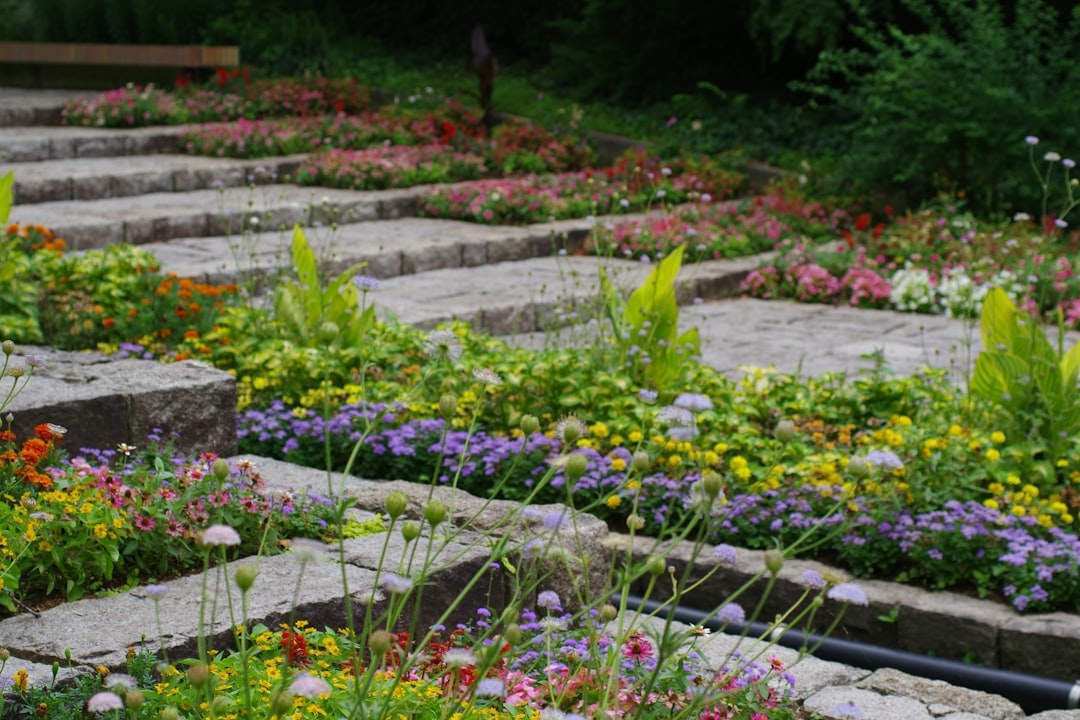
The smell hits you first. That dense, green-sweet combination of warm earth and bruised foliage that only exists on a summer morning in a garden that’s actually alive. Then the color resolves — a sweep of orange zinnias catching the early light, a clump of purple coneflowers humming with bees, the whole scene almost impossibly saturated against a backdrop of dark mulch. This is what a well-planned flower garden feels like from inside it. Getting there, though, requires understanding a few things that most beginner guides skip entirely.
This flower gardening beginners guide doesn’t assume you’re starting from zero knowledge — it assumes you’ve killed a few plants, read a few contradictory tips online, and want something more rigorous. Horticulture is a science. Gardening is its applied practice. The gap between struggling and thriving usually comes down to understanding why, not just what.
Understanding Your Garden’s Fundamentals Before You Plant a Single Seed
Most early garden failures trace back to one decision made before any plant was ever purchased: site selection. Light is the non-negotiable variable. Flowering plants — with very few exceptions — require a minimum of 6 hours of direct sun per day to bloom reliably. “Full sun” on a plant tag means exactly that. Many beginners underestimate how much shade a fence, a neighboring building, or even a deciduous tree in full leaf can cast. Before you design anything, track your proposed site at 9 a.m., noon, and 3 p.m. on a clear day. That 30-minute observation will save you a season of disappointment.
Soil is the second pillar. Most native garden soils in the US are either too compacted, too sandy, or too clay-heavy to support vigorous flower growth without amendment. The target is loamy soil with a pH between 6.0 and 7.0, which keeps most essential nutrients — nitrogen, phosphorus, potassium, and micronutrients like iron and manganese — chemically available to plant roots. A basic soil test kit from any garden center costs $10–$20 and tells you both pH and basic nutrient levels. Your local Cooperative Extension office often offers more detailed lab testing for $15–$25, with specific amendment recommendations for your region.
Amending Soil for Maximum Flower Performance
For most residential soils, the single most impactful amendment is finished compost. Incorporating 2–3 inches of compost into the top 8–10 inches of soil improves drainage in clay soils, increases water retention in sandy soils, feeds soil microbiota, and slightly acidifies alkaline soils. Do this in fall for spring planting, or 2–3 weeks before planting if you’re working in spring. Aged compost (dark, crumbly, smelling of forest floor) outperforms fresh material — fresh compost can temporarily tie up nitrogen as it continues to break down.
If your soil pH tests below 6.0, ground limestone at 5–10 lbs per 100 square feet will raise it incrementally. For pH above 7.5, granular sulfur lowers it, though this takes 3–6 months to fully register. Neither adjustment is instant — plan seasonally.
USDA Hardiness Zones and Why They Actually Matter
The USDA Plant Hardiness Zone Map divides the US into 13 zones based on average annual minimum winter temperatures, updated most recently in 2026. Zone 5 sees winter lows down to -20°F; Zone 9 rarely drops below 20°F. These zones govern one critical question: which perennials will survive your winters. Annuals, by definition, complete their entire life cycle in one season and don’t overwinter regardless of zone — so zone matters less for zinnias and marigolds and enormously for lavender, coneflowers, and rudbeckia.
Every plant tag sold in the US should carry a zone range. A coneflower (Echinacea purpurea) rated for Zones 3–9 will come back reliably from its roots each spring across most of the continental US. A lantana rated for Zones 10–11 will behave as an annual everywhere else. Knowing your zone isn’t optional — it’s the foundation of any perennial planting strategy.
Frost Dates: The Practical Planting Calendar
Beyond zones, your local last frost date in spring and first frost date in fall define your actual growing window. These dates vary by 6–8 weeks between regions and can vary by 2–3 weeks even within a single county based on elevation and proximity to water. The Old Farmer’s Almanac maintains a free frost date calculator by zip code that remains one of the most reliable quick references available.
As a general framework for most temperate US regions:
- Early spring (4–6 weeks before last frost): Start warm-season annuals (zinnias, cosmos, marigolds) indoors under grow lights. Sow cool-season annuals (pansies, snapdragons, larkspur) directly outdoors in mild climates.
- After last frost: Transplant hardened-off seedlings outdoors. Direct-sow zinnias, sunflowers, and nasturtiums.
- Early summer: Plant dahlia tubers once soil reaches 60°F. Succession-sow cosmos and zinnias every 3–4 weeks for continuous bloom.
- Late summer (8–10 weeks before first frost): Plant spring-blooming bulbs (tulips, daffodils, alliums) in Zones 3–7. Divide and transplant established perennials.
- Fall: Cut back spent annuals, mulch perennial beds with 2–3 inches of shredded leaves or wood chips to insulate roots through winter.
- Winter: Order seeds and bare-root plants for the coming season. Review what worked and what didn’t.
Choosing the Right Flowers: Annuals, Perennials, and Biennials Explained
These three categories describe a plant’s life cycle, and confusing them is the source of enormous beginner frustration. Annuals — zinnias, marigolds, petunias, impatiens — complete germination, growth, flowering, seeding, and death within a single growing season. They bloom prolifically precisely because reproduction is their only remaining biological imperative. Perennials — coneflowers, black-eyed Susans, daylilies, peonies — return from their root systems each year but typically bloom for a shorter window, 2–6 weeks for most species. Biennials, the least understood category, grow foliage the first year and bloom the second before dying — foxglove and hollyhock are the most common examples.
A well-designed flower garden layers all three. Annuals provide season-long color. Perennials provide structure, reliability, and year-over-year value (a single peony clump, purchased for $15–$25, can bloom for 50+ years with minimal care). Biennials add vertical drama and self-seed freely once established, effectively becoming a permanent, low-maintenance presence.
Best Starter Flowers for Beginner Gardens
For first-season success, prioritize species with wide adaptability and forgiving care requirements:
- Zinnias (Zinnia elegans): Direct-sow after last frost in full sun. Germinate in 5–7 days, bloom in 8–10 weeks, and continue until hard frost. Highly drought-tolerant once established. Avoid overhead watering to prevent powdery mildew.
- Black-eyed Susan (Rudbeckia hirta): Native to North American prairies. Zones 3–9. Extremely drought-tolerant, blooms June through October, and attracts goldfinches to the seed heads in fall.
- Purple coneflower (Echinacea purpurea): Native perennial, Zones 3–9. Establishes slowly in year one but becomes drought-tolerant and self-seeding by year two. Highly attractive to pollinators.
- Cosmos (Cosmos bipinnatus): Fast-growing annual that thrives in poor soil — heavy fertilization actually reduces blooming. Direct-sow after frost. Blooms in 7–8 weeks.
- Marigolds (Tagetes spp.): Pest-deterrent properties (particularly against nematodes) make them useful throughout the garden. Full sun, heat-tolerant, and available in sizes from 6 inches to 4 feet depending on species.
- Daylilies (Hemerocallis spp.): Nearly indestructible perennials for Zones 3–9. Each flower lasts one day, but a mature clump produces dozens of buds per stem. Divide every 3–4 years to maintain vigor.
A Reader Story: The Year of the Wrong Soil
A gardener in suburban Ohio — we’ll call her Margaret — spent two consecutive springs planting hybrid tea roses and watching them stall out at 8 inches, producing a few weak blooms before fading. She’d amended with bagged topsoil from a big-box retailer, watered regularly, and positioned the bed in what she described as “full sun.” The third year, on the advice of her county extension office, she sent a soil sample to the state lab. Results: pH 7.9, compacted clay subsoil, and negligible organic matter. Her “bagged topsoil” had been largely fill dirt. The following fall, she incorporated 4 inches of finished compost and added granular sulfur at the recommended rate. The next spring, her roses grew 3 feet by June.
The lesson isn’t dramatic. It’s this: plants communicate through their growth patterns, and slow or stunted growth almost always has a diagnosable cause rooted in soil chemistry or structure. Before adding more plants or more fertilizer, test what’s already there.
Planting Technique: Getting the Details Right
Correct planting depth is more consequential than most beginners realize. The standard rule — plant at the same depth the plant was growing in its nursery container — exists because the crown of the plant (the junction between roots and stem) is physiologically distinct from both. Burying it invites crown rot; exposing it invites desiccation. For bulbs, the general formula is to plant at a depth three times the bulb’s diameter: a 2-inch tulip bulb goes 6 inches deep; a 1-inch grape hyacinth goes 3 inches deep.
Spacing is equally critical. Crowded plants compete for light, water, and nutrients, and reduced airflow between leaves increases humidity and fungal disease pressure. Most seed packets and plant tags list recommended spacing; take these seriously. A garden that looks sparse in May will be appropriately full by July if spacing is correct. The instinct to fill every gap immediately — with extra plants, with close spacing — is one of the most common beginner errors and one of the hardest to resist.
Watering Principles That Actually Work
The single most impactful watering change a beginning gardener can make is switching from frequent shallow watering to infrequent deep watering. Shallow daily watering keeps moisture in the top 2–3 inches of soil, which encourages roots to remain shallow. Deep watering — applying 1 inch of water per week, delivered in 1–2 sessions — pushes moisture down 6–8 inches, training roots to follow it deeper. Deeply rooted plants are dramatically more drought-tolerant and more structurally stable.
One inch of water per week is a measurable standard, not an approximation. Place an empty tuna can in your garden while running your sprinkler — when the can holds 1 inch of water, you’ve delivered the right amount. Drip irrigation and soaker hoses deliver water directly to the root zone, reducing evaporative loss by 30–50% compared to overhead sprinklers and keeping foliage dry, which reduces fungal disease.
Fertilizing Flowering Plants: Less Is Often More
Nitrogen drives vegetative growth — leaves and stems. Phosphorus supports root development and flower production. Potassium governs overall plant health and stress tolerance. A balanced granular fertilizer (10-10-10) applied at label rates at planting provides a reliable foundation. For flowering plants specifically, a low-nitrogen, high-phosphorus formula — such as 5-10-5 — applied at first bud set can noticeably increase bloom count and size.
Over-fertilizing, particularly with excess nitrogen, produces exactly the opposite of what most gardeners want: lush, dark green foliage with minimal flowers. This is why cosmos and nasturtiums — both heavy bloomers — are traditionally grown in relatively poor, unamended soil. Their blooming response is partially a stress response, triggered by nutrient limitation. Understanding this counterintuitive dynamic saves money on fertilizer and produces better results.
Slow-release granular fertilizers (often labeled “90-day” or “season-long”) offer a practical advantage for busy gardeners: one application per season rather than repeated liquid feeding every 2–3 weeks. Espoma Garden-Tone ($12–$18 for a 4-lb bag) and Osmocote Plus ($15–$22 for a 2-lb container) are widely available, consistent performers at price points accessible to hobby gardeners.
Managing Pests and Disease Without Reaching for Chemicals First
Most garden pest problems are manageable — and often preventable — through cultural practices rather than chemical intervention. Healthy, properly spaced plants in appropriate soil conditions simply attract fewer pests and recover more quickly from those they do encounter. This isn’t an ideological position; it’s practical horticulture backed by decades of integrated pest management research from land-grant universities across the US.
The Most Common Flower Garden Pests and Their Solutions
Aphids cluster on new growth and the undersides of leaves, feeding on plant sap. A strong jet of water from a garden hose dislodges them effectively; they rarely climb back onto the same plant. Insecticidal soap spray (available pre-mixed for $8–$12 or diluted from concentrate) works on contact for severe infestations.
Japanese beetles (active June–August across most of the eastern US) skeletonize foliage and flowers. Hand-picking into soapy water in early morning, when beetles are sluggish, is the most effective small-scale control. Neem oil applied preventively deters feeding; pyrethrin-based sprays provide rapid knockdown for severe infestations.
Powdery mildew, a fungal disease that produces white, talcum-like patches on foliage, thrives in humid conditions with poor air circulation. Prevention — proper spacing, avoiding overhead watering, selecting resistant cultivars — outperforms any treatment. Potassium bicarbonate spray (1 tablespoon per gallon of water) effectively manages early infections on susceptible plants like phlox and zinnias.
Slugs and snails feed at night on seedlings and soft foliage. Iron phosphate baits (sold as Sluggo or similar, at $12–$18 per lb) are highly effective, safe around pets and wildlife, and approved for organic gardens. Diatomaceous earth applied as a dry barrier works in dry conditions but loses effectiveness when wet.
Deadheading, Pruning, and Extending Your Bloom Season
Deadheading — removing spent flowers before they set seed — is one of the highest-return maintenance tasks in a flower garden. The biological logic is straightforward: a plant that completes seed production has fulfilled its reproductive purpose and may reduce flower production as a result. Removing spent blooms signals continued reproductive urgency, sustaining bloom production for weeks or months beyond what an undeadheaded plant produces.
The technique varies by plant. For zinnias, marigolds, and cosmos, pinch or cut spent blooms back to the next set of leaves or lateral bud. For daylilies, snap off spent individual flowers daily; when all buds on a scape have opened and finished, cut the entire scape to the base. For coneflowers and rudbeckias, you have a choice: deadhead for continued blooming through fall, or leave seed heads intact from late summer onward to feed goldfinches and chickadees through winter. Both are valid strategies.
Pinching back young annuals — removing the growing tip when plants are 4–6 inches tall — forces lateral branching and produces a bushier plant with significantly more flowering stems. One pinch on a young zinnia seedling at transplanting can double or triple the eventual flower count. It feels counterintuitive to remove healthy growth, but the branching response is predictable and reliable.
Designing for Continuous Color: A Seasonal Bloom Calendar
A common disappointment for new gardeners: planting an entire bed of the same species and experiencing one spectacular week of bloom followed by months of green foliage. Continuous color requires intentional succession planting across species with different bloom windows. The following framework works for most temperate US gardens (adjust 2–4 weeks earlier for Zones 7–9, later for Zones 3–4):
- Early spring (March–April): Bulbs — tulips, daffodils, alliums, and grape hyacinths planted the previous fall. Pansies and violas, which tolerate light frost. Hellebores, among the earliest perennials to bloom, sometimes flowering through snow.
- Late spring (May): Peonies, bleeding heart, columbine, and iris provide the classic late-spring display. Catmint (Nepeta) begins blooming and continues with minimal care into fall.
- Early summer (June): Salvia, lavender, coreopsis, and the first flush of daylilies. Direct-sown zinnias and cosmos from a May sowing begin flowering.
- Midsummer (July–August): Peak season for most annuals. Echinacea, rudbeckia, agastache, and butterfly weed anchor the perennial layer. Dahlias reach full production and continue until frost.
- Late summer into fall (September–October): Asters, sedums, ornamental grasses, and late-blooming rudbeckia varieties carry the garden into cooling temperatures. A September succession sowing of pansies (in mild climates) bridges into winter interest.
Designing with this calendar in mind — assigning each planting zone at least two distinct bloom windows across the season — transforms a garden from a one-act spectacle into a months-long display.
Practical Tips to Level Up Your Flower Garden This Season
Mulch Correctly and Consistently
A 2–3 inch layer of organic mulch (shredded hardwood bark, shredded leaves, or straw) around — not touching — plant stems suppresses weed germination by blocking light, moderates soil temperature by 5–10°F, reduces evaporative moisture loss by up to 25%, and gradually adds organic matter to the soil as it breaks down. This is one of the highest-leverage maintenance investments in any garden. A cubic yard of shredded hardwood mulch covers approximately 100 square feet at 3 inches deep and costs $30–$50 depending on region.
Keep a Simple Garden Journal
Recording plant names, purchase sources, planting dates, observations about performance, and first and last frost dates takes 5 minutes per week and generates an irreplaceable personal knowledge base. After two or three seasons, you’ll have locally calibrated data that no general gardening guide can provide — specific variety performance in your exact microclimate, your actual frost dates versus regional averages, and which plants delivered the best return on investment for your aesthetic goals.
Learn to Read Plant Stress Signals Early
Yellowing lower leaves on established plants often indicate nitrogen deficiency or overwatering. Wilting in the morning, when temperatures are still cool, suggests root problems (rot or root-feeding pests) rather than simple water stress. Pale, washed-out foliage with stunted growth in full sun frequently signals iron deficiency in alkaline soils. Catching these signals early — and diagnosing correctly before treating — prevents the well-intentioned damage of applying the wrong remedy.
Grow From Seed at Least Once
Starting flowers from seed costs a fraction of nursery transplants — a packet of zinnia seeds containing 50–100 seeds typically sells for $2–$4, versus $4–$6 per six-pack of seedlings — and opens access to hundreds of variety options unavailable in any local nursery. Start indoors 6–8 weeks before last frost under fluorescent or LED grow lights positioned 2–4 inches above the seedling tray. Bottom-watering (filling the tray beneath the cells rather than watering from above) reduces damping-off, a fungal seedling disease that kills young plants at the soil line.
Frequently Asked Questions
What is the easiest flower to grow for a complete beginner?
Zinnias are the most reliably successful flower for first-time gardeners. Direct-sow seeds after the last frost date in full sun, water at the base rather than overhead, and deadhead spent blooms. They germinate in 5–7 days, bloom in 8–10 weeks, and continue producing flowers until hard frost. Marigolds and sunflowers are equally forgiving and nearly as rewarding.
How do I know which flowers will grow in my area?
Look up your USDA Plant Hardiness Zone using your zip code at planthardiness.ars.usda.gov. Match your zone to the zone range listed on any plant tag or seed packet. For annuals, zone matters less — focus instead on your last spring frost date to time planting correctly. Your local Cooperative Extension office provides free, regionally specific planting guides calibrated to your county’s climate.
How often should I water my flower garden?
Most established flower gardens need approximately 1 inch of water per week, delivered in 1–2 deep watering sessions rather than daily shallow watering. Sandy soils may need water twice weekly; clay soils retain moisture longer and may need only one deep session. Newly transplanted seedlings need more frequent watering for the first 1–2 weeks until roots establish. An empty tuna can placed in the garden measures exactly when 1 inch has been applied during irrigation.
When should I plant flowers in spring?
The timing depends on the flower type. Cool-season annuals like pansies and snapdragons can go out 4–6 weeks before the last frost date. Warm-season annuals — zinnias, marigolds, cosmos — should be planted after the last frost date when soil has reached at least 60°F. Tender perennials and dahlia tubers go in once soil temperatures are consistently above 60°F. Use your local frost dates as the anchor for all spring planting decisions.
Why are my flowers not blooming?
The three most common causes are insufficient sunlight (fewer than 6 hours of direct sun), excess nitrogen from over-fertilizing (which promotes foliage at the expense of flowers), and plants that haven’t yet matured to blooming age (perennials often don’t bloom fully until their second or third season). Check light exposure first — it’s the most frequently misdiagnosed problem. If light is adequate, reduce nitrogen fertilizer and switch to a high-phosphorus formula at bud set.
Where to Go From Here
This flower gardening beginners guide covers the biology and practice that separates a struggling garden from a thriving one. But the most valuable thing any intermediate gardener can do now is narrow focus rather than expand it. Pick 5–7 species you genuinely love, grow them well across two full seasons, and develop real fluency with their specific needs. Broad and shallow plant knowledge produces mediocre gardens. Deep familiarity with a curated palette produces remarkable ones.
Your next practical step: pull up the USDA zone map and your local frost date calendar tonight. Cross-reference them against the species list above and identify three flowers suited to your climate that you haven’t grown yet. Order seeds in January and February — the best selection from specialty seed companies like Baker Creek, Johnny’s Selected Seeds, and Floret Farm sells out by late winter. Your spring garden starts in the depth of winter, on paper, long before the soil is workable.
The gap between a decent garden and a genuinely beautiful one is mostly a knowledge gap — and you’re already closing it.