The Ultimate Guide to Flower Arranging: Techniques, Tools, and Design Principles
19 min read
Contents:
- A Brief History of Floral Design (and Why It Still Matters)
- Essential Tools for Flower Arranging: What You Actually Need
- The Non-Negotiables
- Nice-to-Have Tools
- The Flower Arranging Techniques Guide: Core Methods Explained
- The Stem Grid Technique
- The Spiral Technique
- The Armature Technique
- Ikebana-Inspired Minimalism
- The Massed Arrangement
- Design Principles That Elevate Every Arrangement
- The Rule of Odds
- Focal Flowers, Supporting Flowers, and Filler
- Color Theory for Floral Designers
- Scale and Proportion
- Texture and Negative Space
- Choosing and Sourcing Flowers for Home Arrangements
- Grocery Store vs. Florist vs. Farmers Market
- How to Select Fresh Flowers
- Seasonal Flower Availability in the US
- Caring for Your Arrangements: Extending Vase Life
- The Essential Care Routine
- Variety-Specific Care Notes
- Small-Space Flower Arranging: Specific Strategies for Apartment Living
- Vase Strategies for Small Spaces
- The Single-Stem Strategy
- A Reader’s Story
- Working with Foraged and Dried Materials
- Flower Arranging Styles to Study and Experiment With
- Garden Style (or “English Garden”)
- European Style
- Japanese Ikebana
- Sculptural / Contemporary
- Practical Flower Arranging Tips: A Consolidated Reference
- Building a Practice: How to Actually Get Better at Flower Arranging
- The Weekly $15 Practice Model
- Learning Resources Worth Your Time
- Frequently Asked Questions About Flower Arranging
- What are the basic flower arranging techniques every beginner should learn first?
- How do I make flowers last longer in a vase?
- What is the best flower arrangement style for small spaces or apartments?
- How many flowers do I need for a basic arrangement?
- What flowers are best for beginners to arrange?
- Your Next Arrangement Starts Now
A single stem, placed with intention, can transform a room. That’s not poetic exaggeration — it’s the foundational truth that every great floral designer eventually discovers. Flower arranging is not a talent reserved for professionals with sprawling studio spaces and wholesale access. It’s a learnable craft, one built on a handful of repeatable techniques, a modest set of tools, and design principles that have guided arrangers for centuries. This flower arranging techniques guide breaks all of it down — from the mechanics of a proper stem cut to the color theory behind arrangements that stop people mid-step.
Whether you’re working with a single mason jar on a kitchen counter or a collection of mismatched vases on a windowsill, the principles here apply. Apartment arrangers, take note: limited space is not a limitation. It’s a creative constraint, and the best designers will tell you those are actually a gift.
A Brief History of Floral Design (and Why It Still Matters)
Humans have been arranging flowers intentionally for at least 3,000 years. Ancient Egyptians placed lotus blossoms in wide-mouthed vases as offerings to the gods. Greek and Roman cultures wove flowers into garlands and used them in ceremonial contexts. By the 17th century, Dutch and Flemish painters were immortalizing elaborate floral compositions on canvas — arrangements so complex and botanically precise that historians use them to track which flowers were available in Europe at the time.
The reason this history matters for a modern home arranger is simple: most of what we consider “good design” today is directly descended from these traditions. The triangular silhouette that anchors most Western arrangements? Rooted in 18th-century European floristry. The minimalist single-stem aesthetic? Influenced by ikebana, the Japanese art of flower arranging that dates back to the 6th century and treats negative space as an active design element.
Understanding where these techniques came from helps you apply them with more confidence — and break them more deliberately when the time comes.
Essential Tools for Flower Arranging: What You Actually Need
The floral industry is full of specialty tools, and most of them are unnecessary for home arrangers. Here’s what genuinely earns its place in a small-apartment toolkit.
The Non-Negotiables
- Floral shears or sharp bypass pruners: A clean, angled cut is the single most important mechanical step in flower arranging. Dull scissors crush the stem’s vascular tissue, blocking water uptake and cutting your arrangement’s lifespan in half. A decent pair of Japanese-style bypass pruners costs between $15 and $35 and will outlast dozens of cheap alternatives.
- A clean bucket or deep vase: Flowers need to hydrate for at least two hours — ideally overnight — before being arranged. A simple 5-gallon bucket works perfectly and doubles as conditioning storage.
- Floral tape: The stretchy, self-adhesive green tape used to build grids across vase openings, secure foam, and reinforce delicate stems. A single roll costs under $5 and lasts months.
- Floral foam (or a sustainable alternative): Traditional green foam (often sold as Oasis) is useful for structured arrangements but is not biodegradable. Alternatives like Agra-Wool, chicken wire, or kenzans (the heavy metal pin frogs used in ikebana) are increasingly popular and work beautifully.
- A sharp knife: For woody stems and thicker flower stalks, a knife produces a cleaner angled cut than scissors.
Nice-to-Have Tools
- Flower food packets: The small packets included with grocery store bouquets contain a precise formula — typically citric acid to lower pH, sugar for nutrition, and bleach to prevent bacterial growth. Homemade versions (1 teaspoon sugar + 1 teaspoon bleach per quart of water) work nearly as well.
- Stem wire and floral picks: Used to reinforce drooping stems or extend short ones. Particularly useful for gerbera daisies, which have notoriously hollow, fragile stems.
- Spray bottle: A fine mist on petals (not stems in water) helps delicate blooms like peonies and ranunculus stay fresh longer, especially in dry apartment air.
💡 What the Pros Know: Professional florists condition their flowers in water that’s been treated with a small amount of bleach (about 1/4 teaspoon per quart) and kept at 34–38°F overnight. This process — called “hardening” — allows stems to fully saturate before the arrangement is built, which extends vase life by 3–5 days. You don’t need a walk-in cooler. The bottom shelf of your refrigerator, away from fruit (which emits ethylene gas that accelerates wilting), works perfectly.
The Flower Arranging Techniques Guide: Core Methods Explained
There are dozens of specific arranging styles, but they all descend from a smaller set of foundational techniques. Master these, and you can execute almost any design you encounter.
The Stem Grid Technique
This is the first skill every serious home arranger should learn. A stem grid — made by crisscrossing strips of floral tape across the mouth of a vase — creates a support structure that holds stems in place without foam. It’s ideal for clear vases where foam would be visible, and it’s fully reusable.
To build one: run strips of tape horizontally across the vase opening, then vertically, creating squares roughly 1 inch wide. The stems drop into individual cells, allowing precise placement. For a standard 4-inch vase opening, a 3×3 grid (9 cells) provides sufficient structure for most medium-sized arrangements.
The Spiral Technique
Used primarily for hand-tied bouquets, the spiral technique involves holding stems at a 45-degree angle and adding each new stem in the same rotational direction — always to the right (or always to the left, but never alternating). This creates a natural spiral in the bunch that fans the blooms outward and allows the finished bouquet to stand on its own when trimmed flat at the base.
It takes practice. Most beginners find the first five stems easy and the next ten frustrating. The trick is to keep your grip point fixed — always hold the stems at the same spot, about two-thirds of the way down — and resist the urge to “fix” individual stems once they’re placed.
The Armature Technique
An armature is an internal structure — built from branches, chicken wire, or twisted vines — that supports stems without the use of foam or tape. This technique is borrowed from high-end event design, but it scales beautifully to small-space arrangements. A simple chicken wire ball stuffed loosely into a ceramic pitcher, for example, gives you a flexible grid that can hold asymmetric, garden-style designs that foam would make rigid and predictable.
Ikebana-Inspired Minimalism
Traditional ikebana operates on a three-line structure representing heaven, earth, and humankind — with specific angle ratios (typically 45°, 75°, and 15° from vertical) governing stem placement. You don’t need to follow the philosophy literally to benefit from its visual logic. The core principle — that three well-placed stems communicate more than thirty crowded ones — is transformative for apartment arrangers working with small vases and limited flowers.
Try this: take five stems of the same flower and arrange them in a shallow dish with a kenzan. Remove two. Look at what remains. Remove one more. The arrangement almost always improves with each subtraction. That’s ikebana’s most practical lesson.
The Massed Arrangement
The opposite of ikebana. Massed arrangements pack a single type of flower — or a deliberately limited palette — into a dense, textured composition. A tight cluster of 25 garden roses in a low ceramic bowl, all cut to the same height, creates a visual impact that mixed arrangements rarely match. The technique works best with flowers that have open, rounded heads: hydrangeas, ranunculus, peonies, and dahlias are all ideal candidates.
Design Principles That Elevate Every Arrangement
Technique handles the mechanics. Design principles handle the aesthetics. These are the rules behind what makes an arrangement feel intentional rather than accidental.
The Rule of Odds
Odd numbers of stems, blooms, or focal flowers consistently create more dynamic, visually interesting arrangements than even numbers. Three tulips feel designed. Four tulips feel like leftovers. This principle applies at every scale — three varieties of flower, five stems of each, arranged in a grouping of seven — and it’s one of the most reliable shortcuts to a professional-looking result.
Focal Flowers, Supporting Flowers, and Filler
Every successful arrangement uses this three-tier hierarchy, whether or not the arranger knows it by name.
- Focal flowers are the stars — large, open, visually dominant blooms that draw the eye first. Peonies, dahlias, garden roses, sunflowers, and proteas are classic focal flowers. An arrangement typically needs 1–3 focal flowers, depending on size.
- Supporting flowers are medium-sized blooms that frame and complement the focal flowers. Spray roses, ranunculus, tulips, and lisianthus fill this role beautifully.
- Filler adds texture, movement, and scale contrast. Baby’s breath is the most recognizable filler, but more interesting options include waxflower, astilbe, scabiosa pods, eucalyptus, and dried grasses.
For a small-space arrangement in a 6-inch vase, a workable ratio is 2 focal flowers, 5–7 supporting flowers, and 3–4 stems of filler. That’s a complete arrangement for under $20 at most grocery store floral departments.
Color Theory for Floral Designers
You don’t need a degree in art to use color theory effectively. Three approaches cover 90% of successful floral color work:
- Monochromatic: One color in multiple tones, tints, and shades. A monochromatic arrangement in blush, soft pink, and deep rose is sophisticated and cohesive. It’s also forgiving — within a single color family, almost any combination works.
- Analogous: Two or three colors that sit adjacent on the color wheel. Purple, blue-purple, and blue. Orange, coral, and peach. Analogous arrangements feel harmonious and organic — they mimic the way color transitions in nature.
- Complementary: Colors directly opposite each other on the wheel. Orange and blue. Purple and yellow. These pairings create high contrast and visual energy. Used well, they’re stunning. Used carelessly, they’re jarring. The key is to let one color dominate (about 70%) and use the complement as an accent (30%).
Scale and Proportion
The classical guideline is that the visible height of the arrangement should be 1.5 to 2 times the height of the container. A 6-inch vase, by this rule, supports an arrangement 9–12 inches tall. This isn’t a rigid law — ikebana regularly breaks it in beautiful ways — but it’s a reliable starting point for arrangements that feel balanced rather than top-heavy or stunted.
For small-space arrangers: low, wide compositions in shallow bowls or compote dishes work exceptionally well on coffee tables and narrow sideboards. They don’t block sight lines and feel intentionally designed rather than shrunken.
Texture and Negative Space
Texture is the difference between an arrangement that photographs beautifully and one that looks flat in person. Combine smooth petals (roses, tulips) with ruffled petals (ranunculus, peonies), spiky elements (allium, thistle, protea), and soft, airy fillers (gypsophila, astilbe). The contrast makes each element more visible and interesting.
Negative space — the deliberate absence of material — is equally powerful. Especially in smaller arrangements, leaving some open air within the design prevents the overcrowded look that plagues most beginner work. One branch of twisted willow, placed asymmetrically to extend well beyond the vase, does more for the composition than ten extra stems of filler.
Choosing and Sourcing Flowers for Home Arrangements
The best technique in the world can’t compensate for flowers that were already dying when you bought them. Sourcing matters.
Grocery Store vs. Florist vs. Farmers Market
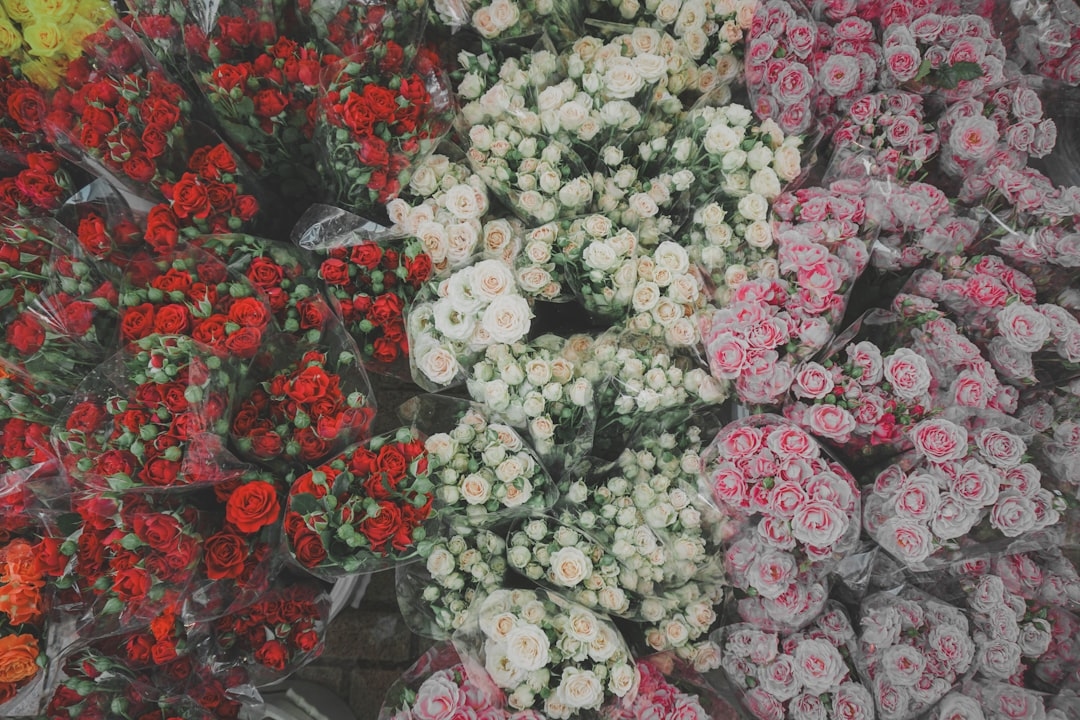
Grocery store flowers — Trader Joe’s, Whole Foods, Costco — have improved dramatically over the past decade and represent genuinely good value. Trader Joe’s, in particular, is consistently cited by professional florists as a reliable source for everyday stems; their $3–$5 single-variety bunches offer excellent quality-to-cost ratios. The limitation is selection and seasonality.
Local florists offer access to specialty and seasonal varieties, custom sourcing, and the knowledge to help you choose stems that will work together. Prices are higher, but so is the ceiling on what’s available. For a small-space arrangement built around one exceptional focal flower — a dinner-plate dahlia in August, a garden rose in June — a local florist is often the right call.
Farmers markets are the best option for seasonal, locally grown flowers, which are typically fresher than anything that’s been shipped from Ecuador or Colombia. In most US cities, the Saturday farmers market season runs from May through October, with winter markets in warmer climates. Locally grown flowers have often been cut within 24 hours of purchase, versus the 7–10 days in transit common for imported stems.
How to Select Fresh Flowers
Look for stems where the blooms are between one-quarter and one-half open. Fully open flowers are beautiful at the store and may be wilted by tomorrow. Tightly closed buds of certain varieties — like roses and peonies — will open gracefully at home, but others (like irises and daffodils) need to show some color before you can tell whether they’re healthy.
Check the water in the bucket. Clear water is a good sign. Cloudy, smelly water indicates bacterial buildup, which means the stems have likely already been compromised. Look at the leaves: they should be firm and green, not yellowing or slimy at the base.
Seasonal Flower Availability in the US
Working with seasonal flowers isn’t just more sustainable — it’s cheaper and produces better results, because seasonal stems are fresher and bred for their natural growing conditions. A rough seasonal guide for the continental US:
- Spring (March–May): Tulips, ranunculus, anemones, sweet peas, lilac, peonies (late May), daffodils, hyacinths.
- Summer (June–August): Dahlias, sunflowers, zinnias, garden roses, lavender, lisianthus, gladiolus, echinacea.
- Fall (September–November): Dahlias (through frost), marigolds, celosia, dried grasses, chrysanthemums, cosmos, late-season roses.
- Winter (December–February): Amaryllis, paperwhites, hellebores, forced branches (quince, cherry, forsythia), evergreen foliage, dried botanicals.
Caring for Your Arrangements: Extending Vase Life
Most cut flowers last 5–7 days under average home conditions. With the right care, many varieties will last 10–14 days. The difference comes down to a few consistent habits.
The Essential Care Routine
- Cut stems at a 45-degree angle before placing in water. The angled cut increases the surface area for water absorption and prevents the stem from resting flat on the bottom of the vase, which would block uptake entirely.
- Remove all foliage below the waterline. Submerged leaves decompose quickly, accelerating bacterial growth that clogs stem tissue. This single step has more impact on vase life than almost anything else.
- Change the water every two days. Clean water = longer-lasting flowers. While you’re at it, re-cut stems by about half an inch to open fresh tissue.
- Keep arrangements away from direct sunlight, heating vents, and ripe fruit. Heat accelerates wilting. Ethylene gas from fruit (especially apples, bananas, and avocados) triggers premature aging in nearby flowers. A cool room away from direct sun is ideal.
- Mist delicate blooms lightly. Peonies, sweet peas, and ranunculus benefit from a fine water mist on their petals, particularly in apartments with dry, heated air (common in Northeastern US winters).
Variety-Specific Care Notes
Tulips continue to grow after cutting — sometimes by 2–3 inches — and tend to reach toward light. Embrace the movement or rotate the vase regularly to keep the design balanced. A pin through the stem just below the flower head (an old Dutch trick) can slow the drooping.
Hydrangeas are prone to wilting suddenly, even in water. If a stem collapses, cut one inch off the base, then submerge the entire stem — bloom and all — in cool water for 30–45 minutes. In most cases, the bloom will revive completely.
Woody stems (lilac, viburnum, quince, forsythia) need a different preparation than soft stems. Use a hammer or knife to smash or split the bottom 2 inches of the stem, exposing more inner tissue to water. Some arrangers also make a vertical slit about an inch deep. Both approaches significantly improve uptake.
Daffodils and narcissus secrete a sap that is toxic to other flowers. Condition them separately for 24 hours in their own water before combining with other stems. Once conditioned, the sap secretion slows enough to coexist safely.
Small-Space Flower Arranging: Specific Strategies for Apartment Living
A studio apartment or small one-bedroom isn’t a compromise. It’s a curated environment where every object carries visual weight — which means a single, well-executed flower arrangement has disproportionate impact.
Vase Strategies for Small Spaces
The most useful vases for small-space arranging are not the large, statement vases that dominate home décor stores. They’re the 4–8 inch range: bud vases, small cylindrical vases, low compote dishes, and glass medicine bottles. These scale appropriately to apartment dimensions, require fewer stems (reducing cost), and can be grouped in clusters of three or five for a collected, intentional look.
Thrift stores are exceptional sources for interesting small vessels. The $2–$4 range regularly yields ceramic pitchers, vintage glass bottles, small earthenware crocks, and Japanese-made bud vases that would cost $30–$60 new. Many professional floral stylists source exclusively from thrift stores for their personal collections.
The Single-Stem Strategy
Three bud vases, each holding one carefully chosen stem, placed in a loose cluster on a windowsill — this arrangement, done well, is more sophisticated than a crowded grocery-store bouquet in a mason jar. The key is choosing stems with inherent visual interest: an open garden rose, a curving tulip, a branch of eucalyptus with berries. One stem should be slightly taller than the other two, reinforcing the rule of odds even at the smallest scale.
A Reader’s Story
Maya, a reader who reached out after taking a weekend workshop, described the moment that changed how she approached flower arranging in her 500-square-foot Brooklyn apartment: “I used to buy the big mixed bouquets because they felt like more for my money. But they never looked right in my space — too chaotic, too tall. Then I tried separating one $12 grocery store bouquet into three small vases and putting them in different spots in my apartment. It was the same flowers, but suddenly they felt intentional. My kitchen, my desk, and my bathroom all had flowers. It felt like a completely different apartment.”
That redistribution strategy — buying one medium bouquet and distributing it across multiple small vessels — is one of the most practical and underused techniques in small-space decorating. Fifteen stems across five bud vases, placed at different heights and in different rooms, consistently outperforms fifteen stems in one large vase that only benefits one corner of the apartment.
Working with Foraged and Dried Materials
Apartment arrangers have a secret advantage: the best filler materials are often free. Branches from the park (where permitted), dried seed heads from a community garden, stems of dried lavender, or bundles of wheat are all legitimate arrangement materials that cost nothing and last indefinitely.
Dried flower arranging has surged in popularity — dried pampas grass alone generated over 3.5 million Google searches in 2026 — and for good reason. A dried arrangement in a small apartment doesn’t require water changes, lasts months or years, and creates a textural, earth-toned aesthetic that photographs exceptionally well. Dried protea, bunny tail grass, dried strawflower, and lunaria (money plant) are all widely available at craft stores and online retailers for $10–$20 per bundle.
Flower Arranging Styles to Study and Experiment With
Knowing the major stylistic traditions gives you a vocabulary to work with — and a set of templates you can adapt, combine, or deliberately subvert.
Garden Style (or “English Garden”)
Loose, asymmetric, abundant, and naturalistic. Garden-style arrangements look as though the flowers were gathered from a summer garden and placed in a vase moments ago. Stems curve in different directions. Heights vary dramatically. Foliage trails over the edge of the container. The palette is typically soft and romantic: blush, cream, soft coral, dusty mauve, sage green.
Key flowers: garden roses (particularly David Austin varieties), sweet peas, ranunculus, clematis, jasmine vine, foxglove, and any flowering herb.
European Style
Dense, compact, and highly structured. European-style arrangements are typically low, rounded, and built very tightly — almost no negative space, with every stem supporting its neighbors. The overall shape is a dome or hemisphere. This style is technically demanding because each stem placement must account for the ones surrounding it.
Key flowers: roses, tulips, lisianthus, hyacinths, muscari (grape hyacinth), and compact foliage like ruscus or pittosporum.
Japanese Ikebana
As introduced earlier — minimalist, structural, philosophically rooted in the concept of bringing nature indoors in a way that communicates season, mood, and harmony. The three main schools (Ikenobo, Ohara, and Sogetsu) each have distinct rules, but all share the emphasis on negative space, asymmetry, and the beauty of individual stems rather than collective mass.
For apartment arrangers, Sogetsu is the most accessible school — it explicitly encourages the use of non-traditional materials and has no strict rules about flower type or container.
Sculptural / Contemporary
Increasingly prominent in editorial floral work and seen throughout social media floral accounts. Sculptural arrangements treat stems as three-dimensional art objects — flowers may be inverted, wired into unusual positions, or combined with non-botanical materials. This style requires confident technique and a willingness to experiment, but it’s accessible to anyone who’s comfortable with the basics.
Practical Flower Arranging Tips: A Consolidated Reference
These are the details that accumulate into skill over time. Worth bookmarking.
- Cut under water whenever possible. Cutting a stem in the air allows a small air bubble to enter the vascular tissue; submerging the cut prevents this. Fill a bowl with a few inches of water and make your final cuts there.
- Work from the center outward. Place your focal flowers first, at the center and slightly above the arrangement’s midpoint. Build outward and downward with supporting flowers, then fill gaps with filler and foliage.
- Use the “rotate and check” method. After adding every 3–4 stems, rotate the vase 90 degrees and evaluate. Arrangements are three-dimensional objects and need to look intentional from every angle, not just the front.
- Vary stem heights by increments of roughly 1.5 inches. Consistent but small height variations create visual rhythm without looking choppy. Large, irregular jumps in height tend to read as mistakes rather than design choices (unless you’re working in a very sculptural or garden style).
- Add foliage last, not first. Many beginners place foliage as a base layer. Professionals typically add foliage after flowers are placed, using it to fill gaps and soften edges rather than create structure.
- The “hand test” for freshness: Hold the arrangement loosely and gently tap the top. Fresh, firm stems will spring back. Soft, rubbery stems are dehydrated and may not revive.
- Clean your tools after every use. Floral shears that aren’t cleaned regularly harbor bacteria that transfer to cut stem ends and dramatically reduce vase life. A quick wipe with isopropyl alcohol takes 10 seconds and makes a measurable difference.
Building a Practice: How to Actually Get Better at Flower Arranging
Reading about technique is useful. Doing it weekly is what builds actual skill. Here’s a structured approach for a beginner-to-intermediate arranger working with a small budget and limited space.
The Weekly $15 Practice Model
Buy $15 worth of flowers every week for eight weeks. Each week, focus on one technique or principle: the first week, work only on the stem grid. The second week, try the spiral hand-tied bouquet. The third week, practice monochromatic color. The fourth week, try a massed arrangement. By week eight, you’ll have experimented with every major technique in this guide and built enough muscle memory to combine them fluidly.
Document every arrangement with a simple photo. Looking back at eight weeks of work is the single most motivating thing a developing arranger can do — the improvement is always more dramatic than it felt in the moment.
Learning Resources Worth Your Time
For books: The Flower Recipe Book by Alethea Harampolis and Jill Rizzo is widely considered the best practical guide for intermediate home arrangers. Ikebana: The Art of Arranging Flowers by Shozo Sato is the standard English-language introduction to the Japanese tradition.
For online learning: the YouTube channels of Floral Society, Sarah Ryhanen (Saipua), and Tobey Nelson Flowers offer high-quality, free instruction in everything from basic structure to advanced sculptural work. The Professional Floral Designers Association (PFDA) also offers introductory online courses starting around $99 for those who want structured curriculum.
Frequently Asked Questions About Flower Arranging
What are the basic flower arranging techniques every beginner should learn first?
Start with three fundamentals: the proper stem cut (45-degree angle, sharp shears, ideally under water), the tape grid for vase structure, and the focal/supporting/filler hierarchy for composition. These three techniques underlie nearly every arrangement style and will immediately improve your results before you learn anything else.
How do I make flowers last longer in a vase?
The most effective steps: re-cut stems at a 45-degree angle before placing them in clean water, remove all foliage below the waterline, change the water every two days, keep the arrangement in a cool spot away from direct sunlight and ripe fruit, and use a flower food packet (or a homemade version: 1 tsp sugar + 1 tsp bleach per quart of water). Done consistently, these steps extend most arrangements from 5–7 days to 10–14 days.
What is the best flower arrangement style for small spaces or apartments?
Low, wide compositions in shallow vessels and single-stem bud vase clusters work best in small spaces. They scale to apartment dimensions, don’t block sight lines, and feel deliberately designed. Distributing one medium bouquet across three to five small vases — rather than keeping all stems together — is an especially effective strategy that makes the same flowers feel more intentional and fills more of the apartment with greenery.
How many flowers do I need for a basic arrangement?
A complete, balanced arrangement for a 4–6 inch vase requires roughly 12–18 stems total: 2–3 focal flowers, 5–7 supporting flowers, and 3–5 stems of filler or foliage. At grocery store prices, this typically costs between $12 and $25. For a single bud vase or minimalist ikebana-style composition, 1–5 stems are sufficient and often more visually effective.
What flowers are best for beginners to arrange?
Tulips, sunflowers, alstroemeria, and chrysanthemums are forgiving, widely available, and long-lasting. Ranunculus and roses are slightly more demanding but enormously rewarding. Avoid starting with dahlias or sweet peas — both are beautiful but have short vase lives and specific conditioning requirements that can frustrate new arrangers before they’ve built enough baseline technique to troubleshoot.
Your Next Arrangement Starts Now
This flower arranging techniques guide covers a lot of ground — because flower arranging is genuinely deep, and you deserve the full picture rather than a surface-level overview. But depth shouldn’t be paralyzing. The path forward is simple: buy five stems of something you like, find a vessel that fits your space, and make something. It won’t be perfect. It doesn’t need to be.
The arrangers who get genuinely good at this are not the ones who wait until they have the right vase or the right flowers or the right amount of space. They’re the ones who make something with what’s available, photograph it, and do it again next week. Small apartment or not, the most beautiful arrangements are built from practice, not from perfection.
Start with one bunch of grocery store tulips. Separate them into three bud vases. Place them where you’ll see them throughout your day. Notice how the space feels different. That’s the beginning of everything else.