How to Price Flower Arrangements: A Complete Pricing Guide for Florists
14 min read
Contents:
- Why Flower Arrangement Pricing Is Harder Than It Looks
- The Foundation: Understanding Your Actual Costs
- Flower and Foliage Costs (COGS)
- Hardgoods and Supplies
- Labor
- Overhead
- The Core Pricing Formula for Flower Arrangements
- What Markup Should You Use?
- Pricing Flower Arrangements by Type
- Hand-Tied and Wrapped Bouquets
- Vase Arrangements
- Wedding Arrangements
- Sympathy and Funeral Arrangements
- Event and Corporate Arrangements
- Labor: The Line Item Most Florists Get Wrong
- Setting Your Labor Rate
- How to Factor in Overhead Costs
- Seasonal Pricing Adjustments
- Valentine’s Day and Mother’s Day
- Seasonal Flower Availability
- Building a Pricing Calendar
- This Pricing Flower Arrangements Guide Applied: Real-World Examples
- Example 1: $65 Mixed Bouquet
- Example 2: $225 Bridal Bouquet
- Example 3: $180 Sympathy Standing Spray
- Communicating Price to Customers Without Losing the Sale
- Offer Three Price Points
- Educate Without Over-Explaining
- Never Apologize for Your Prices
- Profit Margins: What Should You Actually Aim For?
- Pricing for Profit: Advanced Strategies
- Recipe Costing
- Price Floors
- Delivery Pricing
- Wholesale Account Discounts
- Common Pricing Mistakes and How to Avoid Them
- Frequently Asked Questions
- What is the standard markup for flower arrangements?
- How do I price a wedding flower arrangement?
- What profit margin should a florist aim for?
- How do I adjust flower arrangement prices for Valentine’s Day?
- Should I charge for flower arrangement delivery?
- Build Your Pricing System Before Your Next Order
Most florists are undercharging — and they don’t realize it until they’re exhausted and barely breaking even. Pricing flower arrangements isn’t guesswork, and it isn’t just “what the market will bear.” It’s a formula. Get it right, and your shop becomes sustainable. Get it wrong, and every beautiful arrangement you sell quietly bleeds your business.
This pricing flower arrangements guide covers everything: the core markup formula, labor and overhead calculations, pricing by arrangement type, seasonal adjustments, and how to handle clients who push back on cost. Whether you’ve been selling flowers for two months or twenty years, there’s a number somewhere in your pricing that isn’t working as hard as it should.
Why Flower Arrangement Pricing Is Harder Than It Looks
Flowers are perishable. That single fact makes floral pricing more complex than pricing a candle or a piece of furniture. Unsold inventory doesn’t sit on a shelf — it wilts, and that loss comes directly out of your margin.
Then there’s the variability. Wholesale flower prices fluctuate weekly based on season, weather, fuel costs, and global supply chains. A stem of garden roses that costs $1.80 in September might cost $3.50 in February, two weeks before Valentine’s Day. Your retail prices need to absorb that volatility without surprising your customers or destroying your profitability.
Add to that the invisible costs — your time designing, the gas to pick up orders, the credit card processing fees, the tissue paper — and you can see why so many florists price from instinct rather than math. Instinct, unfortunately, tends to undercharge.
The Foundation: Understanding Your Actual Costs
Before you calculate a single retail price, you need a clear picture of what each arrangement actually costs you. Costs fall into four buckets:
1. Flower and Foliage Costs (COGS)
This is your wholesale cost for every stem in the arrangement. Track it per stem, not per bunch. A bunch of 10 tulips that costs $8 wholesale means each stem costs $0.80. If your design uses 12 tulips, your tulip COGS is $9.60.
Don’t forget foliage. Eucalyptus, ruscus, pittosporum — these are often priced loosely or written off, but they add up fast. A typical 12-stem mixed bouquet might include $3–$6 in foliage alone.
2. Hardgoods and Supplies
Everything that isn’t a stem has a cost: vases, foam, wrapping paper, ribbon, pins, water tubes, twine, and tissue. These are often called “hardgoods” in the industry. A ceramic vase that costs you $4 wholesale should be priced into the arrangement — it is not a gift. Ribbon and wrap for a hand-tied bouquet might cost $0.75–$1.50 per order.
3. Labor
This is the most undercalculated cost in floral design. Track how long it actually takes to build each arrangement type. A hand-tied bouquet might take 20 minutes; a sympathy spray might take 90 minutes. At a labor rate of $18/hour (your wage or the wage of the designer doing the work), that’s $6 and $27 in labor, respectively — before you’ve added any profit margin.
4. Overhead
Rent, utilities, insurance, software, website hosting, credit card fees, delivery vehicle costs — these are real expenses that must be covered by your pricing. A common method is to calculate your monthly overhead, divide by the number of arrangements you produce per month, and add that flat figure to every order. If your monthly overhead is $3,000 and you produce 150 arrangements per month, that’s $20 in overhead per arrangement.
- Wholesale flowers (12 stems): $14.00
- Foliage: $3.50
- Wrap, ribbon, water tube: $1.25
- Labor (25 min @ $18/hr): $7.50
- Overhead allocation: $20.00
- Total Cost: $46.25
- Retail at 2.5x stem markup + labor + overhead: ~$72
The Core Pricing Formula for Flower Arrangements
The floral industry has used a standard markup formula for decades. It’s not perfect, but it’s a proven starting point:
Retail Price = (Wholesale Flower Cost × Markup) + Labor + Hardgoods + Overhead
The markup multiplier on wholesale flowers is typically 3x to 4x for most retail florists. Here’s what that looks like in practice:
- Wholesale stem cost: $1.50 → Retail contribution: $4.50–$6.00
- Wholesale stem cost: $3.00 → Retail contribution: $9.00–$12.00
- Wholesale stem cost: $5.00 → Retail contribution: $15.00–$20.00
Some florists use a simpler “recipe cost × 3.5” formula and add labor separately. Others fold everything — flowers, supplies, labor, overhead — into a single cost figure and mark that up by 2x to 2.5x. Either method works if you’re consistent and honest about what goes into your cost number.
What Markup Should You Use?
A 3x markup covers costs and leaves a modest margin. A 4x markup is where most healthy retail floral businesses operate. High-end studios and luxury event florists often price at 5x or higher on premium stems, because their brand, design skill, and client experience command it.
If you’re consistently selling out and turning down orders, your prices are too low. If you’re struggling to book clients, pricing may be one factor — but it’s rarely the only one.
Pricing Flower Arrangements by Type
Not all arrangements have the same cost structure. A hand-tied bouquet is quick; a funeral casket spray is not. Here’s how to think about pricing across the most common arrangement categories.
Hand-Tied and Wrapped Bouquets
These are your highest-volume, fastest-to-produce arrangements. Design time runs 15–30 minutes for a skilled designer. Because labor is lower, the stem cost and markup do most of the pricing work. Retail prices for hand-tied bouquets typically range from $45 to $150, depending on stem count, flower selection, and packaging.
A useful benchmark: a “market-style” wrapped bouquet with 15–18 mixed stems (including some premium focal flowers) should retail around $65–$85 in most US markets.
Vase Arrangements
Add the cost of the container to your calculation. A $6 wholesale vase at 2x markup adds $12 to the retail price before you’ve counted a single stem. Vase arrangements take slightly longer to design than hand-tied bouquets — roughly 20–40 minutes depending on complexity. Expect retail prices from $55 to $175.
Wedding Arrangements
Wedding pricing is its own discipline. Bridal bouquets alone retail between $150 and $400 at most shops, with high-end or garden-style designs reaching $500+. Wedding work involves extensive consultation time, proposal writing, delivery, setup, and breakdown — none of which shows up in a stem count.
A good rule: calculate your total hours on a wedding (consultation, design, delivery, setup) and make sure your price covers those hours at a minimum of $25–$35/hour in labor, plus full markup on all materials. Many florists add a 15–20% design fee on top of itemized costs for weddings.
Sympathy and Funeral Arrangements
Sympathy work is time-intensive. Casket sprays, standing sprays, and wreaths require significant stem volume and 60–120 minutes of labor. They also carry emotional weight that justifies premium pricing. A full casket spray with 80–120 stems retails from $350 to $700 at most US florists. Smaller sympathy pieces like dish gardens or standing sprays start around $85–$150.
Event and Corporate Arrangements
Centerpieces for events are often priced in packages. A standard 10-inch low centerpiece might retail at $65–$100 each; tall statement pieces can reach $200–$400. For corporate accounts with regular orders, you can offer a modest discount (5–10%) in exchange for volume and payment reliability — but never discount below your fully-loaded cost.
Labor: The Line Item Most Florists Get Wrong
Here’s a number that should make you stop: if you pay yourself $15/hour and spend 3 hours per day on arrangement production (not counting sales, admin, or cleaning), that’s $45/day in owner labor — $1,350/month — that needs to be recovered through pricing.
Track your design time for two weeks. Time yourself on each arrangement type with a phone timer. Most florists discover their actual labor time is 30–50% higher than their mental estimate. That gap is margin you’re leaving on the table.
Setting Your Labor Rate
Your labor rate should reflect the true cost of the labor being performed. For a solo florist, this means your own hourly compensation target. For a shop with employees, it means actual wage cost plus payroll taxes and benefits (add 20–25% on top of base wage to cover employer costs).
Minimum viable labor rates by market:
- Small/rural markets: $15–$18/hour
- Mid-size cities: $18–$22/hour
- Major metro areas (NYC, LA, Chicago): $22–$30/hour
How to Factor in Overhead Costs
Overhead is the silent cost that many small florists ignore until tax season. It includes:
- Rent and utilities
- Refrigeration equipment and maintenance
- Insurance (general liability, commercial property)
- Point-of-sale software and website
- Marketing and advertising spend
- Delivery vehicle costs (fuel, insurance, maintenance)
- Credit card processing fees (typically 2.5–3%)
- Packaging materials beyond per-order supplies
Add these up for a month and divide by your monthly arrangement volume to get a per-arrangement overhead figure. Most independent retail florists find their overhead runs $15 to $30 per arrangement when calculated this way.
If that number feels shockingly high, it’s because it is — and it’s exactly why pricing from gut instinct leads to undercharging. The math has to work even when you’re not thinking about it.
Seasonal Pricing Adjustments
Flower prices at wholesale don’t stay flat — and neither should your retail prices. The three biggest pricing pressure points in the US floral calendar are Valentine’s Day, Mother’s Day, and the wedding season (May through October).
Valentine’s Day and Mother’s Day
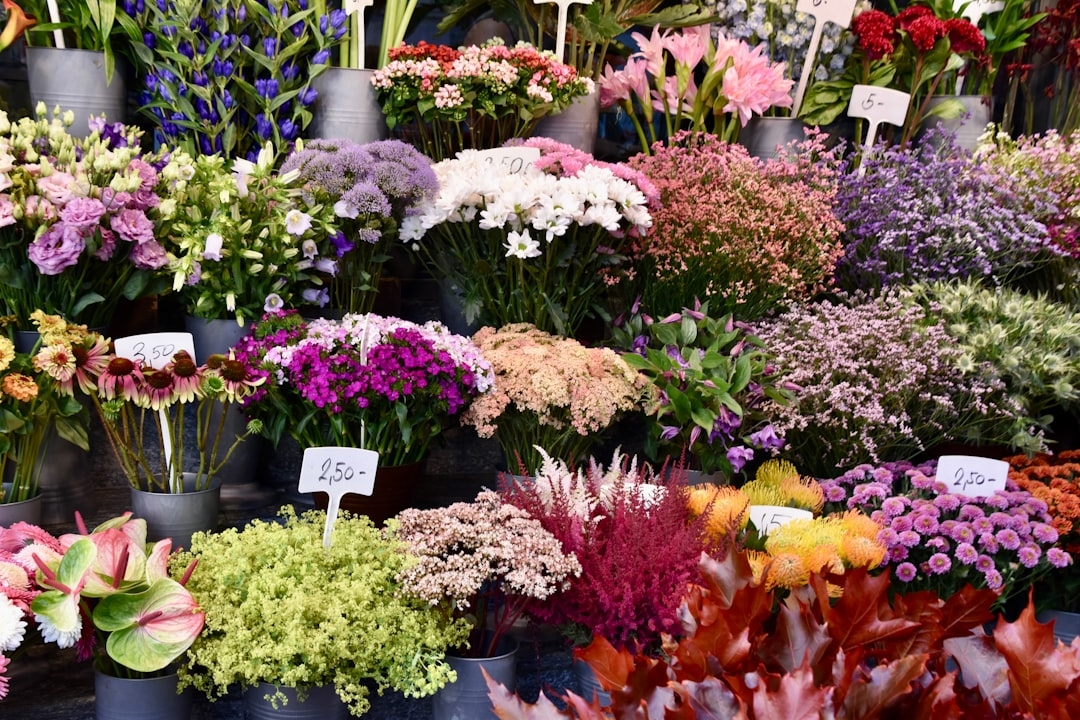
Wholesale rose prices can triple or quadruple in the two weeks before Valentine’s Day. A stem of red roses that costs $0.90 in November may cost $3.50 in early February. Your retail prices must reflect this. Most experienced florists charge a “holiday premium” that adds 20–40% to their standard pricing during peak holidays.
Don’t apologize for this. Customers who buy flowers regularly understand seasonal pricing. Communicate it clearly on your website and in your shop, and frame it around the elevated wholesale cost — which is the truth.
Seasonal Flower Availability
Locally grown and seasonal flowers are often less expensive than imported out-of-season stems. Peonies in May, dahlias in August, and ranunculus in spring can actually improve your margin if you build arrangements around what’s abundant rather than what’s trendy. A spring arrangement built around locally grown tulips and daffodils can carry strong margins and a compelling story.
Building a Pricing Calendar
Map out your pricing adjustments before each major holiday season. Set your Valentine’s Day and Mother’s Day prices in January. Update your wedding pricing annually in the fall, before booking season begins. Having a pricing calendar means you’re never scrambling to recalculate under pressure.
This Pricing Flower Arrangements Guide Applied: Real-World Examples
Abstract formulas are useful. Concrete examples are more useful. Here are three real-world pricing walkthroughs.
Example 1: $65 Mixed Bouquet
- 5 stems spray roses @ $0.70/stem = $3.50
- 3 stems garden roses @ $2.20/stem = $6.60
- 4 stems lisianthus @ $1.10/stem = $4.40
- 5 stems eucalyptus/foliage @ $0.60/stem = $3.00
- Wrap + ribbon: $1.25
- Wholesale total: $18.75
- Flower markup (3.5x): $65.63
- Labor (20 min @ $20/hr): $6.67
- Overhead: $18.00
- Retail price: $90.30 → round to $90 or $95
If you’re selling this arrangement for $65, you’re losing money on every single one.
Example 2: $225 Bridal Bouquet
- 15 stems garden roses @ $2.50/stem = $37.50
- 6 stems ranunculus @ $1.80/stem = $10.80
- 8 stems foliage @ $0.75/stem = $6.00
- Ribbon, pins, stem wrap: $3.50
- Wholesale total: $57.80
- Flower markup (3.5x on stems only): $189.35
- Labor (45 min design + 30 min consultation allocation @ $25/hr): $31.25
- Overhead: $20.00
- Retail price: $240+ — price at $245 or $250
Many florists would quote this at $175–$195 and wonder why wedding work feels exhausting.
Example 3: $180 Sympathy Standing Spray
- 25 stems mixed flowers (carnations, alstroemeria, snapdragons) @ avg $1.20 = $30.00
- Foliage and greenery: $8.00
- Foam, cage, easel rental or depreciation: $12.00
- Wholesale total: $50.00
- Flower markup (3x): $150.00
- Labor (75 min @ $18/hr): $22.50
- Overhead + delivery: $30.00
- Retail price: $202.50 → price at $195–$215
Communicating Price to Customers Without Losing the Sale
Price resistance is real, but it’s often about how price is presented, not the number itself. A $95 bouquet sounds expensive if the customer has been anchored to grocery store prices. The same bouquet sounds like a thoughtful gift when it’s described as “a hand-designed arrangement of garden roses, lisianthus, and eucalyptus, wrapped in kraft paper with a satin ribbon.”
Offer Three Price Points
Give customers a good, better, and best option at clear price tiers. A customer who balks at $95 might comfortably spend $65 on a smaller version — and that’s a sale you keep. Without tiered options, “too expensive” too often becomes “no thanks.”
A simple three-tier structure for mixed bouquets:
- Classic: $55–$65 (10–12 stems, seasonal mix)
- Signature: $80–$95 (15–18 stems, premium focal flowers)
- Luxury: $120–$150 (20+ stems, garden-style, premium foliage)
Educate Without Over-Explaining
You don’t need to justify every dollar, but a brief explanation of what’s in an arrangement goes a long way. Train your staff (or yourself) to describe arrangements the way a sommelier describes wine — with confidence, specificity, and enthusiasm. “These are Ecuadorian garden roses — they’re in season right now and they’re exceptional” lands differently than “these are the roses.”
Never Apologize for Your Prices
Saying “I know it’s a little pricey, but…” before quoting a number signals that you don’t believe the price is fair. If your price is correct — meaning it covers your costs and returns a profit — own it. Confidence in pricing is part of the customer experience.
Profit Margins: What Should You Actually Aim For?
A healthy retail florist typically operates at a gross profit margin of 40–50% after COGS (flowers and direct supplies), before overhead and labor. After all expenses, a well-run floral shop should net 10–15% profit margin.
If you’re running below 40% gross margin, your markup is too low or your wholesale costs are too high — or both. If you’re running below 10% net, your overhead needs attention, your volume is insufficient, or your pricing formula isn’t capturing all your costs.
Check your margins quarterly. Pull your COGS from your accounting software, compare it to revenue, and calculate gross margin as a percentage. If that number is drifting south, it usually means wholesale costs have increased without a corresponding retail price adjustment.
Pricing for Profit: Advanced Strategies
Recipe Costing
For high-volume or repeatable arrangements, build formal recipes. A recipe lists every stem, every supply item, and the exact quantity used. It takes 20–30 minutes to build a recipe the first time; after that, you have a locked cost figure you can update as wholesale prices change. Recipe costing eliminates the guesswork and makes it easy to spot when a price needs adjusting.
Price Floors
Set a minimum price for every arrangement category and don’t go below it, even for friends, family, or good customers who ask for deals. Your price floor is the minimum amount that covers your costs plus a small margin. Going below the floor — even occasionally — trains customers to expect it and makes every future negotiation harder.
Delivery Pricing
Delivery is a service, and it should be priced as one. Most retail florists charge $12 to $20 per delivery within a local radius, with extended delivery zones at higher rates. Factor in the driver’s time, fuel, vehicle wear, and the cost of being unavailable for design work during delivery windows. Free delivery is never actually free — the cost just hides elsewhere in your margins.
Wholesale Account Discounts
If you sell to other retailers, event planners, or restaurants on a wholesale basis, your pricing formula changes. Wholesale accounts expect a discount — typically 20–30% off retail. Make sure your wholesale price still covers your COGS, labor, and overhead with at least a 15–20% margin before offering wholesale terms to anyone.
Common Pricing Mistakes and How to Avoid Them
- Using retail flower prices instead of wholesale costs. Always price from what you paid for the stem, not what you’d pay at a supermarket.
- Forgetting to price the container. Vases, boxes, and baskets are not complimentary. Mark them up like any other hardgood.
- Not updating prices when wholesale costs rise. Build a quarterly price review into your calendar. Even a 10% increase in wholesale costs erodes margin fast if retail prices stay flat.
- Discounting to win business. Discounting occasionally to close a large account is a business decision. Discounting habitually because you’re nervous about price resistance is a profitability problem.
- Ignoring design time on complex orders. An elaborate centerpiece that takes 2.5 hours to build has $45–$75 in labor cost alone. If your price doesn’t reflect that, you’re subsidizing your customer’s event with your time.
- Not charging for consultations. Wedding and event consultations are skilled professional time. Charge a consultation fee ($50–$75 is standard) that applies to the final invoice if they book. It filters serious clients and compensates your time if they don’t.
Frequently Asked Questions
What is the standard markup for flower arrangements?
The standard markup for flower arrangements in the retail floral industry is 3x to 4x the wholesale flower cost. This means if a stem costs $1.50 wholesale, it contributes $4.50 to $6.00 to the retail price. Labor, hardgoods, and overhead are added on top of the marked-up flower cost to arrive at the final retail price.
How do I price a wedding flower arrangement?
Price wedding arrangements by calculating the full wholesale cost of all stems and supplies, marking flowers up 3.5x to 4x, then adding labor at $25–$35 per hour (including consultation, design, delivery, and setup time). Many florists also add a 15–20% design fee to the total for weddings to cover creative direction and project management. A bridal bouquet typically retails between $150 and $400.
What profit margin should a florist aim for?
A healthy retail florist should target a gross profit margin of 40–50% after cost of goods sold, and a net profit margin of 10–15% after all expenses including labor and overhead. If your gross margin falls below 40%, your markup is likely too low or your wholesale costs are too high relative to your retail prices.
How do I adjust flower arrangement prices for Valentine’s Day?
Wholesale flower prices — especially roses — can increase 200–400% in the two weeks before Valentine’s Day. Retail prices should reflect this directly. Most experienced florists add a 20–40% holiday premium to their Valentine’s Day pricing and communicate this to customers in advance. Pre-ordering flowers early and limiting design options can help control costs during peak periods.
Should I charge for flower arrangement delivery?
Yes. Delivery should always be a separate line item, priced at $12 to $20 for local delivery, with higher rates for extended zones or same-day delivery. Factor in driver time, fuel, vehicle maintenance, and the opportunity cost of production time lost during delivery windows. Folding delivery into your arrangement price hides the cost and makes it harder to adjust independently as fuel prices change.
Build Your Pricing System Before Your Next Order
The florists who price well aren’t necessarily the ones with the best flowers or the most creative designs — they’re the ones who understand their numbers and price with confidence. Sustainable pricing is what lets you invest in better flowers, better tools, and better talent.
Start this week: pull your last ten orders and calculate the true cost of each one using the formula above. Compare that to what you charged. The gap you find is your starting point.
From there, build your recipe cards, set your price floors, update your delivery fees, and schedule a quarterly pricing review. This pricing flower arrangements guide gives you the structure — but the work of applying it to your specific shop, your specific market, and your specific cost base is yours to do. Do it once, and pricing stops being the thing you dread before every quote.