How to Start a Wedding Florist Business: Everything You Need to Know
16 min read
Contents:
- The Wedding Florist Industry: What You’re Actually Entering
- Wedding Florist vs. Retail Florist: Understanding the Difference
- How to Structure Your Wedding Florist Business
- Choose a Legal Business Structure
- Name Your Business Thoughtfully
- Write a Business Plan (Even a Simple One)
- Startup Costs: A Realistic Budget Breakdown
- Building Your Floral Skills and Design Education
- Work Under an Established Florist
- Floral Design Courses and Workshops
- Practice with Purpose
- Sourcing Flowers: Wholesale, Local, and Beyond
- Wholesale Flower Markets and Distributors
- Local Farms and Flower Growers
- Understanding Seasonal Availability
- Pricing Your Wedding Floral Services Correctly
- The 3x Markup Rule (and When to Exceed It)
- Labor Pricing
- Sample Pricing Tiers
- Your Seasonal Business Calendar: Planning the Year
- Marketing Your Wedding Florist Business
- Build a Portfolio Before You Have Clients
- Wedding Vendor Directories
- Instagram and Pinterest: Your Visual Storefront
- Build Relationships with Wedding Planners and Venues
- Client Consultations and Proposals
- The Listening Phase
- The Education Phase
- The Proposal
- Operations: Running a Smooth Wedding Day
- The Week-of Workflow
- Build a Day-of Toolkit
- Staffing and Assistance
- Contracts, Policies, and Protecting Your Business
- Growing and Scaling Your Wedding Florist Business
- Raise Your Minimums, Not Just Your Prices
- Specialize to Stand Out
- Add Revenue Streams
- Frequently Asked Questions
- How much does it cost to start a wedding florist business?
- Do I need a license to be a wedding florist?
- How do wedding florists find clients?
- What is the profit margin for a wedding florist?
- What flowers are most popular for weddings?
- Your First Step Starts Today
What would it take to turn your love of flowers into a thriving business that makes people cry happy tears every single weekend? That question sits at the heart of this wedding florist business guide — and the answer is more achievable than you might think. The U.S. wedding industry generates over $57 billion annually, and floral design consistently accounts for 8–10% of the average wedding budget. That’s real money, real opportunity, and a craft that genuinely changes the atmosphere of one of the most important days in a person’s life.
Starting a wedding florist business isn’t just about arranging pretty flowers. It’s about building systems, managing client relationships, understanding wholesale markets, and delivering flawless work under tight deadlines. This guide covers all of it — from your first business license to your first $10,000 event.
The Wedding Florist Industry: What You’re Actually Entering
The floral industry in the United States employs over 55,000 people across retail and event-based businesses, according to the U.S. Bureau of Labor Statistics. Wedding floristry sits at the premium end of that spectrum. Unlike a retail flower shop selling $25 bouquets daily, a wedding florist builds long-term client relationships over months, delivers high-ticket installations, and works almost exclusively on weekends during peak season (May through October).
The average couple in the U.S. spends between $2,500 and $5,000 on wedding flowers, with luxury weddings routinely hitting $15,000–$30,000 or more. A solo wedding florist handling just two weddings per weekend during a 30-week peak season could realistically gross $150,000–$300,000 annually before expenses. Those numbers shift significantly based on your market, your niche, and your operational costs — but the ceiling is genuinely high.
One more thing worth knowing upfront: this is a physically demanding, logistically intense business. You’ll be lifting 50-pound buckets of water, driving refrigerated cargo, and setting up floral arches at 6 a.m. before a noon ceremony. The glamour is real. So is the grind.
Wedding Florist vs. Retail Florist: Understanding the Difference
Many aspiring floral entrepreneurs conflate these two business models, and the confusion leads to costly mistakes. A retail florist operates a storefront, sells walk-in arrangements, handles holidays like Valentine’s Day and Mother’s Day as major revenue events, and runs a daily operation with consistent hours. A wedding florist is an event-based business with a fundamentally different rhythm, client base, and financial structure.
Here’s a direct comparison of the two models:
- Revenue timing: Retail florists generate daily income; wedding florists earn in bursts tied to booked events, often with deposits collected months in advance.
- Overhead: Retail shops require storefronts, walk-in coolers, and daily staffing. Wedding florists can operate from a home studio or small warehouse space, dramatically reducing fixed costs.
- Seasonality: Retail florists spike on Valentine’s Day and Mother’s Day. Wedding florists spike May–October, with a secondary surge around November–December holiday weddings.
- Client relationships: Retail is transactional. Wedding floristry is consultative — you may speak with a client a dozen times before the wedding day.
- Design scale: Retail bouquets might use 15–20 stems. A wedding ceremony installation might require 400+ stems, custom armature, and a two-person installation crew.
If your goal is to focus exclusively on weddings and events, you do not need a retail storefront. Many of the most successful wedding florists in the country work from climate-controlled garage studios or rented commercial kitchen-style prep spaces. Don’t let the retail model box you in.
How to Structure Your Wedding Florist Business
Choose a Legal Business Structure
Before you book your first client, establish a legal entity. Most solo wedding florists start as a sole proprietorship for simplicity, but an LLC (Limited Liability Company) offers significantly stronger personal asset protection — especially important when you’re handling $20,000 worth of flowers for a client’s wedding day. Filing for an LLC typically costs $50–$500 depending on your state, and it separates your personal finances from your business liabilities.
You’ll also need:
- An EIN (Employer Identification Number) from the IRS — free to obtain online
- A business bank account separate from your personal finances
- A seller’s permit or resale certificate if your state requires you to collect sales tax on floral services (requirements vary by state)
- A local business license — typically $25–$100 per year
- General liability insurance — budget $500–$1,200 per year for a policy with $1 million in coverage
Name Your Business Thoughtfully
Your business name is a marketing asset. It should be easy to spell, searchable online, and reflective of your aesthetic. Before falling in love with a name, check: (1) your state’s business name registry, (2) the U.S. Patent and Trademark Office database, and (3) domain name availability. Ideally, you want a .com domain that closely matches your business name. Names like “Ivory & Bloom” or “The Wildflower Studio” tend to photograph well on business cards and Instagram profiles alike.
Write a Business Plan (Even a Simple One)
You don’t need a 40-page MBA-style document. You need clarity on three things: your target client (budget-conscious couples vs. luxury market), your revenue goals for year one, and your cost structure. A one-page business plan that answers those questions will do more for your focus than an elaborate spreadsheet that never gets updated.
Startup Costs: A Realistic Budget Breakdown
One of the most Googled questions among aspiring floral designers is “how much does it cost to start a wedding florist business?” Here’s a realistic breakdown for a home-based or small-studio setup in the U.S.:
- Business registration and licensing: $100–$600
- General liability insurance (annual): $500–$1,200
- Basic floral tools and supplies (frogs, chicken wire, floral tape, wire, shears, knives): $300–$600
- Vessels and hardgoods (vases, compotes, urns, arches): $1,000–$3,000 (can grow over time)
- Wholesale flower account setup (some wholesalers require a deposit or minimum order): $200–$500
- Refrigeration (a used commercial floral cooler or dedicated refrigerator): $400–$2,000
- Website (Squarespace or similar, plus professional photos): $500–$2,000
- Initial marketing (business cards, styled shoots, vendor directory listings): $300–$1,000
- Vehicle or cargo van rental budget (if you don’t have a suitable vehicle): $200–$500 per event initially
Total estimated startup range: $3,500–$11,400. Many florists launch for closer to $5,000 by buying used equipment, starting with a small vessel collection, and investing in photography gradually. The most important investments early on are proper tools, a reliable cooler, and a professional-looking online presence.
Building Your Floral Skills and Design Education
You do not need a formal degree to become a wedding florist. What you do need is hands-on experience with flower mechanics, an understanding of seasonal availability, and a design eye you’ve actively developed. Here are the most effective paths:
Work Under an Established Florist
Apprenticing or working part-time for an established wedding florist is the single fastest way to learn. You’ll see how real wedding days unfold, how flower orders are processed, and how experienced designers handle the inevitable last-minute chaos. Even 6–12 months of paid or volunteer assistance provides an education no online course can replicate.
Floral Design Courses and Workshops
Several reputable options exist at various price points:
- Local community college floral design programs: $500–$2,000 for a semester-long course
- Florist-led workshops (often 1–3 days, hosted by established wedding designers): $300–$1,500
- Online platforms like Skillshare, Creativebug, or dedicated floral education sites (e.g., Mayesh Design Star, which is free): $0–$200/year
- Floral Design Certificate Programs (e.g., through the American Institute of Floral Designers, AIFD): More advanced, suited for those pursuing professional certification
Practice with Purpose
Buy wholesale flowers and practice specific techniques weekly. Don’t just arrange — practice pavé techniques, armature building, hand-tied bouquets, and foam-free mechanics. Document every piece you make. Your practice work can become your portfolio before you have a single real wedding under your belt.
Sourcing Flowers: Wholesale, Local, and Beyond
Your flower sourcing strategy directly impacts your margins and your design options. Most successful wedding florists use a combination of sources rather than relying on a single supplier.
Wholesale Flower Markets and Distributors
Opening a wholesale account — either with a local distributor or a national supplier like Mayesh Wholesale Florist, FiftyFlowers (wholesale tier), or Dutch Flower Line — gives you access to trade pricing typically 40–60% below retail. To open most wholesale accounts, you’ll need your business license and resale certificate. Minimum orders vary; some local wholesalers require $150–$200 per order, while national mail-order wholesalers may require $300–$500 minimums with overnight shipping fees.
Local Farms and Flower Growers
Farm-direct sourcing is both a practical strategy and a powerful marketing angle. The USDA’s Local Food Directories database lists flower farms by state. Buying from local growers supports your community, reduces your carbon footprint, and often gives you access to unique seasonal varieties unavailable through standard wholesalers. It also makes for compelling storytelling on social media and in client consultations.
Understanding Seasonal Availability
This is a foundational skill every wedding florist must develop. Availability varies dramatically by season, and recommending out-of-season flowers to clients without flagging the cost premium is a fast path to blown budgets. Here’s a general U.S. seasonal flower reference:
- Spring (March–May): Ranunculus, peonies, lilacs, tulips, sweet peas, anemones
- Summer (June–August): Garden roses, dahlias, sunflowers, zinnias, lisianthus, cosmos
- Fall (September–November): Dahlias (late season), marigolds, chrysanthemums, hypericum berries, amaranthus
- Winter (December–February): Amaryllis, paperwhites, evergreen foliage, hellebores, forced bulbs
Peak season (May–October) aligns almost perfectly with peak wedding season in the U.S., which is fortunate — you’ll have maximum availability when demand is highest. Off-season weddings (November–February) require more creative sourcing and may involve higher per-stem costs for imported blooms.
Pricing Your Wedding Floral Services Correctly
Underpricing is the number-one reason wedding florist businesses fail in their first three years. Many new florists price based on what “feels fair” rather than what’s financially sustainable. Here’s a more reliable framework.
The 3x Markup Rule (and When to Exceed It)
The industry standard is to charge clients approximately 3–4x your wholesale flower cost. If you spend $500 on flowers for a wedding, your floral product line item to the client should be $1,500–$2,000. This markup covers: your time processing and conditioning flowers, design labor, overhead, and profit margin. For high-complexity designs (intricate floral installations, cascading bouquets, suspended ceiling arrangements), a 4x or even 5x multiplier is appropriate.
Labor Pricing
Flower cost is only part of your invoice. You must also price your labor. A reasonable starting point is $25–$50/hour for your own design time, with $15–$25/hour for any assistants. A full-service wedding might involve 20–40 hours of total labor across consultation, ordering, processing, designing, delivery, setup, and breakdown. At $35/hour for 30 hours, that’s $1,050 in labor alone — before a single flower is purchased.
Sample Pricing Tiers
- Elopement/Micro-wedding package (bouquet + boutonniere + 2 bud vases): $350–$700
- Mid-range wedding package (full bridal party florals + ceremony arch + 10 centerpieces): $3,500–$6,000
- Full luxury wedding florals (all of the above plus lounge florals, cake flowers, chandeliers, florals on chairs): $10,000–$30,000+
Build a pricing worksheet in a spreadsheet that calculates your flower cost, labor, overhead allocation, and desired margin for every proposal. Tools like Honeybook, Curate (formerly Lovegevity), or even a well-built Google Sheet can make this process replicable and fast.
Your Seasonal Business Calendar: Planning the Year
A wedding florist’s year has a distinct rhythm. Understanding it helps you plan cash flow, staffing, and marketing proactively rather than reactively.
- January–February: Engagement season — couples who got engaged over the holidays begin researching vendors. This is your highest-impact window for marketing, styled shoot releases, and updating your portfolio. Inquiries peak; convert them aggressively.
- March–April: Consultations, proposals, and contract signing for spring and summer weddings. Begin sourcing conversations with wholesalers. Hire and train seasonal assistants.
- May–June: Peak wedding season begins. Expect 1–3 weddings per weekend. Your prep workflow, cooler management, and assistant coordination become mission-critical.
- July–August: High season continues. Heat management for flowers becomes a real challenge — invest in insulated transport vessels and plan delivery timing carefully.
- September–October: The second peak. Fall weddings often have larger budgets and favor rich color palettes — dahlias, roses, marigolds. Some of the most photographed work of the year happens in this window.
- November–December: Season winds down. Ideal time for education (workshops, courses), equipment maintenance, portfolio building, and planning next year’s pricing and packages.
Cash flow tip: require a 30–50% non-refundable deposit at contract signing, with the balance due 2–4 weeks before the wedding. This means you’ll have income flowing in during the off-season from next year’s bookings — which smooths out the financial feast-and-famine cycle.
Marketing Your Wedding Florist Business
Beautiful work that nobody sees doesn’t build a business. Marketing a wedding florist business is primarily a visual medium challenge — your goal is to get stunning photographs of your work in front of the right couples at the right moment.
Build a Portfolio Before You Have Clients
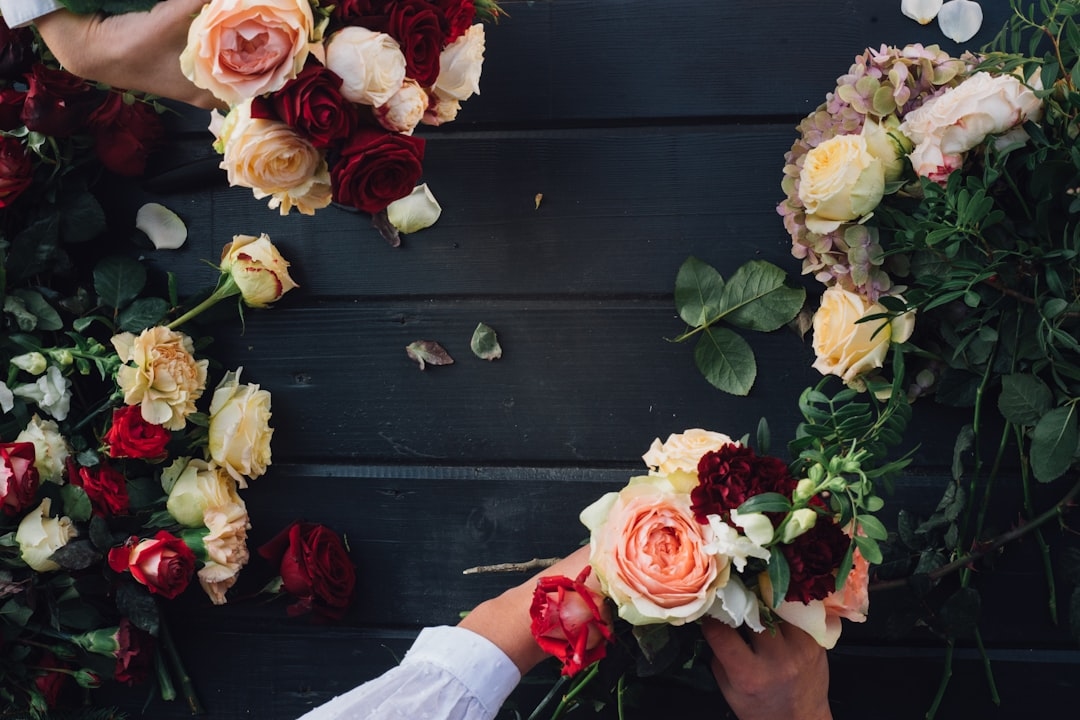
Your first marketing move is a styled shoot — a collaborative photography session where you partner with a wedding photographer, a model or couple, and possibly a planner or venue to create editorial-quality images of your work. These images become your website portfolio, your Instagram content, and your submission material for wedding blogs and publications. The cost to you is typically just the flowers ($200–$500 worth) in exchange for professional images you own. Reach out to newer photographers who also need portfolio work — the collaboration benefits everyone.
Wedding Vendor Directories
Listings on The Knot, WeddingWire, and Zola put you in front of actively searching couples. Paid listings on The Knot start around $100–$400/month depending on your market. Free listings are available but have limited visibility. Start with one paid listing in your primary geographic market and track your inquiry rate over 6 months before expanding.
Instagram and Pinterest: Your Visual Storefront
Instagram remains the dominant discovery platform for wedding florists, with Pinterest close behind for inspiration-stage searches. Posting consistently — even 3x per week — with well-lit photos, descriptive captions using keywords like your city + “wedding florist,” and strategic hashtag use builds organic visibility over time. Don’t neglect Pinterest: pins have a much longer shelf life than Instagram posts and drive significant referral traffic to florist websites.
Build Relationships with Wedding Planners and Venues
No marketing channel outperforms referrals from wedding planners. A single strong relationship with an active planner can send you 10–20 weddings per year. Introduce yourself professionally, offer to collaborate on styled shoots, and deliver exceptional work every single time you share a client. Venues — particularly those with preferred vendor lists — are similarly powerful. Getting on a preferred vendor list at a popular venue in your area can transform your booking rate.
Client Consultations and Proposals
Your consultation process is where weddings are won or lost. Couples are hiring you as much for your professionalism and personality as for your floral talent. A strong consultation has three phases: listening, educating, and proposing.
The Listening Phase
Before you suggest a single flower, ask questions. What’s the overall wedding aesthetic? Where are they getting married — barn, ballroom, garden, beach? What’s their color palette? Have they saved inspiration images? What’s their floral budget? That last question is the most important one. A couple who says their budget is “open” almost always has a number in their head; your job is to surface it.
The Education Phase
Most couples have no idea what their inspiration images actually cost to produce. When a bride shows you a lush, 36-inch cascading ceremony arch from a $40,000 editorial shoot, your job is to lovingly clarify what achieving that look would require — and offer alternatives if the budget doesn’t support it. This transparency builds trust and prevents scope-creep disasters.
The Proposal
Send a detailed written proposal within 48–72 hours of the consultation. It should include an itemized list of every floral element, the flower varieties you plan to use, the quantities, and a clear total price. Use proposal software like Curate, Honeybook, or Aisle Planner — these platforms allow clients to sign contracts and pay deposits electronically, which dramatically improves conversion rates vs. emailing PDFs.
Operations: Running a Smooth Wedding Day
The Week-of Workflow
Professional wedding florists follow a strict weekly rhythm. A typical wedding-week timeline looks like this:
- Monday: Confirm final flower order with your wholesaler based on finalized client proposal.
- Tuesday–Wednesday: Flowers arrive. Process immediately — cut stems at a 45-degree angle, remove foliage below the waterline, and place in clean buckets with fresh water and floral preservative. Allow 24–48 hours of hydration before designing.
- Thursday–Friday: Design days. Build centerpieces, bridal party florals, and any pre-designed ceremony elements. Store in your cooler at 34–38°F for most blooms (exceptions: tropical flowers and gardenias prefer slightly warmer storage).
- Saturday (or event day): Load vehicle carefully — use non-slip mats and bucket holders. Arrive at venue 2–3 hours before ceremony start. Set up, perform a final quality check, and brief your assistant on any breakdown duties.
Build a Day-of Toolkit
Every professional wedding florist travels with an emergency kit that includes: extra floral tape, wire, waterproof stem wrap, a water mister, extra zip ties, a lighter (for sealing ribbon ends), safety pins, a needle and thread, extra boutonniere pins, and a small bucket of water for on-site touch-ups. You will use this kit. Prepare it every single time.
Staffing and Assistance
A solo florist can handle weddings up to approximately $3,000–$4,000 in florals. Beyond that, you need at least one reliable assistant for setup and breakdown. Start by building a roster of 2–3 trained freelance floral assistants you can call on for larger events. Pay fairly — $18–$28/hour is standard for experienced floral assistants — and treat them well. Your best assistants become your best employees when you’re ready to scale.
Contracts, Policies, and Protecting Your Business
Every wedding must be governed by a signed contract. No exceptions. Your contract should address:
- Scope of work: Exactly what floral elements are included and excluded
- Deposit and payment schedule: Amount, due dates, and payment methods accepted
- Cancellation and rescheduling policy: Be specific — e.g., deposits are non-refundable; full balance is retained if cancellation occurs within 60 days of the event
- Substitution clause: Flowers are agricultural products subject to availability. Your contract should grant you the right to substitute similar-value flowers if a specific variety becomes unavailable
- Force majeure: Addresses what happens if the event is cancelled due to circumstances outside either party’s control
- Delivery and setup times: Be specific about when you’ll arrive and when setup will be complete
Purchase a wedding florist contract template from a reputable legal template service (GDPR-compliant templates exist for around $50–$200) or have a local attorney review and customize one for your state. This is a one-time investment that protects you for years.
Growing and Scaling Your Wedding Florist Business
Once you’ve completed 10–15 weddings and have a repeatable workflow, growth becomes less about hustle and more about strategy. Here are the levers that move the needle most effectively:
Raise Your Minimums, Not Just Your Prices
Rather than incrementally raising prices across all packages, establish a minimum spend threshold. Starting at $2,500 as a minimum wedding budget filters out price-sensitive clients and positions you in the mid-to-luxury tier. Raise your minimum by $250–$500 each year as your portfolio strengthens and your demand grows.
Specialize to Stand Out
Generalist wedding florists compete on price. Specialists compete on expertise. Developing a clear aesthetic — whether that’s wild, garden-style organic arrangements, structured European elegance, or locally grown seasonal-only designs — attracts clients who specifically want what you do and are willing to pay for it.
Add Revenue Streams
Beyond weddings, consider: corporate event florals (office installations, launch parties), private floral workshops (charge $75–$150 per person for hands-on classes), subscription arrangements for local businesses, or holiday pop-up shops. These streams generate income during the off-season and keep your creative skills sharp.
Frequently Asked Questions
How much does it cost to start a wedding florist business?
Startup costs for a home-based or small-studio wedding florist business typically range from $3,500 to $11,400. Major expenses include business registration, liability insurance, floral tools, a flower cooler, vessel inventory, and a professional website. Many florists launch successfully for around $5,000 by prioritizing essential equipment and growing their vessel collection over time.
Do I need a license to be a wedding florist?
In most U.S. states, there is no specific “florist license” required. However, you will need a general business license from your city or county, a seller’s permit or resale certificate to purchase flowers at wholesale prices, and potentially a sales tax permit depending on your state’s tax laws for floral services. Forming an LLC is also strongly recommended for liability protection.
How do wedding florists find clients?
The most effective client acquisition channels for wedding florists are: referrals from wedding planners and venues, listings on directories like The Knot and WeddingWire, Instagram and Pinterest with consistent high-quality imagery, and submissions to wedding blogs and publications. Building vendor relationships — particularly with active wedding planners — is consistently cited by experienced florists as their highest-ROI marketing strategy.
What is the profit margin for a wedding florist?
A well-run wedding florist business typically achieves a net profit margin of 20–35% after accounting for flower costs, labor, overhead, and marketing. Gross margins on floral products (using the 3–4x markup standard) can reach 65–75%, but labor and operational costs reduce net margins significantly. Florists who specialize in higher-budget weddings and maintain strong wholesale relationships tend to achieve the best margins.
What flowers are most popular for weddings?
Garden roses, peonies, ranunculus, eucalyptus, and lisianthus consistently rank among the most requested wedding flowers in the U.S. market. Hydrangeas, dahlias, and sweet peas are also perennially popular. Trends shift seasonally and regionally — keeping up with wedding publications like Style Me Pretty, Green Wedding Shoes, and Martha Stewart Weddings helps florists anticipate what clients will bring to consultations.
Your First Step Starts Today
The most successful wedding florists didn’t wait until everything was perfect before starting. They took one concrete step — opened a wholesale account, booked a styled shoot, filed for their LLC — and built momentum from there. This wedding florist business guide has given you the framework. Now the work is yours to do.
Start with what you can control today: register your business name, set up your wholesale account, and photograph everything you make. Six months from now, you’ll have a portfolio, a pricing structure, and the foundation of a brand. Twelve months from now, you could be booking your first full wedding season. The flowers are waiting. So are the couples who need exactly what you have to offer.