Complete Guide to Flower Photography: Tips for Instagram and Beyond
18 min read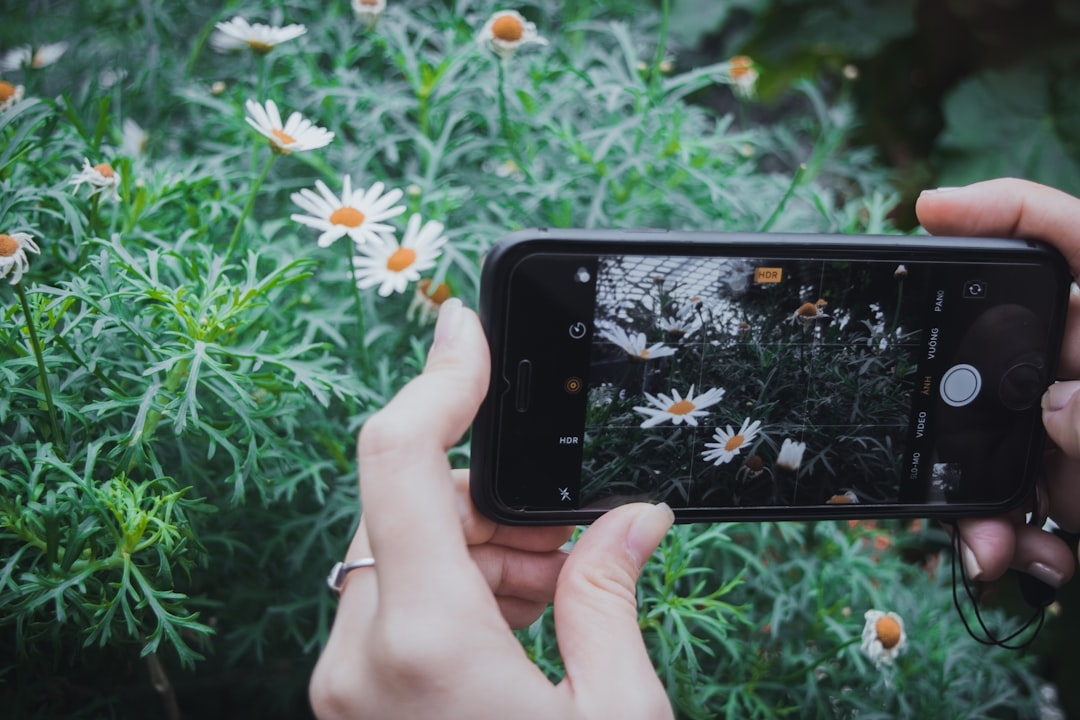
Contents:
- Why Flower Photography Rewards Careful Study
- Choosing the Right Camera Gear for Flower Photography
- Camera Bodies: Mirrorless vs. DSLR vs. Smartphone
- Lenses That Make a Difference
- Supporting Equipment Worth Owning
- Mastering Light: The Core Skill in Floral Photography
- Golden Hour and Overcast Light
- Backlighting for Translucent Petals
- Studio and Artificial Lighting Setups
- Camera Settings for Flower Photography: A Practical Framework
- Aperture: The Most Important Variable
- Shutter Speed and ISO for Static Subjects
- White Balance: Set It Manually
- Composition Techniques That Elevate Floral Images
- The Rule of Thirds and Deliberate Breaking of It
- Shooting Angles That Change Everything
- Using Negative Space and Color Theory
- Flower Photography vs. Plant Photography: Understanding the Distinction
- A Practical Anecdote: What a Ruined Shoot Teaches
- Editing Flower Photos: Workflows for Different Platforms
- Adobe Lightroom: The Industry Standard
- Alternatives Worth Knowing
- Editing for Instagram vs. Print
- Smartphone Flower Photography: Getting Professional Results
- Using Portrait Mode and Macro Mode Intelligently
- Third-Party Apps for Manual Control
- Building an Instagram Aesthetic for Flower Photography
- Developing a Signature Style
- Captions, Hashtags, and Posting Strategy
- Seasonal Planning for Flower Photography
- Spring and Summer: Peak Season
- Fall and Winter: The Underexplored Seasons
- Frequently Asked Questions About Flower Photography
- What camera settings should I use for flower photography?
- What is the best lens for flower photography?
- How do I photograph white flowers without overexposing them?
- Can I do professional flower photography with a smartphone?
- What time of day is best for outdoor flower photography?
- Taking Your Flower Photography Further
This flower photography guide exists because of a simple truth: flowers have been compelling subjects for image-makers for centuries. When Louis Daguerre captured his first daguerreotype in 1839, botanical specimens were among the earliest subjects placed before the lens — their stillness made them ideal for the long exposure times the technology demanded. Nearly 200 years later, a single well-composed floral photograph can reach millions of people within hours on Instagram. The subject hasn’t changed. Only the stakes have.
Flower photography sits at an interesting crossroads. It’s accessible enough for absolute beginners — your subject won’t move, argue, or charge a modeling fee — yet technically demanding enough to challenge professional photographers who’ve spent decades behind the camera. Getting truly great floral shots requires understanding light, optics, color theory, and post-processing, often all at once.
This guide walks through every stage of the process: gear selection, lighting strategy, composition principles, camera settings, field techniques, editing workflows, and platform-specific tips for Instagram. Whether you’re shooting in a backyard garden with a smartphone or a studio with a full-frame mirrorless system, the principles here apply.
Why Flower Photography Rewards Careful Study
Floral photography is one of the most popular niches in both amateur and professional photography — and one of the most competitive. On Instagram alone, the hashtag #flowerphotography has over 40 million posts. Standing out requires more than pointing a camera at a pretty bloom.
The best floral photographers understand their subject deeply. Petal texture, pistil structure, color gradients, dew behavior — all of these become compositional tools when you know how to use them. A macro shot of a dahlia’s geometric center is a fundamentally different photograph from a wide bokeh-filled portrait of the same flower. Both are valid. Neither is accidental.
There’s also a timing dimension that many beginners overlook. Most flowers have peak visual windows that last only a few days. A peony photographed on day two of its bloom has tight, voluminous petals and vivid color. By day five, the outer petals have begun to curl and brown at the edges. Knowing your subject’s lifecycle — and planning shoots around it — separates consistent photographers from lucky ones.
Choosing the Right Camera Gear for Flower Photography
The camera you use matters less than how you use it, but gear choices do have real consequences in this genre. Here’s how to think through your options.
Camera Bodies: Mirrorless vs. DSLR vs. Smartphone
Full-frame mirrorless cameras like the Sony A7 series or Nikon Z6 III offer the best combination of dynamic range, low-light performance, and lens compatibility. For flower photography specifically, the ability to shoot at ISO 400–800 with minimal noise is valuable when working in shaded garden conditions. However, crop-sensor cameras like the Fujifilm X-T5 or Sony A6700 work exceptionally well — the 1.5x crop factor actually increases effective focal length, which benefits macro work.
Smartphone photography has become genuinely competitive in this space. The iPhone 15 Pro and Samsung Galaxy S24 Ultra both offer macro modes and computational portrait effects that produce compelling floral images. The limitation isn’t resolution — it’s lens flexibility and manual control depth. For Instagram-only workflows, a high-end smartphone is entirely sufficient. For print, stock licensing, or editorial use, a dedicated camera body gives you more room to work.
Lenses That Make a Difference
Lens selection may be the single most impactful gear decision in flower photography. Three categories deserve attention:
- Macro lenses (90mm–105mm): The Nikon 105mm f/2.8 Macro and Canon RF 100mm f/2.8L Macro are industry standards for a reason. A true macro lens achieves 1:1 reproduction ratio, meaning a 1-inch flower fills the entire sensor. This level of detail reveals structures invisible to the naked eye.
- Short telephoto lenses (85mm–135mm): These focal lengths compress backgrounds beautifully and allow comfortable working distance from your subject — typically 2–3 feet — without disturbing dew or petal arrangement. The 85mm f/1.4 is a favorite for environmental floral portraits with creamy bokeh.
- Standard zoom lenses (24–70mm): Versatile for garden scenes and contextual shots where you want to show the flower in its environment. Less effective for detail work.
Avoid wide-angle lenses (below 35mm) for close-up flower work. The distortion introduced at close focusing distances exaggerates proportions in ways that rarely flatter the subject.
Supporting Equipment Worth Owning
A sturdy tripod is non-negotiable for macro work. At 1:1 magnification, even the vibration from pressing the shutter button creates blur. Use a remote shutter release or a 2-second self-timer delay to eliminate camera shake. A flexible Joby GorillaPod is particularly useful for low-angle ground-level compositions in garden settings.
A 5-in-1 collapsible reflector (around $25–$40) transforms natural light work. The white and silver sides bounce light into shadow areas on petals, reducing harsh contrast without requiring artificial lighting. For outdoor macro shoots, a small piece of black foam board placed behind the flower creates an instant clean background — a trick used by professional botanical photographers shooting for publication.
Mastering Light: The Core Skill in Floral Photography
Light is the medium. Every other decision you make — composition, aperture, subject selection — happens in the context of the light available to you. Understanding how different light conditions affect flowers specifically will change your photographs immediately.
Golden Hour and Overcast Light
The golden hour — the 30–60 minutes after sunrise and before sunset — produces warm, directional light that skims across petal surfaces and creates dimension. Side lighting at this time of day emphasizes texture, making velvet-finish flowers like black-eyed Susans and sunflowers particularly striking. The color temperature of golden hour light (around 3,000K–4,000K) also warms cooler flower colors like purple lavender and blue hydrangea in ways that feel organic rather than filtered.
Overcast conditions are underrated by beginners but beloved by experienced floral photographers. An overcast sky acts as a giant softbox, wrapping light around petals from all directions and eliminating harsh shadows inside complex flower structures like peonies, roses, and dahlias. Colors appear saturated and accurate. White flowers, which blow out instantly in direct sun, render beautifully under cloud cover. If you have a choice, schedule shoots involving white or pastel flowers for overcast days.
Backlighting for Translucent Petals
Backlighting — positioning the light source behind the flower relative to your camera — creates a glowing, translucent effect in thin-petaled flowers. Poppies, tulips, and California poppies are particularly responsive to this technique. At f/11 with the sun positioned 15–20 degrees above the horizon behind the flower, you can achieve petal translucency while retaining sharpness in the stamen and pistil. Expose for the highlights in this scenario; shadow detail in the stem can be recovered in post-processing, but blown petal highlights cannot.
Studio and Artificial Lighting Setups
Studio work gives you complete control over light direction, intensity, and color temperature. A single continuous LED panel (such as the Godox SL60W at around $100) placed at 45 degrees to the flower with a white reflector on the opposite side produces a clean, professional result for product-style floral photography. Add a black background panel for a dark, dramatic fine-art aesthetic — this style performs particularly well on Instagram.
Ring lights, while popular for portraits, tend to flatten the dimensional quality of flowers. The front-facing circular catchlight looks unnatural on petals. If you’re shooting in a home studio, a rectangular softbox at a 45-degree angle will almost always produce better results than a ring light for this subject.
Camera Settings for Flower Photography: A Practical Framework
Automatic modes will get you a technically acceptable exposure the majority of the time, but they won’t give you creative control over depth of field, motion blur, or noise levels. Here’s a working framework for manual or semi-manual shooting.
Aperture: The Most Important Variable
Aperture controls depth of field — how much of the frame is in sharp focus — and this decision defines the character of a flower photograph more than any other setting. Consider three distinct approaches:
- f/1.4–f/2.8 (shallow depth of field): Isolates a single element — one petal, one stamen — against a completely blurred background. Creates an intimate, painterly quality. Works best with a clean, uncluttered background.
- f/5.6–f/8 (moderate depth of field): The sweet spot for most single-flower portraits. Keeps the primary bloom sharp while softening the background enough to prevent distraction. This aperture range also sits in most lenses’ sharpness peak.
- f/11–f/16 (deep depth of field): Used for botanical documentation, garden scene photography, or when you want sharp focus from foreground to background. Requires more light or a higher ISO.
Shutter Speed and ISO for Static Subjects
Flowers are stationary subjects — with one significant exception. Wind. Even a light breeze creates motion blur in petals when shooting at macro distances. In garden conditions with any wind, keep your shutter speed at 1/250 second or faster, even if it means increasing ISO to 800 or 1600. Modern sensors handle ISO 1600 cleanly; motion blur is unrecoverable.
For studio or indoor work with no wind, shutter speed is less critical. Use 1/60 to 1/125 second and keep ISO at your camera’s base value (typically ISO 100 or 200) for maximum image quality. Enable your camera’s electronic front curtain shutter or silent shooting mode to further reduce vibration at close focusing distances.
White Balance: Set It Manually
Auto white balance does a reasonable job in consistent lighting, but it can shift between frames during a shoot — problematic when you’re editing a series. Set a custom white balance using a gray card, or use a fixed Kelvin value: 5500K–6000K for midday outdoor light, 4500K–5000K for shade, 3200K for tungsten studio lights. Consistent white balance across a session saves significant editing time and produces more accurate flower colors.
Composition Techniques That Elevate Floral Images
Technical precision is the foundation. Composition is what makes a technically correct photograph into a compelling one. These principles apply whether you’re shooting with a smartphone or a medium format camera.
The Rule of Thirds and Deliberate Breaking of It
Placing your primary flower at a rule-of-thirds intersection — rather than the center of the frame — creates visual tension and a sense of movement. The eye travels into the frame and finds the subject, rather than landing immediately on a centered target. That said, centered compositions work powerfully for symmetrical flowers: sunflowers, dahlias, and gerbera daisies with radial petal structures benefit from centered framing that honors their geometry.
Shooting Angles That Change Everything
Most beginners photograph flowers from standing height — the same angle they view the world from in daily life. The resulting images look ordinary because they’re ordinary. Three alternative angles consistently produce more interesting results:
- Ground level, looking up: Positions the flower against the sky, creating a sense of scale and drama. Best in early morning or late afternoon when the sky has color.
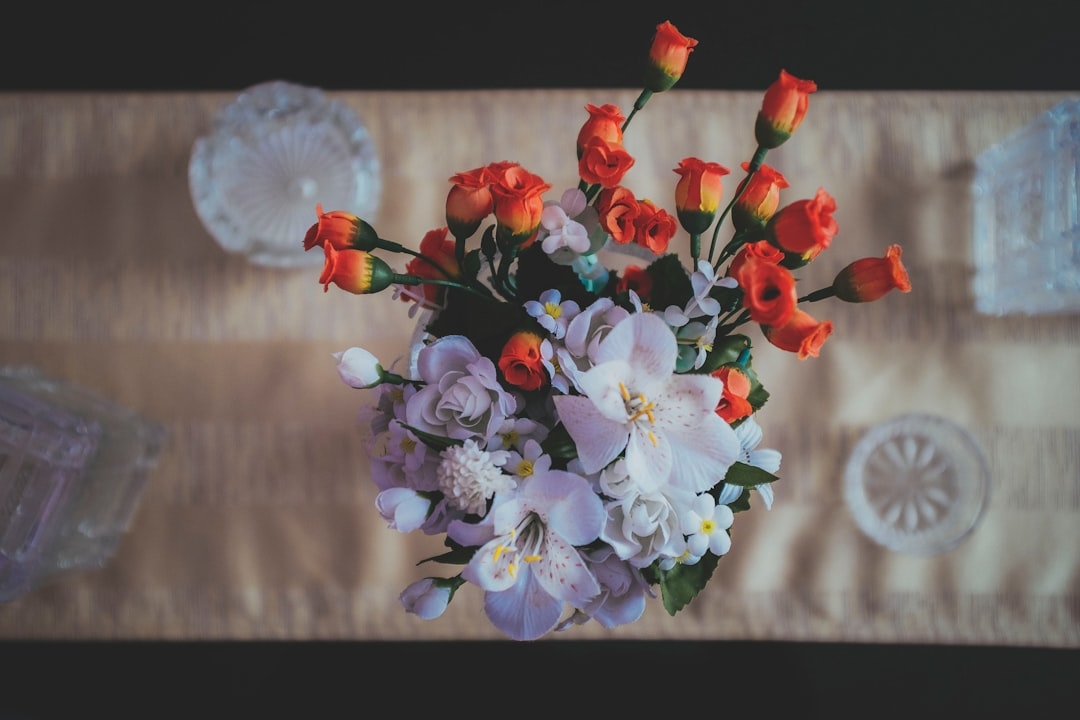
- Directly above (flat lay): Works beautifully for cut flower arrangements and blooms with interesting radial structure. Requires a tripod or a clear surface.
- Eye level with the bloom: Gets you physically low to the ground for outdoor flowers. This angle separates subject from background most effectively and produces the cleanest bokeh.
Using Negative Space and Color Theory
Negative space — the empty area surrounding your subject — gives the eye room to rest and makes the flower feel more impactful. A single red tulip against a large field of blurred green grass uses negative space to create stillness and focus. This approach also photographs extremely well on Instagram, where small thumbnail previews reward simple, high-contrast compositions.
Color relationships matter too. Complementary color pairings — orange flowers against blue-sky backgrounds, purple lavender against yellow fields — create natural visual vibration that reads as dynamic and professional. Analogous color schemes (a pink rose photographed among pink and magenta wildflowers) produce harmony and warmth. Neither approach is superior; they serve different emotional registers.
Flower Photography vs. Plant Photography: Understanding the Distinction
These two genres are frequently conflated, but they have meaningfully different goals — and mixing them up leads to unfocused imagery.
Flower photography prioritizes the bloom as the primary aesthetic subject. The goal is visual impact: color, texture, light, and form. Botanical accuracy is secondary. A heavily blurred background that makes species identification impossible is perfectly acceptable — often desirable — in flower photography. The image exists to be beautiful and emotionally resonant.
Plant photography (including botanical photography) prioritizes documentation and accuracy. Botanical illustrators and scientific photographers shoot with deep depth of field to keep leaves, stems, and root structures in focus. Multiple views — top, side, detail — are often required. The Latin species name typically appears in the caption. This work appears in field guides, academic journals, horticultural publications, and botanical garden archives.
The practical consequence: if you’re shooting for Instagram or personal creative work, flower photography principles apply. If you’re shooting for a nursery catalog, seed company, or academic publication, plant photography standards are expected. Many photographers do both but treat them as separate workflows with different gear setups, lighting choices, and editing aesthetics.
A Practical Anecdote: What a Ruined Shoot Teaches
A gardening photographer named Sarah — based in Portland, Oregon — spent an entire Sunday morning in her backyard photographing her first serious dahlia harvest. She’d grown ‘Café au Lait’ dahlias from tubers over the summer and was thrilled with the blooms. She shot 200 frames, feeling confident about the soft overcast light and the variety of angles she’d explored.
When she sat down to edit that evening, almost every image had the same problem: the background. Her neighbor’s fence, a garden hose, a pile of pots — all rendered softly but still recognizably cluttered. The flowers were beautiful. The frames were ruined.
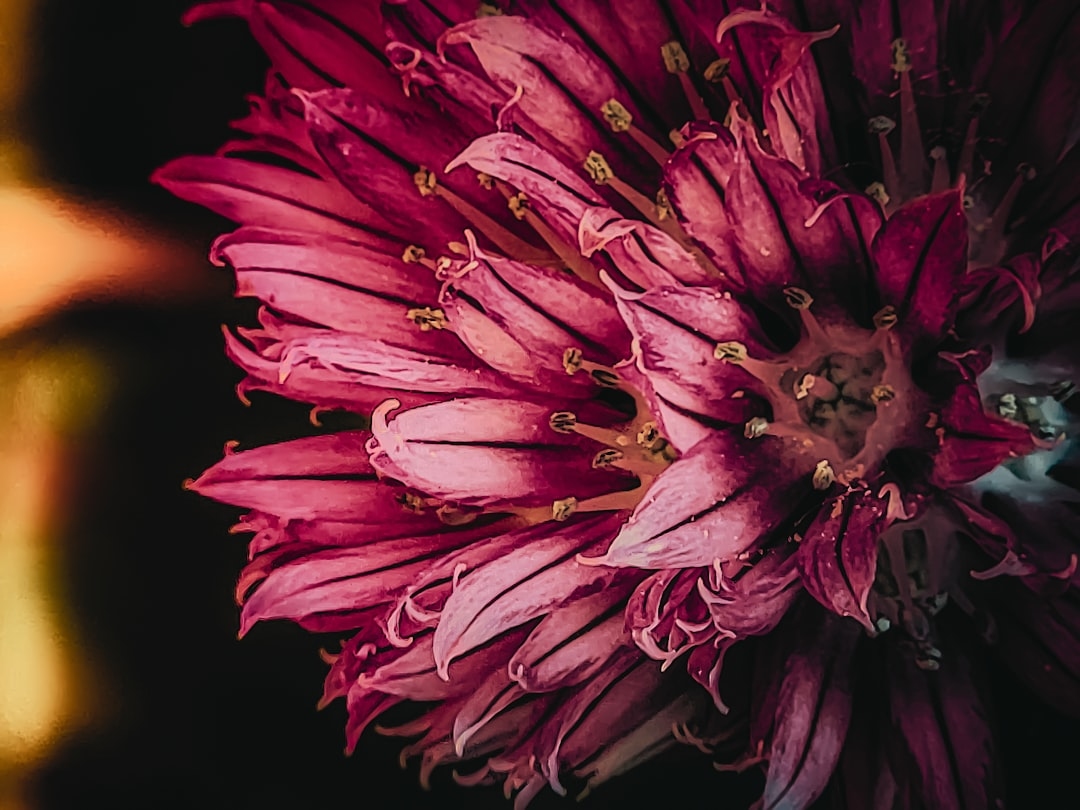
The fix took five minutes to implement and cost nothing. She moved a sheet of matte gray foam board (purchased at a dollar store) to the space behind each flower as she photographed it, giving herself a clean, neutral background at every angle. Her next shoot produced images that looked like they’d been taken in a professional studio. The lesson wasn’t about equipment or settings — it was about attention to the full frame, not just the subject.
Background management is one of the most consistently underestimated skills in flower photography. Train yourself to scan the entire viewfinder — corners included — before pressing the shutter. Distracting elements that seem minor in the field will dominate your attention in the finished image.
Editing Flower Photos: Workflows for Different Platforms
Capture is half the process. A raw flower image shot in ideal conditions still requires post-processing to reach its potential. Here’s how to approach editing efficiently and effectively.
Adobe Lightroom: The Industry Standard
Lightroom Classic (desktop, $9.99/month as part of Adobe’s Photography Plan) remains the most widely used editing tool among serious flower photographers. Its non-destructive RAW processing, color-specific HSL adjustments, and batch editing capabilities make it ideal for high-volume garden shoots. Key adjustments for flower images:
- Whites and Highlights: Pull these down on white and pale flowers to recover petal detail that would otherwise appear blown out.
- Clarity and Texture: Increase Texture (not Clarity) by +10 to +20 to bring out petal surface detail without adding harsh HDR-style halos.
- HSL Panel — Saturation: Selectively boost the saturation of your primary flower color by 10–15 points. Avoid boosting all colors globally, which produces an unnatural, oversaturated look.
- Vibrance vs. Saturation: Vibrance boosts less-saturated colors more aggressively and leaves already-saturated colors alone — it’s generally safer than global Saturation adjustments for floral work.
Alternatives Worth Knowing
Capture One (starting at $24/month) offers superior color grading tools and is preferred by photographers who shoot for print or stock licensing where color accuracy is critical. Its skin tone handling is irrelevant for flower photography, but its color editor for isolating and adjusting specific hues is genuinely more powerful than Lightroom’s HSL panel.
Snapseed (free, iOS and Android) is a legitimate mobile editing option for smartphone flower photographers. Its Selective tool allows you to increase structure (similar to Texture) on specific areas of the frame — the petals — without affecting the background bokeh. The Healing tool efficiently removes small distracting elements like dead leaves or water spots on petals.
Editing for Instagram vs. Print
Instagram’s image processing compresses uploaded files aggressively. To minimize quality loss, export images at 1080 x 1350 pixels (portrait format, which maximizes screen real estate in the feed), sRGB color space, at maximum JPEG quality. Slightly sharpen images in Lightroom’s Export dialog (Amount: 65, Radius: 0.8) specifically for screen output — this compensates for Instagram’s compression.
For print output, work in Adobe RGB color space and export at the full resolution of your sensor. A 24-megapixel file produces a print-quality image up to approximately 16 x 20 inches at 300 DPI. For large format printing (24 x 36 inches and above), consider using Lightroom’s AI Super Resolution feature, which doubles linear resolution while preserving detail effectively.
Smartphone Flower Photography: Getting Professional Results
Smartphone cameras have closed the quality gap with dedicated cameras significantly over the past five years. With intentional technique, a current flagship smartphone can produce flower images that are genuinely difficult to distinguish from those shot on a mirrorless camera in a social media context.
Using Portrait Mode and Macro Mode Intelligently
Portrait mode on smartphones uses computational depth sensing to simulate shallow depth of field. For flowers above approximately 8 inches in height, this works well. For very small flowers (under 2 inches) or for ultra-close macro work, Portrait mode often struggles with edge detection — you’ll see unnatural blurring along petal edges where the AI misidentifies the subject boundary.
Many current smartphones (iPhone 15 series, Pixel 8 Pro, Samsung Galaxy S24) include a dedicated macro mode that allows focusing as close as 1–2 centimeters from the subject. These macro modes produce remarkable detail at this distance, but they require very steady hands or a small tripod — the slightest movement creates blur at macro distances.
Third-Party Apps for Manual Control
The native camera app on most smartphones limits manual control. For serious flower photography on a smartphone, consider Halide Mark II (iOS, $2.99/month or $11.99/year) or ProCamera (iOS, $7.99). Both offer manual focus peaking, RAW capture, and histogram display — tools that professional photographers rely on and that matter for precise floral work.
On Android, Camera FV-5 ($3.95) offers similar DSLR-style manual controls and shoots in RAW DNG format, giving you full latitude in post-processing. Shooting in RAW on a smartphone produces files roughly 4–5x larger than JPEG but preserves significantly more tonal information in highlights and shadows.
Building an Instagram Aesthetic for Flower Photography
Consistency is the currency of Instagram growth. A grid that looks cohesive — in color palette, lighting style, or compositional approach — attracts followers and communicates professionalism. Random posting, even of individually beautiful images, rarely builds an audience.
Developing a Signature Style
The most recognizable floral accounts on Instagram are defined by one or two consistent aesthetic choices: a dark moody editing style with deep shadows and desaturated greens, or a bright airy style with lifted shadows and pastel tones, or a film-emulation style with specific grain and color shifts. Pick one direction and develop it deliberately rather than changing styles between posts.
Creating a custom Lightroom preset for your style and applying it as a starting point for every edit produces consistency efficiently. Your preset doesn’t need to be perfect for every image — it’s a baseline that you then refine per image — but it ensures a recognizable visual DNA across your feed.
Captions, Hashtags, and Posting Strategy
Instagram’s algorithm in 2026 and into 2026 has continued to favor Reels for reach, but static photography posts perform strongly among engaged, niche audiences — which is exactly the audience flower photography attracts. Post frequency matters less than posting consistently: three times per week at consistent times outperforms daily posting followed by two-week gaps.
For hashtags, use a combination of high-volume tags (#flowerphotography, #botanicalphotography) with medium-volume tags (#dahlialove, #macroflowers) and small niche tags (#springbloom, #gardenphotography). Instagram’s own guidance has shifted toward fewer, more targeted hashtags — 5 to 10 is currently more effective than 30.
Seasonal Planning for Flower Photography
Working with nature’s calendar rather than against it produces better images and a more sustainable shooting practice. Each season offers distinct subjects and lighting conditions worth planning around.
Spring and Summer: Peak Season
Spring brings the widest variety in the shortest window. Cherry blossoms (USDA Hardiness Zones 5–8) typically peak for 7–10 days in late March to early April. Tulips (Zones 3–8) follow in April. Peonies (Zones 3–8) bloom in May through June — the most photographed flower of the season, with good reason. Plan shoots around bloom peak predictions using apps like PlantNet or local botanical garden bloom calendars.
Summer extends through dahlias, sunflowers, zinnias, and wildflowers. The challenge in high summer is harsh midday light. Shift your shooting schedule aggressively toward the first two hours after sunrise, when light is soft and directional and dew is still present on petals.
Fall and Winter: The Underexplored Seasons
Fall flower photography is dramatically underserved on Instagram relative to spring. Late-season dahlias, chrysanthemums, and asters photograph beautifully against autumn foliage backgrounds. The lower sun angle in fall extends the golden hour window by 15–20 minutes compared to summer.
Winter flower photography requires intentionality. Forced bulbs (amaryllis, paperwhites) provide indoor subjects. Frost and ice on dried seed heads and rose hips produce textural images unlike anything achievable in warmer months. A macro shot of frost crystals on a dried hydrangea petal in morning light is a technically challenging, visually striking image that very few photographers pursue.
Frequently Asked Questions About Flower Photography
What camera settings should I use for flower photography?
For most single-flower portraits outdoors, start at f/5.6 for moderate depth of field, ISO 200–400, and a shutter speed of 1/250 second or faster to freeze any wind movement. Shoot in RAW format for maximum editing latitude. Adjust aperture based on how much of the flower you want in sharp focus: wider apertures (f/1.8–f/2.8) isolate details, while f/8–f/11 keeps the entire bloom sharp.
What is the best lens for flower photography?
A 90mm–105mm macro lens is the most versatile choice for dedicated flower photography. It achieves 1:1 magnification for extreme close-up work, provides comfortable working distance (8–12 inches), and produces excellent background blur at moderate apertures. An 85mm f/1.4 prime lens is an excellent alternative for environmental flower portraits where you want soft backgrounds but don’t need true macro capability.
How do I photograph white flowers without overexposing them?
Expose to preserve highlight detail by dialing in -0.7 to -1.0 stops of exposure compensation from your camera’s metered reading. Shoot in RAW format, which retains more recoverable highlight information than JPEG. Shoot on overcast days when possible — diffuse light eliminates the harsh contrast that causes blown highlights on white petals. In editing, pull your Highlights and Whites sliders down to recover petal texture.
Can I do professional flower photography with a smartphone?
Yes, for digital and social media outputs. Current flagship smartphones (iPhone 15 Pro, Samsung Galaxy S24 Ultra, Google Pixel 8 Pro) shoot in RAW format, offer macro modes, and produce images suitable for Instagram, websites, and digital publications. For large-format print (16 x 20 inches and above), editorial licensing, or stock photography libraries, a dedicated camera with a macro lens gives you significantly more flexibility and image quality.
What time of day is best for outdoor flower photography?
The first hour after sunrise and the hour before sunset — the golden hour — produce the most flattering directional light for flower photography. Overcast days provide excellent soft, even light throughout the day and are particularly good for white, pastel, and multi-petal flowers like peonies and roses. Avoid midday shooting between 10 a.m. and 2 p.m. in summer, when direct overhead sun creates harsh shadows and washes out color.
Taking Your Flower Photography Further
The gap between a good flower photograph and a great one is almost never about equipment. It’s about attention — to light, to background, to the precise moment of peak bloom, to the angle that hasn’t been photographed a thousand times before. The photographers whose work stands out in a genre this crowded are the ones who slow down, look carefully, and make deliberate choices at every stage of the process.
Start with one variable. If you’re new to manual settings, spend an entire shoot exploring only aperture — shoot the same flower at f/2, f/5.6, and f/11, and study the results. If composition is your focus, force yourself to shoot from three different angles for every subject before moving on. Deliberate, constrained practice builds intuition faster than random experimentation.
Consider submitting your work to botanical photography organizations like the American Society of Botanical Artists or entering competitions through the Royal Horticultural Society (which accepts international entries for its photography awards). The discipline of preparing work for critical evaluation accelerates growth in ways that social media validation alone doesn’t provide.
The flowers are waiting. All they ask is that you pay attention.