The Ultimate Guide to Rose Colors and Their Meanings
15 min read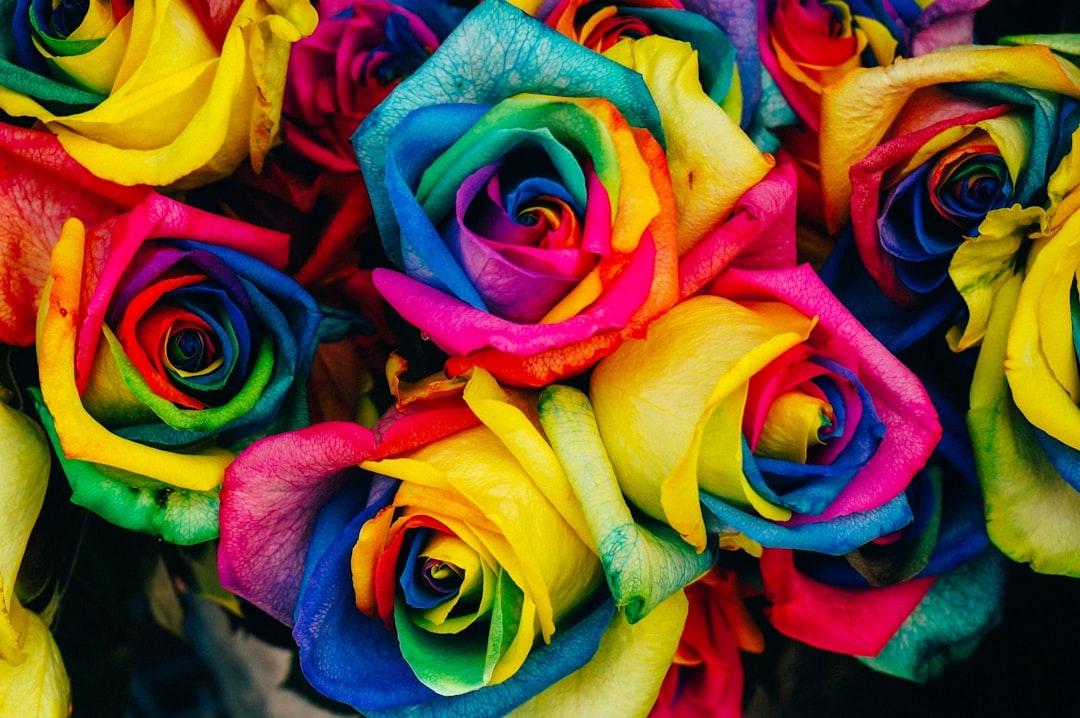
Contents:
- The Science Behind Rose Color: Why Roses Are the Colors They Are
- Red Roses: The Meaning Behind the Most Recognized Flower on Earth
- Shades of Red and Their Specific Meanings
- Pink Roses: The Most Versatile Color in the Rose Spectrum
- Light Pink: Grace, Admiration, and Gentle Affection
- Deep Pink: Appreciation and Gratitude
- Coral: Desire and Enthusiasm
- White Roses: Purity, Silence, and New Beginnings
- Cream vs. Pure White: A Meaningful Distinction
- Yellow Roses: A Color Whose Meaning Has Completely Transformed
- Orange Roses: Energy, Pride, and Passionate Fascination
- Purple and Lavender Roses: Enchantment, Mystery, and Royalty
- Lavender vs. Deep Purple: Distinct Meanings
- Green Roses: The Unexpected Symbol of Growth and Renewal
- Multicolored, Bi-Color, and Rainbow Roses: What They Mean
- Common Mistakes to Avoid When Choosing Rose Colors
- Using the Rose Colors Meanings Guide for Specific Occasions
- Weddings and Anniversaries
- Sympathy and Funeral Arrangements
- Corporate and Professional Gifting
- Growing Roses at Home: Color Considerations for US Gardeners
- How Rose Color Meanings Vary by Culture
- Frequently Asked Questions
- What does each rose color mean?
- What is the most romantic rose color besides red?
- Do blue roses exist naturally?
- What rose color is appropriate for a funeral?
- Can you mix rose colors in one arrangement?
- Choosing the Right Rose Color: Your Next Step
Most people think they know what a red rose means. They’re only half right. The symbolism of rose colors is far more nuanced — and far more scientifically interesting — than the Valentine’s Day industrial complex would have you believe. This rose colors meanings guide covers every major color variant, the pigment chemistry that produces each one, the cultural history that shaped their symbolism, and the practical knowledge you need to choose the right rose for the right moment. Whether you’re a first-time flower buyer or someone who has studied botany for years, there’s something here that will change how you look at a rose.
The Science Behind Rose Color: Why Roses Are the Colors They Are
Rose color isn’t arbitrary. It’s chemistry. The pigments responsible for rose coloration fall into three primary categories: anthocyanins, which produce reds, pinks, purples, and blues; carotenoids, which generate yellows and oranges; and flavonols, which contribute to white and cream tones by modifying how light reflects off the petals.
Red roses owe their iconic color to cyanidin, a specific anthocyanin. The intensity of that red — from pale crimson to deep burgundy — depends on the pH level within the petal cells and the concentration of co-pigments like flavonols. A slight shift in cellular pH can push the same underlying pigment toward purple rather than red, which is why some “red” roses carry unmistakable violet undertones in certain light conditions.
True blue roses don’t exist in nature. The rose genome lacks the enzymatic pathway to produce delphinidin, the anthocyanin responsible for blue pigmentation in flowers like delphiniums. Every “blue” rose you see in a florist’s cooler has been either dyed, genetically modified (Suntory’s Applause variety, developed in Japan in 2004, comes closest through transgenic engineering), or is actually a deep purple misrepresented in marketing. This distinction matters when you’re spending money on a premium arrangement.
Black roses are similarly a myth in their pure form. What’s sold as “black” is invariably a very deep red or burgundy — varieties like Black Baccara and Black Magic, which absorb so much light that they appear nearly black in photographs or low-light environments.
Red Roses: The Meaning Behind the Most Recognized Flower on Earth
Rosa gallica officinalis — the Apothecary’s Rose — has been cultivated for over 2,000 years, making red roses one of humanity’s oldest deliberate plant relationships. The Romans used them in festival garlands. Medieval European courts used them as political emblems (most famously in England’s Wars of the Roses, where red symbolized the House of Lancaster and white the House of York). By the Victorian era, the specific red rose had become the dominant symbol of romantic love through the language of flowers — floriography — a coded communication system that reached its peak in the 1840s.
Today, the US imports roughly 250 million roses for Valentine’s Day alone, the overwhelming majority of them red, primarily from farms in Colombia and Ecuador. That commercial dominance has both reinforced the red rose’s romantic symbolism and, in some ways, diluted it. Red roses are so expected in romantic contexts that a gift of red roses now communicates convention as much as passion.
Shades of Red and Their Specific Meanings
Not all red roses carry identical symbolism. Understanding shade distinctions gives you a finer instrument of communication:
- Bright red (scarlet): Passionate, urgent love. The classic Valentine’s rose. Best for new relationships or dramatic romantic declarations.
- Deep red (crimson/burgundy): Deep, mature devotion. More appropriate for long-term partners, anniversaries, and serious commitments. Varieties like Mr. Lincoln and Pope John Paul II fall here.
- Dark red (near-black): Unconscious beauty, mourning, or elegance. Used in Gothic-inspired event design and sophisticated sympathy arrangements. Black Baccara is the premier commercial variety.
At retail, red roses in the US range from $1.50–$3.50 per stem for standard long-stem grocery store varieties to $6–$12 per stem for premium garden varieties at specialty florists. Farm-direct purchasing through platforms like FiftyFlowers or Mayesh Wholesale typically saves 35–50%.
Pink Roses: The Most Versatile Color in the Rose Spectrum
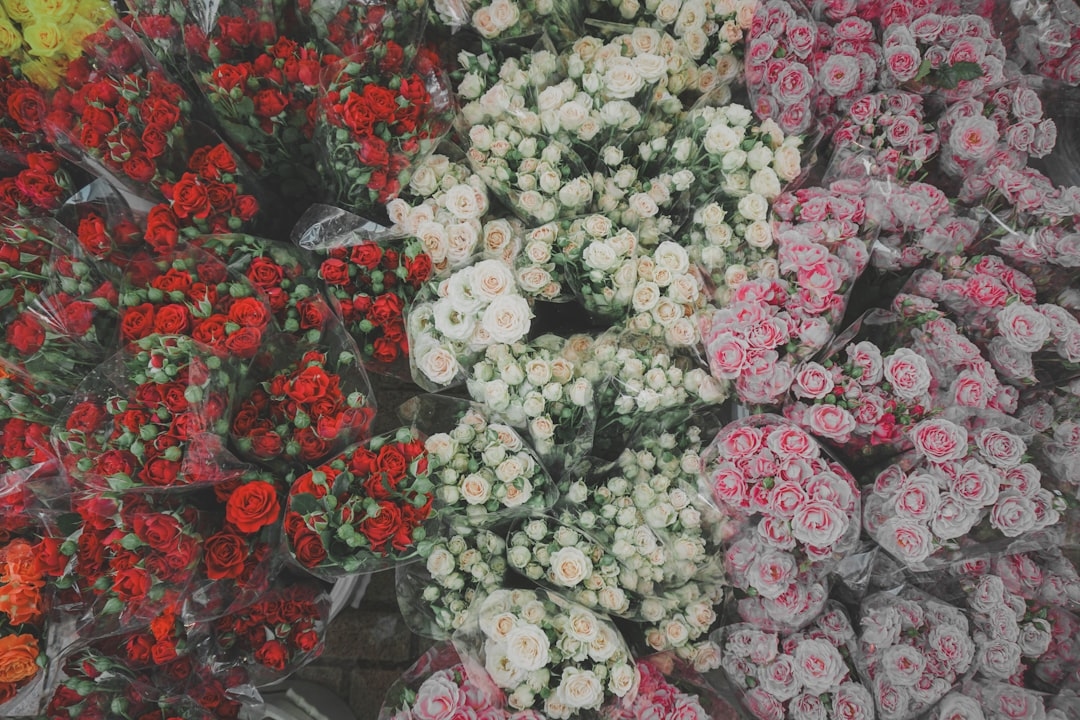
Pink is the broadest and most nuanced category in any rose color symbolism reference. The range spans from barely-there blush to saturated hot pink, and the meaning shifts significantly across that spectrum. Pink roses result from lower concentrations of cyanidin compared to red roses — essentially, diluted red chemistry producing softer expression.
Light Pink: Grace, Admiration, and Gentle Affection
Light pink roses — blush, shell pink, and pale rose — communicate admiration, sweetness, and gentle sympathy. They’re the dominant choice for baby shower arrangements, get-well bouquets, and expressions of gratitude that don’t carry romantic weight. The variety Eden (also called Pierre de Ronsard) is one of the most photographed light pink roses in the world, recognized by its multi-layered, old-fashioned cupped form.
Light pink roses are also the workhorse of the wedding industry. In a 2026 survey by The Knot, pink roses appeared in over 38% of bridal bouquets surveyed — more than any other single flower color.
Deep Pink: Appreciation and Gratitude
Hot pink and deep pink roses carry stronger energy: appreciation, recognition, and thankfulness. They’re appropriate for thank-you arrangements, achievement celebrations, and the kind of admiration that borders on but stops short of romance. The variety Hot Princess and Topaz are popular commercial choices in this range.
Coral: Desire and Enthusiasm
Coral roses occupy an interesting space between pink and orange. They symbolize desire, enthusiasm, and fascination — making them popular for early-stage romantic contexts where red feels too heavy. Coral roses have seen a significant uptick in wedding use since approximately 2018, particularly in West Coast ceremonies that favor warm, earthy color palettes.
White Roses: Purity, Silence, and New Beginnings
White roses are chemically defined by the near-absence of anthocyanin pigmentation, leaving flavonols and structural light reflection to dominate the visual effect. The result is a flower that looks different in every light condition — creamy and warm in candlelight, cool and precise in daylight — which contributes to its symbolic range.
In Western tradition, white roses represent purity, innocence, and reverence. They’re the second most common wedding rose (after pink) and the primary flower in most sympathy and funeral arrangements in the US. They also carry associations with new beginnings and fresh starts, which is why they appear frequently at graduations, christenings, and first communions.
The variety Avalanche is the gold standard of white roses in the commercial US market: large bloom heads (4–5 inches when fully open), long vase life of 10–14 days, minimal fragrance, and consistent availability year-round. For fragrant white roses, Jardins de Bagatelle and Yves Piaget White offer significantly more scent at a higher price point.
Cream vs. Pure White: A Meaningful Distinction
Cream roses — ivory, warm white, antique white — carry softer connotations than stark white. They suggest elegance, thoughtfulness, and charm rather than the more formal purity of bright white. In floral design, cream roses bridge warm and cool palettes in ways that pure white cannot. For weddings with a vintage or bohemian aesthetic, cream roses like Patience and Caramel Antike are far more versatile than standard white varieties.
Yellow Roses: A Color Whose Meaning Has Completely Transformed
Yellow roses have arguably the most interesting symbolic history of any color on this list. In Victorian floriography, yellow roses represented jealousy, infidelity, and dying love — a deeply negative symbol. By the mid-20th century in the United States, that meaning had almost entirely inverted. Yellow roses today universally signal friendship, joy, warmth, and platonic affection.
This shift is a useful reminder that flower symbolism is cultural, not fixed. It’s constructed and reconstructed by the societies that use it.
Yellow rose pigmentation comes from carotenoids — the same class of compounds responsible for the color of carrots, pumpkins, and autumn leaves. Unlike anthocyanins, carotenoids are fat-soluble and relatively stable, which is part of why yellow roses hold their color well even as they age and dry.
In Texas, yellow roses carry specific state pride symbolism, rooted in the 19th-century folk song “Yellow Rose of Texas.” Florists in Houston and Dallas report significantly higher yellow rose sales year-round compared to national averages — a regional cultural imprint with measurable commercial effects.
🌹 What the Pros Know
Professional floral designers never build monochromatic rose arrangements for weddings or events without introducing at least one tonal variation. A “yellow rose” centerpiece that uses three shades of yellow — pale lemon, golden yellow, and amber — creates visual depth that a single-shade arrangement cannot achieve. Ask your florist specifically for “tonal layering” within your chosen color. It adds no significant cost (typically $0–$5 per arrangement) but dramatically increases visual sophistication in photographs.
Orange Roses: Energy, Pride, and Passionate Fascination
Orange roses are produced by a blend of anthocyanin and carotenoid pigments — essentially, red and yellow chemistry working in concert. The result is a color that reads as energetic, warm, and attention-commanding. Symbolically, orange roses represent fascination, enthusiasm, desire, and pride. They’re the natural choice for congratulatory arrangements — promotions, graduations, athletic achievements, and creative milestones.
Orange roses have grown substantially in popularity since approximately 2015, driven largely by the rise of warm-toned, “maximalist” wedding aesthetics on platforms like Pinterest and Instagram. Varieties like Bengal Tiger, Voodoo, and Terracotta are particularly popular in event florals because their orange tones hold well under artificial lighting, which causes many other rose colors to shift in photographs.
In sympathy contexts, orange roses are almost never appropriate — their energy and warmth read as celebratory rather than consoling. This is one of the clearest cases where color meaning has functional consequences.
Purple and Lavender Roses: Enchantment, Mystery, and Royalty
Purple roses are produced by high concentrations of anthocyanins in conditions that push the pigment toward blue rather than red — typically through specific cultivar breeding rather than natural environmental variation. They’re among the rarest naturally occurring rose colors, which historically connected them to royalty, wealth, and exclusivity. Access to purple dyes and purple flowers was genuinely expensive and difficult before synthetic dye chemistry in the 19th century.
Today, purple roses symbolize enchantment, mystery, and love at first sight. They’re popular in arrangements meant to convey that something feels magical or unprecedented — making them a strong choice for engagement announcements, anniversary milestones, and theatrical event design.
Lavender vs. Deep Purple: Distinct Meanings
- Lavender roses: Enchantment, wonder, and adoration. The softer, more romantic of the two purple tones. The variety Sterling Silver was among the first commercial lavender roses and remains widely available.
- Deep purple/violet roses: Majesty, dignity, and splendor. Used more frequently in formal events and upscale corporate gifting. Varieties like Ebb Tide carry an unusually strong fragrance for a modern hybrid tea rose — a genuine rarity in commercial floriculture.
Green Roses: The Unexpected Symbol of Growth and Renewal
Green roses are genuinely unusual and botanically interesting. Most “green” roses — like the variety Super Green (also marketed as Jade) — are actually fully formed roses whose petals express chlorophyll alongside or instead of anthocyanin pigments. They look like a rose that never completed its color development, which is precisely where their symbolism originates: fertility, growth, abundance, and the balance between nature and cultivation.
Green roses are not widely understood by the general public, which makes them a powerful tool for event designers who want to create a response of surprise and curiosity. They pair exceptionally well with white and cream roses in spring wedding arrangements, and their unusual appearance photographs strikingly well in high-contrast floral designs.
Retail pricing for green roses typically runs $3–$6 per stem — slightly above standard red or pink varieties — due to their more specialized production.
Multicolored, Bi-Color, and Rainbow Roses: What They Mean
Bi-color roses — varieties with petals that display two distinct colors, like red petals edged in yellow or white centers bleeding into pink edges — occur naturally through specific breeding programs. They symbolize dual emotions, complexity, or the coexistence of friendship and love. The variety Double Delight, with its creamy white petals edged in bright red, is perhaps the most famous bi-color rose in American horticulture and carries strong fragrance as a bonus.
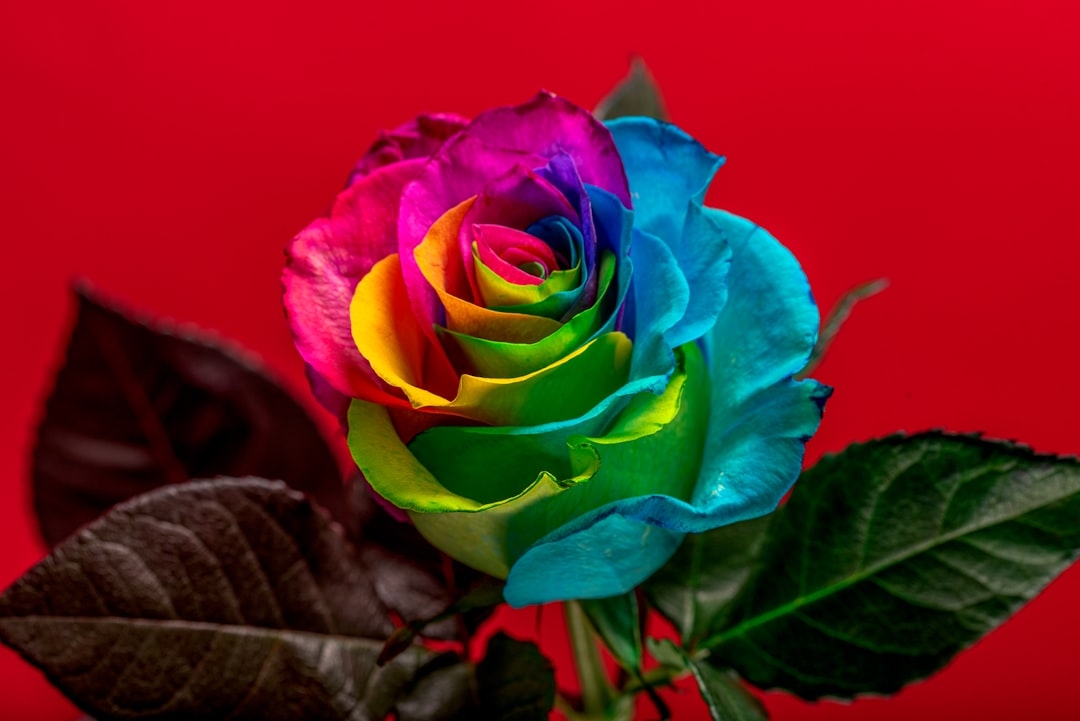
Rainbow roses, by contrast, are not naturally occurring. They’re produced by splitting a white rose’s stem into multiple water containers, each containing a different food-safe dye. The rose draws up all colors simultaneously through capillary action, resulting in petals with distinct sections of color. They have no traditional symbolic meaning — they’re a novelty product. Vase life is typically shorter than undyed roses (4–7 days versus 7–14) because the dye process stresses the stem.
Dyed roses in general — blue, black, teal, or rainbow — should always be disclosed by a florist. Charging premium prices for dyed roses while implying natural coloration is a known practice in some retail environments.
Common Mistakes to Avoid When Choosing Rose Colors
Even well-intentioned rose purchases go wrong. Here are the most frequent errors and how to sidestep them:
- Sending yellow roses to a romantic partner without context: While yellow roses now predominantly mean friendship in the US, the older association with jealousy persists in some cultures — particularly in some European and Latin American contexts. When in doubt for a romantic occasion, pair yellow with another color or choose a different hue.
- Using white roses exclusively at a celebration: White’s strong association with sympathy and funerals in American culture means an all-white arrangement at a birthday or graduation can read as somber. Add cream, blush, or light green accents to shift the tone.
- Assuming orange means romance: Orange roses communicate enthusiasm and fascination, not love. Sending orange roses instead of red as a romantic gesture frequently lands with the wrong emotional register.
- Conflating purple roses with lavender roses: They carry meaningfully different tones. Deep purple reads as formal and majestic; lavender reads as soft and enchanting. In a small arrangement, the wrong purple can feel either too heavy or too casual for the occasion.
- Buying rainbow or heavily dyed roses at premium prices: Novelty roses are a high-margin retail product. They typically cost 2–3x the price of undyed premium roses while having inferior vase life. For meaningful occasions, undyed roses in carefully chosen colors will always outperform novelty dyeing.
Using the Rose Colors Meanings Guide for Specific Occasions
Weddings and Anniversaries
For weddings, the most commonly paired rose colors are white and blush (purity and gentle romance), red and white (passionate love balanced with reverence), and coral and cream (warmth and elegance). For anniversaries, the convention of using the same rose color year after year is less meaningful than choosing a color that reflects the current character of the relationship — deep red for enduring devotion, lavender for continued enchantment, or yellow for a partnership rooted in genuine friendship.
Sympathy and Funeral Arrangements
White remains the standard for sympathy roses in the US, but deep red and dark pink are increasingly used in personalized tributes to reflect the personality of the person being honored. If the deceased had a known favorite color or birth flower, incorporating that into the arrangement adds a layer of personal acknowledgment that generic white arrangements cannot achieve.
Corporate and Professional Gifting
Orange roses (achievement and enthusiasm), yellow roses (appreciation and warmth), and white roses (clean, formal respect) are the strongest choices for professional contexts. Red roses in professional settings carry romantic connotations strong enough to create ambiguity or discomfort, particularly in workplace environments. The safest premium corporate rose choice is a monochromatic arrangement of white or cream roses in a high-quality vessel.
Growing Roses at Home: Color Considerations for US Gardeners
For gardeners in USDA Hardiness Zones 5–9, which covers the majority of the continental US population, the color of roses you can successfully grow is partly a function of which species and cultivars are bred for your climate. Not every color is available in every hardiness-appropriate variety.
Landscape roses — the shrub rose class that includes the Knock Out series — are available in red, pink, coral, and yellow, and are reliably hardy through Zone 5 with minimal winter protection. They bloom repeatedly from late spring through first frost and require far less maintenance than hybrid tea roses.
Hybrid tea roses, which produce the classic high-centered blooms associated with florist roses, are available across the full color spectrum but require more intensive care: regular feeding with a balanced rose fertilizer (10-10-10 NPK or a rose-specific formula), disease management (black spot is the primary threat in humid regions east of the Rockies), and in Zone 5 and colder, significant winter protection.
For purple and lavender roses specifically, note that many commercially bred purple varieties — including Ebb Tide — are rated only to Zone 6. Gardeners in Zone 5 (Chicago, Minneapolis, Denver) should confirm cold hardiness before purchasing.
How Rose Color Meanings Vary by Culture
The symbolism in this guide reflects dominant American and Western European floral tradition, but rose color meanings shift meaningfully across cultures:
- Japan: Yellow roses carry the same jealousy connotation that Victorian England assigned them — the American inversion to “friendship” has not taken hold.
- France: White roses are more strongly associated with death and mourning than in the US; gifting all-white roses socially can be interpreted negatively.
- Mexico and much of Latin America: Red roses retain their universal romantic meaning, but yellow carries varied regional interpretations — in some regions, friendship; in others, death or bad luck.
- China: Pink roses are the preferred romantic rose, considered more appropriate for expressing love than the Western red standard.
- Iran: Roses in general — particularly red — are deeply embedded in classical Persian poetry as symbols of divine love, beauty, and spiritual longing. The rose (gol) is one of the most significant symbols in Persian literary culture.
If you’re choosing roses for someone from a cultural background different from your own, a brief consultation with a florist who specializes in multicultural event work is well worth the conversation.
Frequently Asked Questions
What does each rose color mean?
Red roses symbolize passionate love and romance. Pink roses represent admiration, gratitude, and gentleness. White roses convey purity, reverence, and new beginnings. Yellow roses mean friendship and joy. Orange roses signal enthusiasm, desire, and pride. Purple roses symbolize enchantment and mystery. Lavender roses represent adoration and wonder. Green roses signify growth, renewal, and balance.
What is the most romantic rose color besides red?
Deep pink and coral roses are the strongest romantic alternatives to red. Coral communicates desire and fascination without the formal weight of red. Lavender roses — symbolizing enchantment and love at first sight — are also considered romantic, particularly for early-stage relationships or anniversaries celebrating something that still feels special and rare.
Do blue roses exist naturally?
No. True blue roses do not exist in nature because roses lack the enzymatic pathway to produce the blue pigment delphinidin. All commercially available “blue” roses are either dyed, or deeply purple varieties marketed as blue. Suntory’s Applause, developed through transgenic engineering in Japan, comes closest to true blue but still registers as purple-blue to most observers.
What rose color is appropriate for a funeral?
White roses are the standard choice for funeral and sympathy arrangements in the US. Deep red roses (symbolizing enduring love and respect) and dark pink roses are also appropriate, particularly in personalized tribute arrangements. Orange and yellow roses are generally not suitable for sympathy contexts, as their energetic warmth reads as celebratory.
Can you mix rose colors in one arrangement?
Yes — and professional floral designers almost always do. The most effective mixed-color rose arrangements use 2–3 colors that share tonal proximity (warm tones together, cool tones together) or a deliberate contrast with a clear focal color. Red and white is the most traditional pairing; pink, cream, and lavender is popular for soft romantic arrangements; orange, coral, and yellow creates a warm, celebratory palette ideal for achievement occasions.
Choosing the Right Rose Color: Your Next Step
This rose colors meanings guide gives you a working vocabulary for one of the most expressive tools in human social communication. But knowledge only matters when it’s applied. The next time you’re choosing roses — for a gift, an event, a garden, or a sympathy arrangement — start with the emotional register you want to communicate, then work backward to color, then to variety, then to source.
That sequence — meaning first, logistics second — is what separates an arrangement that lands from one that’s merely pretty. Talk to a florist who asks you what you’re trying to say, not just what colors you like. The right color, chosen deliberately, does work that no card or note can fully replicate.