The Art of Hand-Tied Bouquets: A Complete Tutorial
17 min read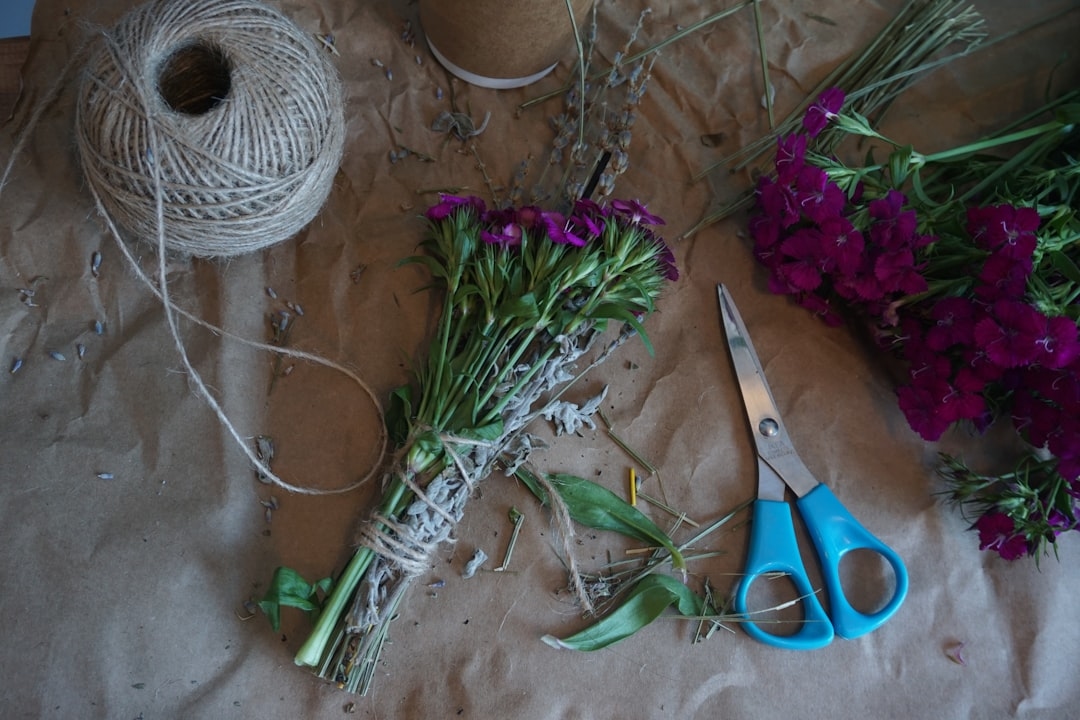
Contents:
- What Is a Hand-Tied Bouquet and Why Does It Matter?
- Tools and Supplies You’ll Need Before You Start
- Essential Tools
- Optional but Helpful
- Choosing Your Flowers: The Three-Layer System
- Layer One: Focal Flowers
- Layer Two: Secondary Flowers
- Layer Three: Filler and Texture
- Seasonal Flower Availability in the US: A Practical Guide
- Regional Differences Worth Knowing
- Step-by-Step: How to Make a Hand-Tied Bouquet
- Step 1: Prepare Your Stems
- Step 2: Build Your Base
- Step 3: The Spiral Technique in Practice
- Step 4: Build the Profile and Fill Gaps
- Step 5: Bind and Tie
- Step 6: Trim the Stems
- Step 7: Finish and Present
- Common Mistakes and How to Fix Them
- Stems Going Every Direction
- Bouquet That Won’t Stand Up in the Vase
- Blooms Bunched Together in One Area
- Flowers Wilting Within 24 Hours
- Ribbon Coming Undone
- Scaling Up: Bridal and Large Event Bouquets
- Caring for Your Finished Bouquet
- Frequently Asked Questions
- How many flowers do I need for a hand-tied bouquet?
- What is the best flower to use in a hand-tied bouquet for a beginner?
- How do you keep a hand-tied bouquet fresh?
- What is the difference between a hand-tied bouquet and a vase arrangement?
- Can I make a hand-tied bouquet the day before I need it?
- Take Your First Bundle of Stems and Start Spiraling
In 1868, a young woman named Eliza Tipper walked into a London flower market with nothing but a shilling and a desire to make something beautiful for her mother’s birthday. She left with a bundle of sweet peas, some trailing ivy, and a handful of larkspur — and assembled them on the street corner into a loose, spiraling posy that passers-by stopped to admire. Nobody taught her the technique. She’d simply watched the flower sellers long enough to understand the basic principle: rotate, layer, bind. That instinct — that quiet confidence with a handful of stems — is exactly what this hand tied bouquet tutorial guide will give you.
- Choose a focal flower (like a rose or peony) and gather 10–20 stems total.
- Hold your first stem vertically, then add stems at a 45-degree angle, rotating the bouquet a quarter-turn between each addition.
- Keep all stems spiraling in the same direction — this is the key to the technique.
- Once your bouquet reaches the desired size, tie it firmly with twine or floral wire at the binding point (where your hand grips).
- Trim all stems to an even length — typically 8 to 12 inches below the binding point.
- Place immediately in water.
That’s the skeleton. The sections below flesh out every detail — from flower selection to finishing with ribbon.
What Is a Hand-Tied Bouquet and Why Does It Matter?
A hand-tied bouquet is exactly what it sounds like: a gathering of flowers assembled and bound entirely by hand, without the use of a foam block (oasis) or wire frame to hold the stems in position. The structure comes entirely from the spiral arrangement of the stems themselves. When done correctly, the bouquet stands upright in a vase on its own, supported by the geometry of the stems fanning outward at the base.
This distinguishes it from a “constructed” arrangement, where stems are individually inserted into foam or a frog (a pin holder placed at the bottom of a vase). Hand-tied bouquets are older, more portable, and — once you understand the spiral — actually easier to control. A florist’s foam arrangement is forgiving of mistakes because each stem is independent. A hand-tied bouquet demands consistency, because every stem affects the balance of the whole.
The spiral technique dates back centuries. Dutch Golden Age paintings from the 1600s — the ones packed with tulips, roses, and convolvulus in ornate vases — almost certainly depict flowers that were hand-gathered and spiraled before being placed. The modern hand-tied bouquet, with its clean binding point and domed profile, became the dominant wedding and gift style in the UK during the 1980s and crossed into mainstream American floristry by the 1990s.
Today, a professionally made hand-tied bouquet at a US florist costs between $65 and $200 depending on the flowers and market. Making one yourself — using flowers from a grocery store, farmers market, or your own garden — can bring that cost down to $15–$40. The skill pays for itself quickly.
Tools and Supplies You’ll Need Before You Start
One of the pleasures of this technique is how little equipment it requires. You don’t need a workbench full of specialized tools. But the few things you do need, you need to have right.
Essential Tools
- Floral snips or sharp scissors: Dull blades crush stem cells instead of cutting them, which shortens vase life dramatically. A decent pair of Japanese-style floral snips (brands like Okatsune or ARS are widely available for $20–$35) will outlast cheap scissors by years.
- Twine, floral wire, or rubber bands: For binding. Garden twine is the most beginner-friendly — it grips without slipping. Floral wire is faster but can cut into delicate stems if overtightened.
- A clean bucket of water: Stems need to go straight into water after cutting. Room temperature water is fine; some florists prefer cool water for roses specifically.
- A clean work surface: Ideally waist height, so you’re not hunching. A kitchen island or a sturdy table works perfectly.
Optional but Helpful
- Flower food packets: The kind that come with grocery store flowers. They contain a biocide, sugar, and an acidifier that together extend vase life by an average of two to three days.
- Floral tape: Stretchy green tape used to reinforce weak stems or extend short ones by taping them to a wooden pick.
- A hand mirror: Prop it up so you can see the front of your bouquet while you build it from the back. Professionals do this constantly.
- Ribbon: For the finished binding. Satin ribbon, 1.5 inches wide, is the classic choice. Grosgrain and velvet ribbon both photograph beautifully.
Professional florists condition their flowers for a minimum of four hours — and ideally overnight — before arranging. Conditioning means cutting stems at a 45-degree angle under water (to prevent an air bubble from entering the stem), stripping all foliage that would sit below the waterline, and letting the flowers hydrate fully in a cool place. A fully conditioned stem lasts three to five days longer in a vase than one arranged straight from the packet. If you buy flowers the day before you plan to arrange them, this step alone is the single biggest upgrade you can make to your finished bouquet.
Choosing Your Flowers: The Three-Layer System
Professional florists don’t grab stems randomly. They build every bouquet around a three-layer structure: focal flowers, secondary flowers, and filler. Understanding this system transforms a chaotic bunch of stems into a balanced, intentional arrangement.
Layer One: Focal Flowers
Focal flowers are the headliners — the blooms your eye goes to first. They’re typically the largest, most visually dominant flowers in the bouquet, and they set the color palette. You’ll use between three and seven focal flowers in a standard hand-tied bouquet (odd numbers almost always look more natural than even ones).
Classic focal flowers for beginners include:
- Garden roses (not hybrid tea roses — garden roses have more petals and a softer, rounder shape)
- Peonies (available May through June; their billowing petals fill space beautifully)
- Sunflowers (an excellent beginner focal because their stems are sturdy and forgiving)
- Dahlias (café au lait and white dahlias are perennial favorites; available late summer through fall)
- Protea (dramatic, architectural, long-lasting — a good choice if you want a bouquet that feels more modern)
Layer Two: Secondary Flowers
Secondary flowers support the focal blooms without competing with them. They add texture, fill gaps, and reinforce the color story. You’ll typically use 1.5 to 2 times as many secondary stems as focal stems.
Good secondary choices include spray roses (multiple small blooms per stem), ranunculus, lisianthus, sweet peas, tulips, and anemones. Lisianthus deserves special mention for beginners: it’s inexpensive ($8–$12 per bunch at most grocery stores), comes in white, purple, and pink, has a long vase life of up to two weeks, and its ruffled petals mimic the look of much more expensive flowers.
Layer Three: Filler and Texture
Filler is what gives a bouquet its airiness and dimension. Without it, even beautiful flowers can look stiff and flat. Filler includes both soft, cloud-like materials and structured foliage.
- Soft fillers: Baby’s breath (gypsophila), waxflower, statice, astilbe, Queen Anne’s lace
- Textural foliage: Eucalyptus (silver dollar, seeded, or willow varieties), dusty miller, ferns, Italian ruscus, pittosporum
- Structural accent stems: Scabiosa pods, thistles, dried grasses, hypericum berries
A good rule of thumb: your bouquet should be roughly 60% flowers and 40% foliage and filler by visual volume. Many beginners under-use foliage, which makes their arrangements look sparse. Eucalyptus in particular is cheap, fragrant, and fills space generously — use more of it than you think you need.
Seasonal Flower Availability in the US: A Practical Guide
Buying in-season flowers does three things: reduces cost, maximizes freshness, and makes your bouquet look cohesive rather than assembled from whatever was left on the shelf. Here’s a quick seasonal breakdown for American buyers:
- Spring (March–May): Tulips, ranunculus, sweet peas, peonies (late April onward), lilac, daffodils, hyacinths, anemones
- Summer (June–August): Dahlias, zinnias, sunflowers, lavender, lisianthus, garden roses, cosmos, snapdragons
- Fall (September–November): Dahlias peak, marigolds, chrysanthemums, ornamental kale, dried grasses, hypericum berries, celosia
- Winter (December–February): Amaryllis, paperwhites, hellebores (increasingly available), forced branches like quince and forsythia, dried and preserved stems
Out-of-season flowers are available year-round from US florists because the wholesale market is supplied by growers in Colombia, Ecuador, and the Netherlands. But they cost more and have typically traveled farther, which can mean shorter vase life. For a self-taught beginner working from a farmers market or grocery store, staying seasonal gives you the best results per dollar spent.
Regional Differences Worth Knowing
Where you live in the US meaningfully affects what’s accessible and when. In the Northeast — particularly New England — peonies and lilac are garden staples that bloom abundantly in late May and are often sold at roadside stands for a fraction of what they cost in florist shops. Foragers in this region can also gather wild Queen Anne’s lace and meadow grasses from mid-summer onward.
In the South, the growing season stretches significantly longer. Dahlias can be grown almost year-round in USDA Zones 8 and 9 (covering much of Texas, Georgia, and the Carolinas), and camellias — rarely seen at northern florists — are cut-flower staples from December through March. Farmers markets in cities like Charleston and Austin routinely stock flowers that would be specialty items elsewhere.
On the West Coast, particularly in California’s growing regions around Carlsbad and Half Moon Bay, locally grown ranunculus, anemones, and sweet peas are available as early as February. The Bay Area’s year-round mild climate means florists there have access to a wider variety of fresh, locally grown material than virtually anywhere else in the country. If you’re in California, look for the California Cut Flower Commission’s “California Grown” designation at your local florist — it’s a reliable signal of freshness.
Step-by-Step: How to Make a Hand-Tied Bouquet
This is the core of the hand tied bouquet tutorial guide. Read through the entire process once before you begin — it’ll make the physical steps feel intuitive rather than mechanical.
Step 1: Prepare Your Stems
Before touching a single stem in a design context, prepare all your material. Strip all foliage from the bottom two-thirds of every stem. This accomplishes two things: it keeps the water clean (decomposing leaves turn water anaerobic quickly, which kills flowers), and it gives you a clean binding point to grip and tie.
Recut each stem at a 45-degree angle — this maximizes the surface area available for water uptake. Place stems immediately back into your water bucket. Work flower type by flower type: prepare all your focal flowers first, then your secondary flowers, then your filler.
Step 2: Build Your Base
Pick up one focal flower and hold it in your non-dominant hand (left hand if you’re right-handed), roughly 8 to 10 inches below the bloom head. This is your starting point. Your grip should be firm but not white-knuckled — you need enough movement in your fingers to rotate the bouquet.
Add your second stem — a piece of foliage or a secondary flower — at a 45-degree angle to the right of the first stem. You’ll notice the two stems cross each other below your grip point. That crossing is the beginning of the spiral.
Now rotate the entire bouquet a quarter-turn toward you (clockwise if you’re right-handed). Add your third stem at the same 45-degree angle. Rotate again. Add a fourth stem. The bouquet is building in a consistent spiral, all stems leaning in the same direction.
Step 3: The Spiral Technique in Practice
The spiral is the entire foundation of hand-tied arranging, and it’s where beginners most commonly go wrong. The mistake is adding stems randomly — some going left, some going right, some straight down. This creates a tangled, unstable bunch that won’t stand on its own.
The rule: every stem goes in the same rotational direction. Think of it as a pinwheel. If you’re building clockwise, every stem crosses the center of the bunch from left to right, leaning away from you at roughly 45 degrees. When you set the finished bouquet down on a table, the stems fan outward evenly in all directions and the heads dome upward — that’s how you know the spiral worked.
A useful mental check every few stems: look at the binding point (where your hand is). You should see stems crossing in a consistent pattern, like the spokes of a wheel slightly off-center. If it looks like a fist of parallel straws going straight down, you’ve stopped spiraling — loosen your grip slightly and correct the angle of the next few stems.
Step 4: Build the Profile and Fill Gaps
As you add stems, alternate between focal flowers, secondary flowers, and filler. Don’t cluster all your roses together — distribute them evenly around the bouquet so the eye travels across the whole arrangement rather than stopping at one dense patch.
Check the profile of your bouquet from the side. You want a gentle dome — highest in the center, sloping softly toward the edges. Stems placed toward the outer edge of the bouquet should lean at a slightly steeper angle (closer to 60 degrees) than stems in the center (closer to 30 degrees), which naturally produces this domed shape.
Filler goes in last. Use it to soften any hard edges and fill the visual gaps between larger blooms. Baby’s breath or waxflower tucked between roses gives the eye somewhere to rest and makes the whole arrangement feel more full than it actually is.
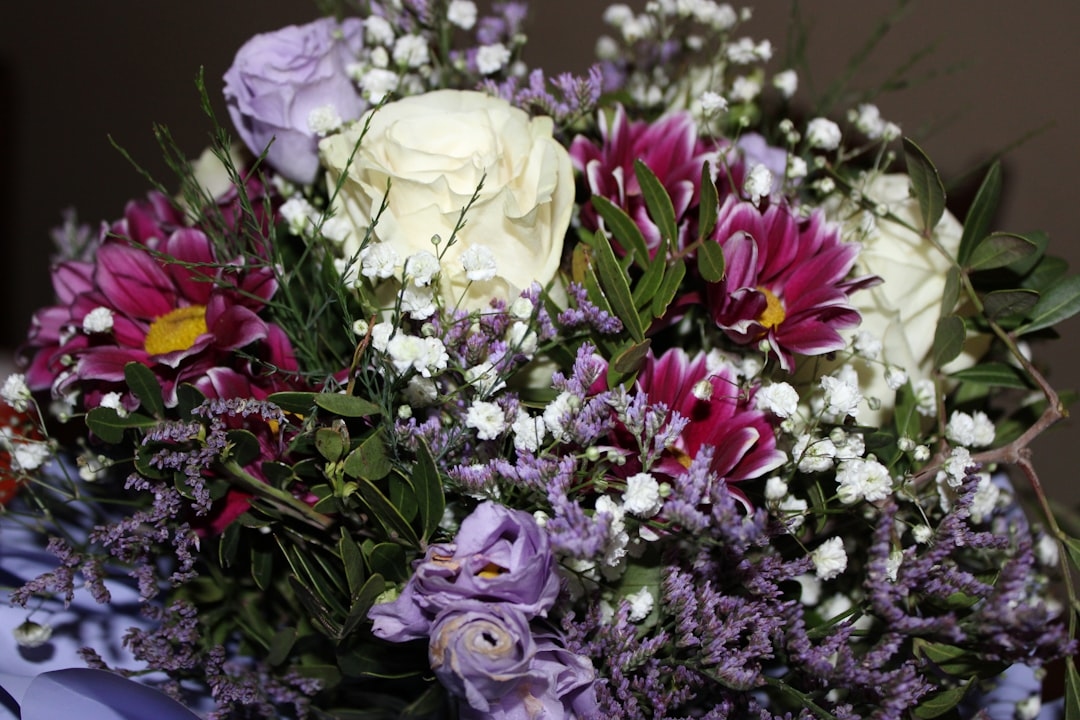
Step 5: Bind and Tie
When you’re satisfied with the shape, maintain your grip and pick up your twine or ribbon. Wrap it firmly around the binding point three to four times, pulling snugly enough to hold without crushing the stems, then tie off with a knot or bow. If you’re using floral wire, twist it around twice and fold the ends down.
Test the bind by gently shaking the bouquet. Stems should not slip or rattle. If they do, rewrap more tightly.
Step 6: Trim the Stems
Lay the bouquet on your work surface. Using your floral snips, cut all stems to a uniform length — typically leaving 8 to 12 inches below the binding point. The exact length depends on your vase: you want the binding point to rest just above the vase rim so the bouquet heads sit 3 to 6 inches above the lip of the vase.
Make the cut in one clean motion per stem. Sawing back and forth crushes the stem end. Place the trimmed bouquet back into water immediately.
Step 7: Finish and Present
A finished bouquet deserves a finished binding. Cut a length of 1.5-inch satin or grosgrain ribbon — about 30 to 36 inches is enough to wrap the stems several times and tie a bow. Start at the top of the binding point (just below the lowest bloom heads), wrap downward in overlapping spirals to cover the twine, wrap back upward, and tie a bow at the top. Secure with a pearl-headed pin pushed horizontally through the ribbon and stems if you want it to stay tidy.
Give the bloom heads a fine mist of water, especially if you’re working with roses or dahlias, which can wilt quickly in warm rooms. Display in a vase with an inch of water and fresh flower food.
Common Mistakes and How to Fix Them
Every beginner makes the same handful of errors. Knowing them in advance saves a lot of frustration.
Stems Going Every Direction
As described above, this is the most common error. Fix: stop, loosen your grip, and spend 30 seconds carefully re-angling the next three or four stems in the correct rotational direction. The spiral can be corrected mid-build if you catch it early.
Bouquet That Won’t Stand Up in the Vase
This usually means the stems are too parallel (not enough outward splay). It can also mean the binding point is too high — you need more stem length below the tie. Untie and re-examine the spiral. Add some heavier foliage stems near the outer edge to increase the base spread.
Blooms Bunched Together in One Area
You added focal flowers too close together in one section of the spiral without distributing them. This is hard to fix completely once the bouquet is built, but you can work some filler stems in around the cluster to break it up visually. Prevention: after adding each focal flower, rotate 180 degrees before adding the next one, which forces even distribution around the whole bouquet.
Flowers Wilting Within 24 Hours
Almost always a conditioning issue. Recut the stems under water, place the bouquet in cool water up to the binding point for two hours, and check that no foliage is submerged (it rots quickly and poisons the water). If stems still wilt, the flowers were already past their prime when you bought them — check for signs of freshness before purchasing: petals should be firm and slightly closed, not fully open; stems should be stiff, not rubbery; leaves should be a vibrant green, not yellowing at the edges.
Ribbon Coming Undone
Satin ribbon is beautiful but notoriously slippery. Tie a double knot before forming the bow, and use a pin to anchor the whole thing. Grosgrain ribbon has more grip and holds a bow more reliably — worth considering for bouquets that need to travel.
Scaling Up: Bridal and Large Event Bouquets
A standard hand-tied bouquet for a gift or a vase uses 15 to 25 stems. A bridal bouquet typically uses 40 to 60 stems and may weigh between 1.5 and 3 pounds fully assembled — which matters, because the bride carries it for hours. Two adjustments make large bouquets manageable.
First, build in sections. Assemble three or four smaller sub-clusters of five to seven stems each, bind each one lightly, and then combine the clusters into a single bouquet, spiraling the clusters themselves as if they were individual stems. This is how professional florists manage volume without losing control of the spiral.
Second, use a bouquet holder — a plastic handle with a foam cage — for very large formal bouquets. This technically makes it a “constructed” arrangement rather than a true hand-tied, but it’s a practical concession for cascade and arm-sheaf styles that would otherwise be unwieldy.
For a full bridal bouquet assembled at home, budget $80 to $150 in wholesale flowers (available through retailers like Mayesh Wholesale Florist, which sells to the public in many states) versus the $250 to $600 a florist would charge for the same arrangement.
Caring for Your Finished Bouquet
A well-conditioned, properly assembled hand-tied bouquet should last seven to ten days in a vase with basic care. Here’s how to maximize that window:
- Change the water every two days. Bacterial buildup is the primary cause of premature wilting. Clean the vase each time with a quick rinse of diluted bleach (one teaspoon per quart of water) before refilling.
- Recut stems every three to four days. Cut another quarter-inch off at a 45-degree angle each time, which reopens the water uptake pathway.
- Keep away from heat and ethylene. Never place flowers near a heating vent, in direct sunlight, or next to a fruit bowl. Ripening fruit emits ethylene gas, which accelerates petal drop. A single banana sitting next to your bouquet can shorten its life by two to three days.
- Cool nights extend vase life. If you have a cool room (below 65°F), moving your bouquet there overnight significantly slows the aging process. This is why commercial florists keep their flowers in refrigerated coolers.
- Remove spent blooms promptly. As individual flowers fade, snip them out rather than leaving them to decompose in the water. The remaining blooms will last longer.
Frequently Asked Questions
How many flowers do I need for a hand-tied bouquet?
For a standard gift or table bouquet, plan on 15 to 25 stems total — roughly five to seven focal flowers plus the rest in secondary blooms and filler. A small, delicate posy might use as few as nine stems. A full bridal bouquet typically requires 40 to 60 stems. Odd numbers of focal flowers almost always look more natural than even numbers.
What is the best flower to use in a hand-tied bouquet for a beginner?
Sunflowers are the best starting point for first-timers. Their stems are thick, stiff, and forgiving, which makes the spiraling technique easier to learn. Spray roses are a close second — the multiple bloom heads per stem give you visual density quickly, and they’re widely available for $6 to $10 per bunch at most grocery stores.
How do you keep a hand-tied bouquet fresh?
Place the bouquet in a clean vase with an inch or two of cool water and a flower food packet immediately after trimming the stems. Change the water every two days, recut the stems every three to four days, and keep the bouquet away from direct sunlight, heat vents, and ripening fruit. These steps reliably extend vase life to seven to ten days.
What is the difference between a hand-tied bouquet and a vase arrangement?
A hand-tied bouquet is assembled entirely in your hand using the spiral technique, then bound with twine or ribbon. It’s a self-supporting structure — the stems hold each other in place. A vase arrangement places stems individually into a container that holds them upright, often using floral foam, a flower frog, or a grid of tape across the vase mouth. Hand-tied bouquets are portable and can be presented as a gift; vase arrangements are typically designed in place.
Can I make a hand-tied bouquet the day before I need it?
Yes — and in many cases you should. Assembling the bouquet 12 to 24 hours in advance gives the flowers time to fully hydrate after the stress of being handled. Store the finished bouquet in a cool room (ideally around 55 to 60°F) in a vase with fresh water overnight. Avoid refrigerating tropical flowers like anthuriums or birds of paradise, which are cold-sensitive. Add any delicate blooms like sweet peas or anemones the day of, as they wilt faster than sturdier flowers.
Take Your First Bundle of Stems and Start Spiraling
The gap between reading about the spiral technique and actually feeling it click in your hands is smaller than it sounds. Most beginners produce a recognizable, attractive bouquet on their first attempt — not because hand-tying is effortless, but because the logic of it is clear. Stems want to spiral. Gravity helps. Your hands learn faster than you expect.
Start with a $15 grocery store haul: one bunch of sunflowers, one bunch of spray roses, and one bunch of eucalyptus. That’s enough material for two practice bouquets — which means if the first one frustrates you, you have a second try built into the budget. Use the first bouquet as a learning exercise, photograph it, and then try to improve one specific thing on the second: the dome profile, the ribbon finish, the evenness of distribution.
Once you’re comfortable with the basic round hand-tied form, there’s a whole vocabulary of styles waiting: the loose garden style (stems left longer, profile more relaxed and asymmetric), the structured wedding bouquet (tightly packed, perfectly domed, with a collar of greens), the arm-sheaf or presentation bouquet (cradled in the crook of the arm rather than held from below), and the biedermeier (concentric rings of single flower types — visually striking and technically demanding). Each one builds on what you’ve learned here.
Floristry is a craft that rewards repetition more than talent. The tenth bouquet you make will be twice as good as the first, not because you’ve changed but because your hands will have remembered something your mind is still catching up to.