Complete Guide to Soil Preparation for Flower Gardens
18 min read
Contents:
- Why Soil Preparation Is the Single Most Important Step in Flower Gardening
- Understanding Your Soil: The Foundation of Every Flower Garden
- Soil Texture: Sand, Silt, and Clay
- Soil Structure: Why It Matters as Much as Texture
- How to Read Your Soil Before You Begin
- Soil pH for Flowers: Getting the Chemistry Right
- pH Preferences of Common Flowers
- How to Test Soil pH at Home
- Adjusting pH: Raising and Lowering
- Soil Amendment for Flower Beds: What to Add and Why
- Organic Amendments: The Workhorses of Soil Improvement
- Inorganic Amendments: When and Why to Use Them
- The Difference Between Soil Amendments and Fertilizers
- Step-by-Step Soil Preparation for Flower Beds
- Step 1: Choose and Mark Your Bed Location
- Step 2: Clear the Area
- Step 3: Test and Amend
- Step 4: Till or Dig
- Step 5: Apply pH Amendments if Needed
- Step 6: Level and Settle
- Step 7: Add Fertilizer
- Soil Preparation for Specific Flower Types
- Annual Flowers
- Perennial Flowers
- Bulbs: Tulips, Daffodils, and Dahlias
- Roses
- A Real Story: What Happens When You Skip Soil Preparation
- Raised Beds vs. In-Ground Flower Gardens: Which Soil Approach is Right for You?
- In-Ground Beds
- Raised Beds
- The Best Soil Mix for Raised Flower Beds
- Mulching After Soil Preparation: Don’t Skip This Step
- Common Soil Preparation Mistakes Beginners Make
- Seasonal Soil Care: Keeping Your Flower Bed Healthy Year After Year
- Spring
- Summer
- Fall
- Winter
- Practical Tips for Beginner Flower Gardeners
- Frequently Asked Questions
- What is the best soil for a flower garden?
- How deep should I prepare soil for flowers?
- Can I use garden soil from one area to fill another flower bed?
- How do I improve clay soil for a flower garden quickly?
- When should I prepare soil for a flower garden?
- Your First Flower Garden Starts Below Ground
Your neighbor’s garden stops you in your tracks every summer — cascading zinnias, fat peonies, dahlias so vivid they look painted. You’ve tried growing flowers yourself. You planted bulbs, watered faithfully, and waited. What came up was scraggly, pale, and half-hearted. Sound familiar? The difference between that showstopper garden and yours almost certainly isn’t the seeds or the sunlight. It’s the soil. This soil preparation flowers guide exists for exactly that moment of frustration — and it will walk you through everything you need to know to build a foundation that makes flowers genuinely thrive.
Why Soil Preparation Is the Single Most Important Step in Flower Gardening
Most beginners spend their gardening budget on seeds, bulbs, and pretty pots. Soil gets an afterthought — a bag of something from the hardware store, maybe. But plants eat and breathe through their roots, and roots live in soil. Get the soil right and you’re solving drainage, nutrition, aeration, and pH in a single step. Get it wrong and no amount of fertilizer or sunshine will compensate.
Consider this: the USDA estimates that healthy topsoil contains up to 1 billion bacteria per teaspoon. That microbial life breaks down organic matter into nutrients plants can actually absorb. Compact, depleted soil kills those communities. Rich, well-structured soil nurtures them — and in turn, nurtures your flowers.
Think of soil preparation less like a chore and more like construction. You’re building the house before you move the furniture in.
Understanding Your Soil: The Foundation of Every Flower Garden
Before you add anything to your garden bed, you need to understand what you’re working with. Soil is not just dirt. It’s a living system with structure, chemistry, and biology. Skipping this step means you’re guessing — and guessing is expensive.
Soil Texture: Sand, Silt, and Clay
Soil texture refers to the relative proportions of three mineral particles: sand (the largest), silt (medium), and clay (the smallest). The mix determines how well your soil drains, how long it holds moisture, and how easy it is to work.
- Sandy soil drains fast — sometimes too fast. Water and nutrients pass through before roots can absorb them. It warms up quickly in spring, which is useful, but it dries out in summer heat.
- Clay soil holds water and nutrients well, but compacts easily. Roots struggle to penetrate it, and poor drainage suffocates them. Clay is the most common problem soil in American backyards.
- Silty soil sits in between — decent fertility and drainage — but it crusts on the surface after rain, blocking seedling emergence.
- Loam is the goal: roughly 40% sand, 40% silt, and 20% clay. It drains well, holds moisture, and has a crumbly texture roots can navigate easily.
To identify your soil type at home, take a handful of moist soil and squeeze it into a ball. Sandy soil falls apart immediately. Clay soil holds its shape and feels slick. Loam holds its shape briefly and then crumbles when you poke it — that crumble is exactly what you want.
Soil Structure: Why It Matters as Much as Texture
Texture is about particle size; structure is about how those particles clump together into aggregates. Good soil structure creates pore spaces — gaps where air, water, and roots can move freely. Compacted soil lacks those pores entirely. Tilling, walking on beds, and heavy rainfall all degrade structure over time. Organic matter rebuilds it.
How to Read Your Soil Before You Begin
Observation is your first diagnostic tool. Notice how your soil behaves after rain. Does water pool for hours? You likely have clay or a hardpan layer below the surface. Does it drain within 30 minutes and feel bone dry the next day? Probably sandy. Does earthworm activity seem low? That signals poor organic content or compaction.
Beyond observation, a simple jar test gives you real texture data. Fill a quart jar one-third full with soil, add water to near the top, shake vigorously, and let it settle for 24 hours. Sand settles to the bottom within minutes, silt settles over a few hours, and clay stays suspended longest, forming the top layer. Measure each layer to estimate your proportions.
Soil pH for Flowers: Getting the Chemistry Right
pH measures how acidic or alkaline your soil is on a scale from 0 to 14, with 7 being neutral. Most flowering plants prefer a slightly acidic to neutral range — roughly 6.0 to 7.0. Outside that range, plants can’t absorb nutrients even when those nutrients are present in the soil. It’s like locking the refrigerator with food inside.
pH Preferences of Common Flowers
Different flowers have different preferences, and knowing them prevents a lot of wasted effort:
- Roses: 6.0–6.5 (slightly acidic)
- Lavender: 6.5–7.5 (neutral to slightly alkaline)
- Hydrangeas: 4.5–6.5 (the more acidic the soil, the bluer the bloom on mophead varieties)
- Marigolds: 5.8–7.0 (tolerant across a wide range)
- Black-eyed Susans: 6.0–7.0
- Zinnias: 5.5–7.0
- Dahlias: 6.0–7.0
How to Test Soil pH at Home
The most accurate option is a mail-in soil test through your local Cooperative Extension Service, which exists in every US state. Tests typically cost $15–$30 and return results that include pH, nutrient levels, and specific amendment recommendations tailored to your region. For a quicker read, digital pH meters (around $15–$40 on Amazon) are reasonably accurate when properly calibrated. Inexpensive paper test strips work in a pinch but are harder to read precisely.
Adjusting pH: Raising and Lowering
If your soil is too acidic (below 6.0), add ground agricultural limestone. For sandy soil, apply roughly 5 pounds per 100 square feet to raise pH by one point; for clay soil, you’ll need closer to 8 pounds per 100 square feet because clay has more buffering capacity. Mix it in thoroughly and retest after 6–8 weeks — pH changes don’t happen overnight.
If your soil is too alkaline (above 7.0), elemental sulfur lowers pH gradually. Apply about 1 pound per 100 square feet to drop pH by roughly one point in sandy soil. In clay, double that rate. Sulfur works slowly — give it a full growing season before retesting. For a faster adjustment, aluminum sulfate acts more quickly but can accumulate to toxic levels if overused, so use it with caution.
Soil Amendment for Flower Beds: What to Add and Why
Amendments are materials you add to change soil properties — texture, structure, drainage, fertility, or pH. The right amendments depend entirely on what your soil lacks. Adding compost to already-rich soil won’t hurt, but adding sand to clay soil (a common mistake) can actually create a concrete-like texture if done in insufficient quantities. You’d need to add enough sand to comprise at least 50% of the total volume to improve drainage — which is rarely practical.
Organic Amendments: The Workhorses of Soil Improvement
Organic matter is the single most universally beneficial amendment you can add to any soil type. It improves drainage in clay, increases water retention in sand, feeds soil biology, and gradually improves pH balance. Add 2–4 inches of organic matter across the surface of a new bed and work it into the top 8–12 inches.
- Compost: Finished compost — either homemade or purchased — is the gold standard. It adds nutrients, improves structure, and inoculates soil with beneficial microbes. Look for compost that smells earthy (not sour or like ammonia) and has a dark, crumbly appearance.
- Aged manure: Cow, horse, or chicken manure that has composted for at least six months adds nitrogen and organic matter. Fresh manure burns roots and can carry pathogens — always use aged.
- Leaf mold: Decomposed leaves are excellent for moisture retention and are free if you have deciduous trees. Shred leaves and compost them for 1–2 years before using.
- Peat moss: Effective at acidifying soil and improving moisture retention, but it’s a non-renewable resource harvested from sensitive bogs. Coconut coir is a sustainable alternative with similar properties.
- Wood chips / bark: Useful as surface mulch but not as a soil amendment — uncomposted wood chips rob nitrogen from the soil as they decompose.
Inorganic Amendments: When and Why to Use Them
- Perlite: Volcanic glass granules that improve drainage and aeration without affecting pH. Mix into dense soil at a rate of 10–25% by volume.
- Vermiculite: Improves water retention and aeration, and adds a small amount of potassium and magnesium. Useful in sandy soils or raised beds.
- Grit / coarse sand: Improves drainage in small containers and raised beds. As noted above, it’s rarely effective as an amendment in large garden beds.
The Difference Between Soil Amendments and Fertilizers
This is one of the most common points of confusion for beginner gardeners. Amendments change the physical or chemical structure of soil. Fertilizers add specific nutrients — nitrogen, phosphorus, potassium — but don’t improve soil structure at all. A slow-release granular fertilizer like 10-10-10 (10% of each macronutrient by weight) feeds your plants but doesn’t help compacted clay drain better. You need both, applied at different times and for different reasons.
Step-by-Step Soil Preparation for Flower Beds
Here’s where everything comes together. The process below works whether you’re starting a new bed from scratch or renovating an existing one. Plan to do the bulk of this work in fall for a spring garden, or at least 2–4 weeks before planting in spring to give amendments time to integrate.
Step 1: Choose and Mark Your Bed Location
Most flowering plants need 6–8 hours of direct sunlight daily. Walk your yard at different times of day to observe where sun falls and for how long. Mark the bed perimeter with a garden hose or rope before you commit to edging. Irregular, curved beds are easier to mow around than geometric squares with tight corners.
Step 2: Clear the Area
Remove existing grass, weeds, and debris. For a new bed, you have two main options:
- Sheet mulching (the lazy but effective method): Lay 6–8 sheets of plain cardboard (no glossy printing) directly over grass. Wet it thoroughly, then pile 4–6 inches of compost or wood chips on top. Leave it for 3–6 months. The cardboard smothers grass and breaks down into organic matter, leaving soft, workable soil underneath. This is especially effective when done in fall for a spring planting.
- Sod removal: Use a flat spade to cut under grass roots about 2 inches deep and roll the sod away. Faster than sheet mulching but more labor-intensive. Compost the removed sod by stacking it grass-side down; it’ll break down in about a year.
For weed-heavy areas, avoid tilling — it brings buried weed seeds to the surface where they’ll germinate enthusiastically. Smother them instead.
Step 3: Test and Amend
With the area cleared, this is the right time to take a soil sample. While you wait for results (or use a home test kit), spread your organic matter across the bed surface. Two inches of compost is the minimum; four inches is better for a new bed that hasn’t been gardened before.
Step 4: Till or Dig
Work the amendments into the soil to a depth of 12 inches. For small beds (under 100 square feet), a garden fork or spade works well. Double-digging — removing the top 12 inches, loosening the layer below, then replacing the topsoil — produces exceptional results for heavy clay. For larger beds, a rear-tine rototiller (available at most equipment rental shops for around $60–$90/day) makes the job manageable.
Don’t till when soil is wet. Squeeze a handful; if it stays in a ball and doesn’t crumble when you poke it, it’s too wet. Working wet soil destroys structure and creates hard clods that take seasons to break down.
Step 5: Apply pH Amendments if Needed
Based on your soil test results, add lime or sulfur as directed. Work it into the top 6 inches and water in lightly. Mark your calendar to retest in 6–8 weeks.
Step 6: Level and Settle
Rake the bed smooth. Then — and this step surprises beginners — water the bed thoroughly and let it settle for at least one week before planting. Freshly amended soil is fluffy and will sink after rain or irrigation, potentially burying shallow-rooted transplants too deep. One good soaking and a week of settling prevents this.
Step 7: Add Fertilizer
A few days before planting, work a balanced slow-release fertilizer into the top 3 inches. For flower gardens, a formula higher in phosphorus — the middle number on any fertilizer label — supports root development and bloom production. A 5-10-5 or 5-10-10 is a solid all-purpose choice for most flowering plants. Follow package rates; more is not better.
Soil Preparation for Specific Flower Types
Most flowers want the same general conditions — loamy, well-drained soil with a pH near neutral and plenty of organic matter. But some categories have particular needs worth knowing before you plant.
Annual Flowers
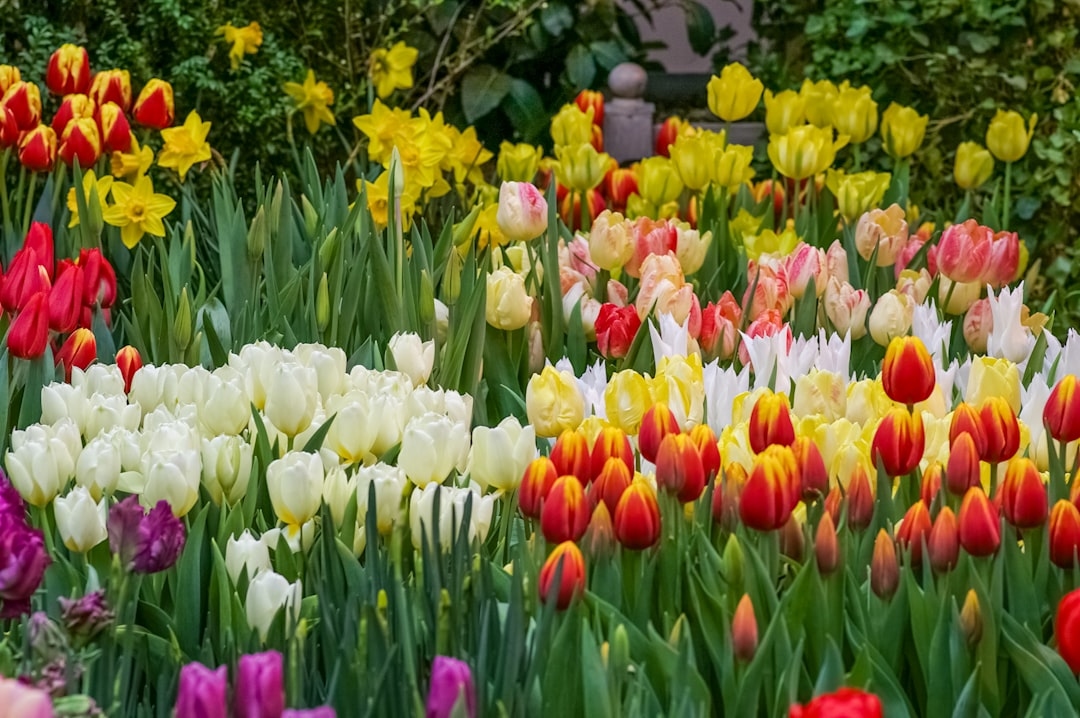
Annuals like marigolds, zinnias, petunias, and impatiens complete their entire life cycle in one season. They’re fast-growing and hungry. Incorporate 2–3 inches of compost before planting and plan to side-dress with a balanced granular fertilizer mid-season. Since you’re replanting every year, you can improve this bed incrementally each fall.
Perennial Flowers
Perennials — coneflowers, black-eyed Susans, daylilies, peonies — return year after year from the same root system. This means getting the soil right before planting is critical because you won’t have easy access to deep soil again without disturbing established plants. Add 4 inches of compost and till to 12 inches before the first planting. Top-dress with 1–2 inches of compost every fall thereafter.
Bulbs: Tulips, Daffodils, and Dahlias
Bulbs rot in waterlogged soil. Drainage is the non-negotiable requirement. If your soil drains slowly, either raise the bed by 6 inches or mix in generous amounts of coarse grit and perlite. Plant spring bulbs (tulips, daffodils, hyacinths) in fall when soil temperatures drop below 55°F. Summer bulbs like dahlias and gladiolus go in after the last frost date in your USDA hardiness zone.
Roses
Roses are notorious for being demanding. They want well-drained, loamy soil with a pH between 6.0 and 6.5. They’re also heavy feeders. Before planting, mix in 2–4 inches of aged compost, a handful of bone meal (for phosphorus and root establishment), and optionally, a specialized rose fertilizer. Avoid high-nitrogen amendments near planting time — they push leafy growth at the expense of blooms.
A Real Story: What Happens When You Skip Soil Preparation
Sarah, a reader in suburban Ohio, spent two growing seasons planting and replanting knockout roses along her fence line. She bought healthy nursery stock, watered consistently, and mulched every spring. The roses sulked — sparse foliage, few blooms, and constant black spot. A neighbor suggested she get a soil test.
The results came back with a pH of 5.2 — far too acidic for roses. Her soil had been compacted clay with almost no organic matter, and the previous homeowners had apparently dumped old potting soil in that area for years, slowly acidifying the bed. She added agricultural limestone at her extension service’s recommended rate, dug in four inches of compost, and left the bed over winter. The following June, she messaged to say her roses had produced more blooms than she’d seen in three years combined.
The roses weren’t the problem. The soil was. And the solution cost her less than $40 in materials.
Raised Beds vs. In-Ground Flower Gardens: Which Soil Approach is Right for You?
Raised beds have become enormously popular, and for good reason — they offer complete control over soil composition from day one. But they’re not universally superior to in-ground gardening. Understanding the difference helps you decide where to invest your effort.
In-Ground Beds
In-ground beds connect to the native soil ecosystem. Plant roots can grow deeply, accessing moisture reserves even during dry spells. Soil biology is richer and more stable. The downside: you’re working with whatever native soil you have, and amending large volumes of clay or sandy ground takes real effort and multiple seasons. In-ground beds also drain more slowly in heavy rain and can be harder to maintain proper pH.
Raised Beds
Raised beds let you fill entirely with ideal soil from the start. A 6–12 inch deep raised bed filled with a 60/40 mix of topsoil and compost is ready to plant immediately. They warm up faster in spring (extending your growing season), drain predictably, and resist weed pressure more easily. The tradeoffs: they’re more expensive to set up (expect $50–$150 per 4×8-foot bed in materials, not counting the frame), dry out faster in summer, and require regular topping off with compost each season as the mix settles and decomposes.
For most beginners, a small raised bed — 4 feet wide (so you can reach the center from either side) and 8–12 inches deep — is the easiest way to get a successful first flower garden without fighting native soil problems.
The Best Soil Mix for Raised Flower Beds
The widely-used “Mel’s Mix” from Square Foot Gardening works excellently for flowers: one-third each of blended compost, perlite, and coconut coir (or peat moss). This mixture drains well, retains adequate moisture, and is light enough that roots penetrate easily. For an 8-inch-deep 4×8-foot bed, you’ll need roughly 21 cubic feet of material total — plan accordingly when ordering.
Mulching After Soil Preparation: Don’t Skip This Step
Once your soil is prepared and your flowers are planted, mulch immediately. A 2–3 inch layer of organic mulch — shredded bark, wood chips, or straw — does several things at once: it moderates soil temperature, suppresses weeds, reduces water evaporation by up to 50%, and breaks down slowly into organic matter.
Keep mulch about 2 inches away from plant stems and crowns to prevent rot. Replenish it each spring as it decomposes. In regions with harsh winters (USDA zones 4–6), apply 4–6 inches of mulch around perennials after the first hard frost to insulate roots.
Common Soil Preparation Mistakes Beginners Make
Knowing what not to do is as valuable as knowing what to do. These are the mistakes that show up repeatedly in struggling flower gardens.
- Tilling wet soil. It destroys soil structure and creates compaction problems that take years to fix. Wait until soil passes the squeeze test described earlier.
- Adding sand to clay. Small amounts of sand to clay soil make it worse, not better. The fine clay particles fill the spaces between sand grains, creating a denser material. Use compost to improve clay drainage instead.
- Using fresh manure. Fresh manure burns plant roots with excess nitrogen and may contain E. coli. Always use aged or composted manure.
- Skipping the soil test. Guessing at pH and nutrient levels leads to wasted amendments and poor results. A $20 test saves you from $200 of frustration.
- Planting immediately after amending. Let amended soil settle for at least one week after watering. Loose, freshly tilled soil can sink several inches around new transplants, burying crowns too deep.
- Over-fertilizing with nitrogen. High nitrogen drives leafy green growth. Flowers need phosphorus and potassium to bloom. Read fertilizer labels and choose formulations suited to flowering plants.
Seasonal Soil Care: Keeping Your Flower Bed Healthy Year After Year
Preparing soil well once gets you a strong start. Maintaining it over time is what makes a garden exceptional.
Spring
As soil thaws and dries out enough to work, rake away any debris left from winter. Top-dress established perennial beds with 1–2 inches of compost and work it lightly into the surface. Check pH every 2–3 years rather than annually — pH changes slowly in established beds. Plant annuals only after your last frost date (check your USDA hardiness zone at planting.usda.gov).
Summer
Avoid working soil during hot, dry weather — it damages soil biology and structure. Focus on watering deeply and infrequently (1 inch of water per week is the general guideline for most flowering plants) rather than shallow, frequent watering. Deep watering encourages roots to grow downward where the soil stays consistently moist. Side-dress heavy feeders like dahlias and roses with a balanced fertilizer every 4–6 weeks through midsummer.
Fall
Fall is the best time to make significant soil improvements. Work in compost after the growing season ends. Plant spring-flowering bulbs. If your soil test from spring showed pH problems, apply amendments now — they have all winter to integrate. In cold climates, cut back perennials and apply a thick layer of mulch after the first freeze.
Winter
Let the bed rest. Soil biology continues at low levels even in winter, slowly breaking down organic matter. Avoid walking on frozen or saturated beds, which compacts the structure you’ve worked to build. This is also a good time to order soil tests, amendments, and seeds for spring so you’re ready when the ground thaws.
Practical Tips for Beginner Flower Gardeners
- Start smaller than you think you should. A well-prepared 4×8-foot bed will outperform a poorly prepared 20×10-foot bed every time. Get one small bed right before expanding.
- Buy a soil thermometer. They cost about $10 and tell you exactly when soil is warm enough to plant (50°F for most annuals, 60°F for warm-season flowers like zinnias and dahlias). Planting in cold soil stunts growth even if air temperatures seem fine.
- Take photos of your garden each season. Visual records help you track what’s working and what isn’t — and comparing spring soil to the following year’s shows you the improvement your amendments are producing.
- Worm castings are beginner-proof. Unlike synthetic fertilizers, worm castings are nearly impossible to over-apply and gently improve both soil structure and fertility. Mix a few cups into planting holes for transplants.
- Don’t buy “topsoil” in bags at big-box stores without inspecting it first. The quality varies enormously. It should be dark, smell earthy, and have some texture. Avoid anything that looks gray, smells sour, or feels like compressed peat.
Frequently Asked Questions
What is the best soil for a flower garden?
The ideal soil for most flower gardens is loam — a mix of approximately 40% sand, 40% silt, and 20% clay — with a pH between 6.0 and 7.0 and at least 5% organic matter content. If your native soil isn’t loam, adding 2–4 inches of compost and working it into the top 12 inches is the single most effective improvement you can make.
How deep should I prepare soil for flowers?
Till or dig amendments into the soil to a depth of at least 12 inches for most flowering plants. Roses, dahlias, and other deep-rooted perennials benefit from 18 inches of well-prepared soil. Shallow roots in compacted subsoil lead to poor drought resistance and weak growth.
Can I use garden soil from one area to fill another flower bed?
You can, but it’s risky. Moving soil transfers weed seeds, soil-borne diseases, and potentially pests from one area to another. It also disturbs the soil structure and microbial communities in both locations. Purchased topsoil or a custom mix of compost, perlite, and coir is safer for new beds.
How do I improve clay soil for a flower garden quickly?
Add 3–4 inches of finished compost and work it into the top 12 inches. Repeat every season. Do not add sand — it worsens drainage in clay. For immediate improvement in raised areas, build a raised bed on top of existing clay and fill it with a custom mix rather than trying to fully amend a large volume of clay in one season.
When should I prepare soil for a flower garden?
Fall is the ideal time — amendments have all winter to integrate, soil biology processes organic matter through the cold months, and your bed is ready to plant as soon as the ground thaws in spring. Spring preparation also works; aim to finish at least 2–4 weeks before your intended planting date to allow soil to settle after amendment and watering.
Your First Flower Garden Starts Below Ground
Everything you’ve read here points to the same conclusion: before you choose your flowers, before you decide on colors or layouts or planting schedules, the soil deserves your first and most serious attention. A flower growing in rich, well-structured, properly pH-balanced soil will outgrow and outbloom the same variety struggling in compacted clay by a factor that seems almost unfair.
The good news is that soil improvement is cumulative. Every season you add compost, every fall you mulch, every pH adjustment you make — it all compounds. Gardeners who’ve been at it for five years often have dramatically better soil than they started with, and their gardens show it dramatically.
Get a soil test this week. It’s the $20 investment that makes every other gardening dollar go further. Once you have your results, you’ll have a clear, specific action plan — not guesswork. From there, the flowers almost take care of themselves.